Showing posts with label Conspiracy theory. Show all posts

Friday, 28 April 2023

Will China have to muzzle its Wolf Warrior diplomats after ambassador to France’s Ukraine faux pas?


  • Diplomatic insiders say Beijing was taken aback by the scale of the backlash after Lu Shaye questioned the sovereignty of former Soviet republics
  • Some observers believe the comments reflect a strain of thought inside the government but Lu may have been speaking out of turn when he made them


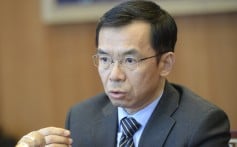
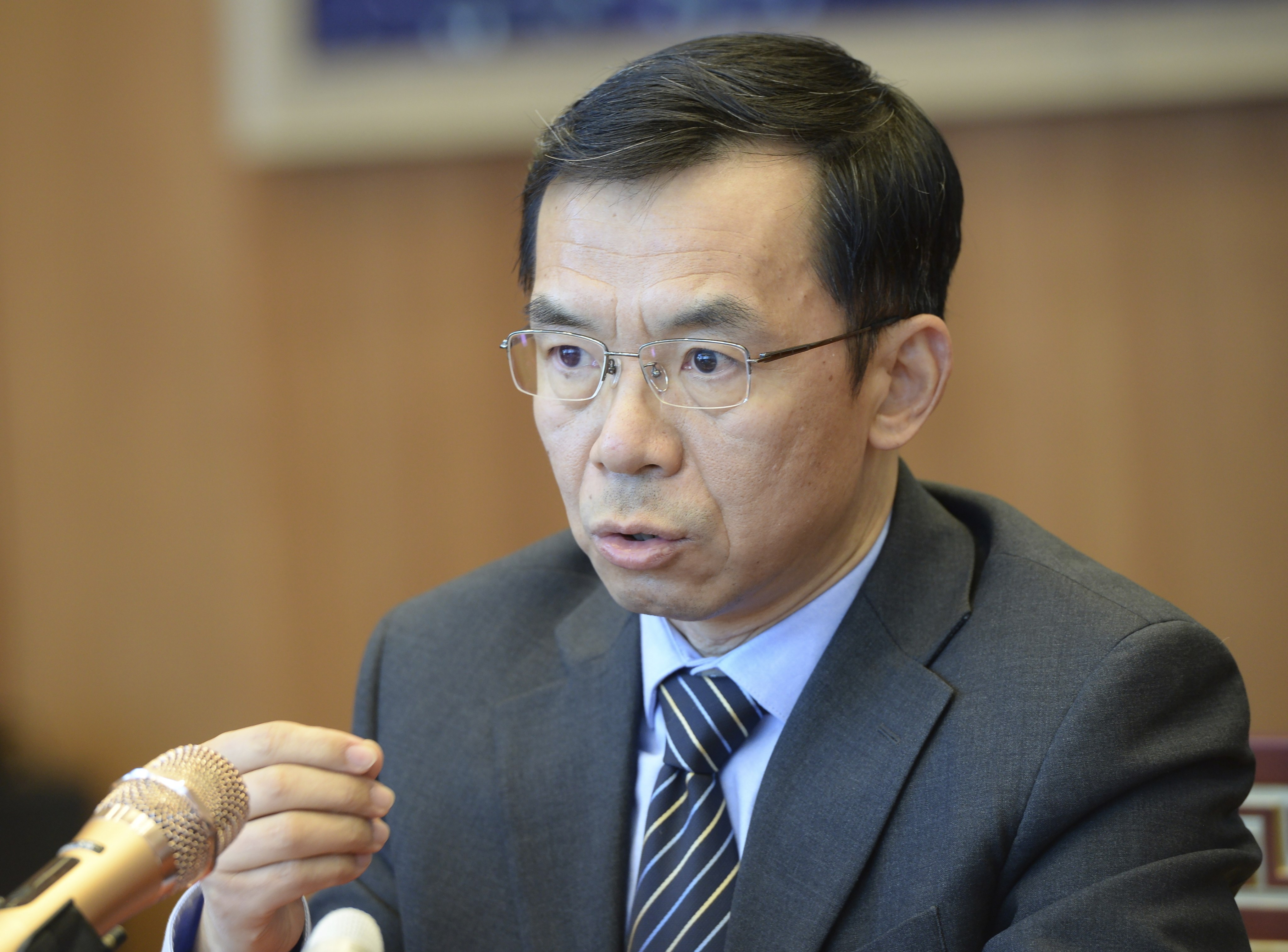
Many observers believe Lu Shaye might be in trouble over his comments. Photo: AP


Calls are mounting for China to keep its Wolf Warrior diplomats on a tighter leash after Beijing’s ambassador to France triggered a diplomatic storm by questioning the sovereignty of Ukraine and other post-Soviet states.


Beijing was taken aback by the uproar across Europe triggered by ambassador Lu Shaye’s comments that those countries had “no effective status in international law”, according to people with knowledge of the situation.


Several incumbent and former Chinese diplomats said Lu’s comments during an interview with French news channel LCI last week, amounted to “a diplomatic accident” and had cast China in a bad light.


The incident has also exposed Beijing’s dilemma in managing its senior diplomats, according to government insiders and analysts, especially when the leadership wants to promote a “fighting spirit” among its envoys.


One former diplomat, speaking on condition of anonymity, said: “Pending a full assessment of its impact, it may be necessary to keep a tighter control of senior envoys, at least for the time being.”


The comments came soon after Beijing began a charm offensive designed to woo European leaders and create distance between Europe and the United States.


China has also been actively promoting itself as a peace mediator in Ukraine, but the comments, and growing scrutiny of its close ties with Russia – especially after President Xi Jinping’s visit to Moscow and meeting with Vladimir Putin last month – have heightened European suspicions of Beijing’s true motives.


China scrambles to defuse EU crisis over envoy’s sovereignty claims
25 Apr 2023


Beijing has taken pains to distance itself from Lu’s remarks, which drew widespread anger from Ukraine, the Baltic states of Estonia, Latvia and Lithuania, the European Union and others.


French President Emmanuel Macron, who returned from China earlier this month pledging closer political and economic ties with Beijing, was also critical of the ambassador.


A group of 80 European Parliament legislators appealed in a joint letter to Paris to declare Lu persona non grata over his remarks that “insulted the history, culture and integrity” of the countries affected.


The Chinese foreign ministry stressed that it respects the sovereignty of all former Soviet republics, while President Xi Jinping finally agreed to Ukrainian leader Volodymyr Zelensky’s request for a direct conversation on Wednesday months after he made it in an interview with the Post.


Foreign Minister Qin Gang also personally sought to reassure his counterparts from Kazakhstan, Kyrgyzstan, Tajikistan, Uzbekistan and Turkmenistan at a meeting in the Chinese city of Xian.


In a rare move, the Chinese embassy in Paris issued a statement in both French and Chinese, saying Lu’s comments were “an expression of personal points of view” that should not be overinterpreted. The embassy had posted a transcript of Lu’s interview on its official WeChat account on Monday, but deleted it hours later.


Observers described the embassy’s statement as “highly unusual” and may have raised more questions than answers about whether Lu’s faux pas was indeed made in a “personal capacity”.


Huang Jing, director of the Institute of the US and Pacific Studies at Shanghai International Studies University, noted Lu once served as an adviser to the top leadership as head of policy research at the Central Leading Group on Foreign Affairs.


“Based on his policy research experience, it’d be hard to believe it was simply a slip of the tongue,” Huang said. “But given the ministry’s statement trying to walk back his comments, it shows at least what he said was not authorised to be made public. It remains unclear whether it is due to internal differences or other reasons.”


A mainland-based political analyst also said it was plausible that Lu was voicing what some elements of the Chinese government privately thought.


“Lu is a self-claimed Wolf Warrior diplomat notorious for making radical and sometimes provocative comments,” he said.


“I wouldn’t be surprised if his views were partly based on some internal talking points and his own understanding. But what matters here is whether he is authorised to reveal those unclassified views.”


Although Beijing generally keeps a tight leash on its diplomats, it is still possible for seasoned ones, especially its top-ranking envoys stationed abroad, to voice their own, sometimes unauthorised opinions, according to Pang Zhongying, a professor of international affairs at Sichuan University.

Xi Jinping’s visit to Moscow last month had already heightened European concerns about Beijing’s stance on the war. Photo: Reuters


In early 2020, China’s former ambassador to the US, Cui Tiankai, chose to distance himself from a conspiracy theory promoted by a foreign ministry spokesman Zhao Lijian accusing Washington of bringing Covid-19 to China.


Zhao, who has since been moved to a less high-profile post, was one of the country’s most prominent Wolf Warriors – a name derived from a series of nationalistic action movies – who have embraced Xi’s calls to show more fighting spirit in the face of what they see as Western efforts to hold back China.


Other senior diplomats, including Gui Gongyou and Zhang Jianmin, the former ambassadors to Sweden and the Czech Republic respectively, faced repeated calls from local politicians for their removal and protests from their host governments over their confrontational approach.


Lu’s rise coincided with China’s nationalist shift in diplomacy. His surprise elevation to the Paris job in 2019 was widely seen as a reward for his time as ambassador to Canada, when he made a series of blistering attacks after the arrest of the Huawei executive Meng Wanzhou.


Two years ago he defended his aggressive diplomatic approach in an interview with the nationalist website Guancha.cn, saying: “I told them that we have changed our style now and you have to adapt to our new style.”


But Sourabh Gupta, a senior fellow at the Institute for China-America Studies in Washington, said it was time for Beijing to consider the impact of Lu’s comments.


“Lu Shaye’s attempt to present himself as some sort of legal eagle in parsing the meaning of sovereignty ended up with him putting his foot in his mouth,” he said. “Calling it ‘an expression of personal points of view’ by the ambassador will not do much to limit the damage.”


He continued: “The foreign ministry should express an unreserved apology; the comments were way out of line. I don’t expect the ministry to do so though. Rather, they will hope that with the passage of time, the comments too will be seen as simply water under the bridge.


“Besides, with China getting active on the Ukraine peace facilitation front, the hope is that policy actions rather than misspoken words will dominate the headlines.”


Gupta said Lu’s comments and the support it attracted from online nationalists also underlined Beijing’s deep-rooted “anger and disgust” towards the Central and Eastern European nations, especially over Taiwan, but he was sceptical that this would lead to “wider ministry-condoned room for sharp elbows against these countries”.


“There is much to lose and little to gain from public expression of such views. To me, it seems the general internal disgust with these countries has inadvertently bubbled over into an unacceptably acerbic public comment by a single individual,” he said.


Most observers believe Lu’s career could suffer. George Magnus, a research associate at Oxford University’s China Centre, said the timing of Xi’s call to Zelensky suggested Beijing was deeply embarrassed and eager to repair its ties with Europe.


“Lu could be in big trouble even if he was only speaking what his government privately thinks,” he said.


He said Chinese diplomats would have to be more careful in the future. “There is a visceral anti-American streak in some parts of the European political scene, which China is keen to exploit, but my hunch is that China is its own worst enemy in this respect if it is not seen to be genuinely impartial and honest in its approach to Putin and Ukraine,” Magnus said.


Huang said Beijing would have to strike a new balance between the urge to exert greater control of senior diplomats and the need to get its message across.


“We’ve seen a recent trend that the leadership is generally in favour of giving more room to diplomats to speak up and improve the ability to fight … But recent controversies are clearly not in line with the end-goal of our diplomacy, that is to create a peaceful and favourable environment for China’s development.


“That’s the dilemma China faces now. Too much control would no doubt do harm to our major power diplomacy.”


Gupta also pointed out that there were no good answers to the challenge, but suggest Chinese diplomats should generally keep a low profile, speak in commonplace language and avoid legalisms.


They should be “the face of constructive engagement” or at least “engagement but not confrontation”, he added, and “leave pointed, sharp, and even angry comments” to the foreign ministry in Beijing.


https://www.scmp.com/news/china/diplomacy/article/3218777/will-china-have-muzzle-its-wolf-warrior-diplomats-after-ambassador-frances-ukraine-faux-pas


ChinaChina’s wolf warrior spokesman Zhao Lijian moves to border role

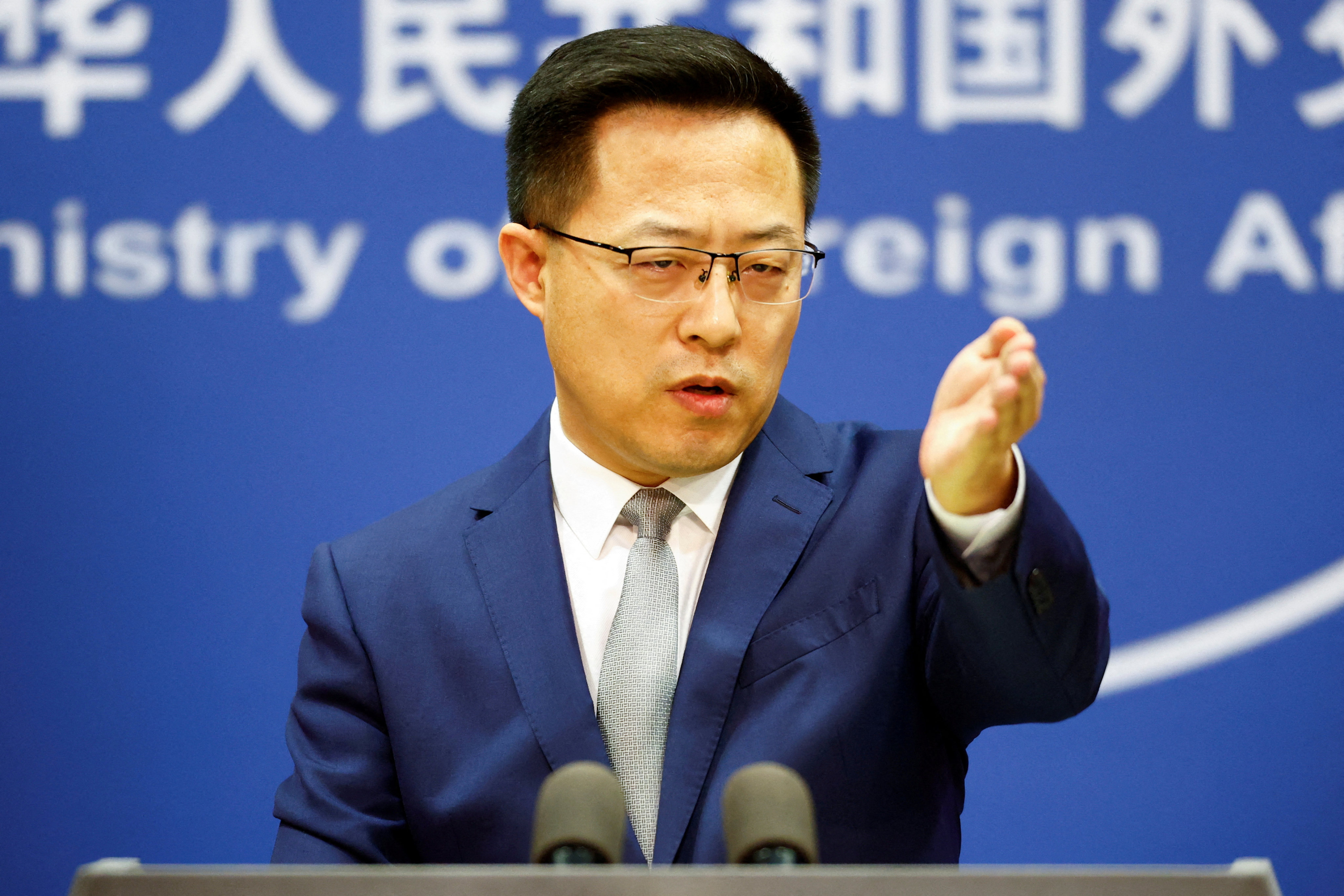
Zhao Lijian, a Chinese foreign ministry spokesman since 2019, has been appointed a deputy director with responsibility for border issues. Photo: Reuters

Zhao’s new responsibilities will include negotiating maritime and land boundaries with neighbouring countries.

videocam


ChinaWill China have to muzzle its Wolf Warrior diplomats after ambassador to France’s Ukraine faux pas?

Many observers believe Lu Shaye might be in trouble over his comments. Photo: AP

Diplomatic insiders say Beijing was taken aback by the scale of the backlash after Lu Shaye questioned the sovereignty of former Soviet republics

videocam

Monday, 24 April 2023

China tries to defuse EU diplomatic crisis after ambassador to France questions ex-Soviet republics’ sovereignty


  • Lu Shaye’s comments when questioned about Ukraine triggered a storm of protest across Europe – especially from the three Baltic republics
  • Beijing clarified it respected the states’ sovereignty while the embassy in France said the ambassador had been expressing his personal views

China’s ambassador to France Lu Shaye earlier said ex-Soviet republics had “no effective status” in international law. Photo: AFP


China has walked back comments made by a senior diplomat that questioned the sovereignty of post-Soviet states, amid a spiralling diplomatic crisis.


Lu Shaye, Beijing’s ambassador in Paris, said in a TV interview last Friday that ex-Soviet republics had “no effective status” in international law, sparking angry responses from across Europe – led by the three Baltic countries that regained their independence from the Soviet Union in 1990.


“China respects the sovereign state status of the relevant republics after the dissolution of the Soviet Union,” foreign ministry spokeswoman Mao Ning told reporters in Beijing on Monday.


Click on link below for rest of the article:

https://www.scmp.com/news/china/diplomacy/article/3218202/china-tries-defuse-eu-diplomatic-crisis-after-ambassador-france-questions-ex-soviet-republics


Monday, 29 November 2021

How China’s ‘wolf warrior’ diplomats use and abuse Twitter

 A little more than a year ago, China had almost no diplomatic presence on Twitter. A handful of accounts, many representing far-flung diplomatic outposts, operated without apparent coordination or direction from Beijing. Today ...

October 28, 2020 
A little more than a year ago, China had almost no diplomatic presence on Twitter. A handful of accounts, many representing far-flung diplomatic outposts, operated without apparent coordination or direction from Beijing. Today, the work of Chinese diplomats on Twitter looks very different: More than 170 of them bicker with Western powers, promote conspiracies about the coronavirus, and troll Americans on issues of race. The quadrupling in the past year and a half of China’s diplomatic presence on a site blocked within China suggests that turning to Western platforms to influence the information environment beyond China’s borders is no longer an afterthought but a priority.
In pursuing increasingly assertive tactics to shape how China is perceived online, Beijing has borrowed elements of Russia’s playbook. China’s “wolf warrior” diplomats—a phrase that comes from a jingoistic Chinese film franchise and refers to a new approach among the Chinese diplomatic corps to more aggressively defend their home country online—propagate conflicting conspiracy theories about the origins of the novel coronavirus that are designed to sow chaos and deflect blame. It is using these so-called warriors, together with its sprawling state media apparatus and, at times, covert trolling campaigns, to amplify false theories on social media and in the news. And it is doing all this by leaning on the propaganda outlets run by Moscow, Caracas, and to a lesser extent, Tehran, and the network of contrarian agitators they leverage to promote anti-Western content.
But Beijing has also developed several of its own plays. Its diplomats engage with Twitter accounts that bear hallmarks of inauthenticity, underscoring the challenge of generating grassroots support for its campaigns on a platform that is banned at home. It has deployed hashtag campaigns and dedicated social media accounts to flood conversations about its human rights record with positive content.
We are witnessing a broad shift in Beijing’s information approach, driven by the COVID-19 pandemic but with implications that will outlast it. How this emerging strategy is implemented going forward will have consequences for the contest between democracies and autocracies and the use of information manipulation by authoritarian leaders to shore up their grip on power at home and weaken their democratic competitors.

Building an audience with viral content

China’s officials have built followings on Twitter by adeptly blending strategic messaging with content meant to connect with and attract Western audiences. Taking a cue from their Russian counterparts, China’s most effective messengers on Twitter have proven skillful at capturing audience share through viral content, mixing Beijing-friendly messaging with clickbait content meant to attract followers, from viral memes to panda videos. China’s diplomats have also demonstrated an understanding that Twitter engagement is driven by provocation, not diplomacy. Almost all of the most engaged with tweets from Chinese embassies and representatives over the past six months feature confrontational or conspiratorial content, and their most followed accounts are the most combative.

This new, more aggressive approach seems to be paying dividends. China’s diplomatic accounts on Twitter have nearly doubled their follower totals since March 2020, when they began their more antagonistic coronavirus messaging.[1] And China’s two most followed government officials, Foreign Ministry spokespeople Zhao Lijian (@zlj517) and Hua Chunying (@spokespersonCHN), have seen a 42% and 121% increase in followers since March 2020, respectively. This represents a remarkable growth in followers. By way of comparison, Russia’s top two government accounts, the official Kremlin account (@kremlinrussia) and Ministry of Foreign Affairs account (@mid_rf), saw a 1% and 0.4% increase over the same period.

Leveraging the influence networks of other autocrats

In the absence of its own established network of proxy influencers, China has piggybacked off the state media outlets and official government accounts of Russia, Venezuela, and Iran in order to push anti-Western messaging that is broadly aligned with China’s geopolitical interests while removing a layer of responsibility and adding a veneer of legitimacy. Over the past six months, for example, Chinese diplomats retweeted Nicholas Maduro more than any other non-Chinese account. (This was due in part to the highly active Twitter account of the Chinese ambassador to Venezuela.) During the same period, Russia’s RT and Venezuela’s TeleSur were among the 10 media outlets most retweeted by Chinese diplomats and not owned by Beijing, and Actualidad RT (RT’s Spanish language outlet) and Sputnik International were among the top 20. This allows Beijing to create an echo chamber of support for its interests or, more commonly, opposition to Washington’s.
Beijing’s diplomats also frequently amplify the same disparate constellation of alt-media outlets, journalists, pseudo-academics, activists, and conspiracy theorists that have long been featured in anti-American propaganda originating in Moscow and other adversary capitals. These “influencers” are defined more by their reactionary opposition to Anglo-American foreign policy than their loyalty to Beijing, yet they serve as useful vectors to push everything from Xinjiang denialism to Chinese Communist Party (CCP)-friendly talking points on Hong Kong and Taiwan. In one particularly salient example, an American filmmaker routinely amplified by Russian and Iranian state media produced a video for a Russian government-funded digital outlet where he labeled Hong Kong protestors “fanatics” and part of a U.S.-government regime change operation. The video was retweeted by at least a half-dozen Chinese diplomats.
While Beijing’s diplomats primarily promote content from China’s own state-backed websites and outlets, they use other state media and Western influencers as external or “independent” validators.  Beijing’s diplomats signal boost RT content that directly or indirectly promotes China’s interests on issues like technology, the South China Sea, responses to the coronavirus, and protests in Hong Kong. At times, they simply retweet RT’s coverage of statements made by other Chinese diplomats; others, they actively seek out RT’s attention by tagging them in posts. Their goal appears to go beyond providing external validation, to tapping into a share of RT (and other state media)’s sizable audience.

Manufacturing the appearance of popular backing

In cases where its diplomats seem unable to rally organic support for their messaging, Beijing appears to rely on false, or at the very least, highly suspicious personas to create an illusion of popular backing. China’s diplomats have routinely engaged with accounts bearing multiple hallmarks of inauthenticity: handles whose naming conventions suggest computer generation, profile photos found elsewhere online or unassociated with the account’s purported identity, and account creation dates that fall within short intervals or a specific time block. Over the past six months, 566 accounts retweeted by Beijing’s diplomats have been suspended by Twitter, including nine in the top 100 most frequently retweeted accounts, and one (@Girl90107796) in the top 10. A few diplomats have engaged with almost laughably obvious fakes, including, for example, a seemingly repurposed Fort Lauderdale, Florida food blog (@FtLaudyEATS) that now exclusively pushes pro-China and pro-Venezuela propaganda. Five diplomats—China’s ambassador to Venezuela, and consuls general in Karachi, Kolkata, Durban, and Cape Town—are responsible for more than 400 retweets of accounts that were subsequently suspended.
This behavior suggests either a stunning lack of digital literacy or a more coordinated effort to manufacture consensus. In either case, it speaks to sloppier tradecraft than Russian or Iranian diplomats, who rarely engage with suspicious accounts. For example, of the 131 suspended accounts retweeted by Russian diplomats over the past year, not a single one was among their top 200 most retweeted accounts.

Conflicting conspiracy theories

As part of its emerging strategy, Beijing has engaged in the promotion of multiple conspiracy theories about the virus’s origin in order to cast doubt on official versions of events. In one particularly brazen instance, a senior Foreign Ministry spokesperson, Zhao Lijian, took to Twitter to promote the false theory that the virus may have originated in a bioweapons lab in Fort Detrick, Maryland, citing a since-deleted post on a website identified by the U.S. State Department as a Kremlin-connected proxy site. China’s diplomatic and state media accounts have since posted more than one hundred times about the Fort Detrick conspiracy, and Zhao himself has returned to the subject on at least three other occasions.

China’s willingness to traffic in outright conspiracy theories represents something of a departure from its recent history. Until recently, China has tended to be more risk averse in its approach to information manipulation, opting to suppress content that is critical of Beijing, rather than drown it out with content that is conspiratorial, false, and undermines the notion of an objective truth.

Beijing has deployed its diplomatic accounts and state-backed media to help boost these theories. More than a dozen Chinese diplomats and embassies retweeted Zhao Lijian’s original conspiracy tweet, and Chinese embassies from Jordan to France tweeted out their own Fort Detrick conspiracy narratives in what appears to have been a coordinated operation. China’s state media amplified these efforts through its English-language websites and Twitter accounts. China Daily, for example, retweeted one of its opinion writers comparing an alleged coverup of the coronavirus’s “true” origins at Fort Detrick to those at Chernobyl and Fukushima. This suggests that China, like Russia, is making coordinated use of multiple tools to maximize the impact of its efforts.

Using ‘positive’ content to drown out criticism

While China’s efforts to blunt criticism of its crackdown in Hong Kong have largely relied on counterattacks and claims of hypocrisy, its response to international condemnation of its repression of Uighurs in Xinjiang frequently endeavors to change the conversation instead. A large share of the Xinjiang-related content promoted by Beijing’s diplomats has featured propaganda images of “happy” Uighurs, supposed “re-education” success stories, or slickly-produced travel videos. Beijing’s diplomats have also boosted a new English-language state media account, Discover Xinjiang (@DXinjiang), and its Chinese-language counterpart, Xinjiang Channel (@Xinjiangchannel), which paint a rosy picture of life in the province. And, they have pushed positive hashtag campaigns around Xinjiang. Among the ten most used hashtags in diplomatic tweets about Xinjiang are #AmazingXinjiang, #AmazingChina, and simply #Amazing.

Trolling the United States on race

Over the summer, as protests over race and policing erupted in the United States, China’s diplomats and state media joined their Russian and Iranian counterparts in framing the U.S. government’s heavy-handed responses as hypocritical. Beijing’s diplomats—typically loath to weigh in on social or political rights issues in other countries—used the #BlackLivesMatter, #GeorgeFloyd, and #IcantBreathe hashtags more than 250 times after the killing of George Floyd. In the weeks and months after his death, official Chinese accounts repeatedly accused the United States of  applying “double standards,” most notably in relation to its support for protestors in Hong Kong.

This was perhaps the first time that Beijing messaged assertively on an issue that did not directly bear on China’s geopolitical interests. In doing so, Beijing appears to have borrowed Russia’s use of “whataboutism” to deflect criticism of its own actions. In one widely shared tweet, China’s foreign ministry spokeswoman responded to a tweet from the U.S. State Department criticizing China’s actions in Hong Kong with “I can’t breathe”—a reference to George Floyd’s last words. Whether or not this is a one-time departure from its earlier reluctance to wade into the domestic affairs of other countries is as yet unclear.

The autocrats’ approaches: China vs. Russia

There are multiple similarities between China’s methods of information manipulation and Russia’s approach: using official channels to promote conspiracy theories; amplifying fringe websites; casting doubt on official accounts of politicized events, in part to create the impression that there is no objective truth; highlighting weaknesses of the political West and deploying “whataboutism” to deflect criticism of its own actions; undermining European and transatlantic cohesion; and framing itself as a victim of Western xenophobia and propaganda.

But in several important ways, China’s approach is different. Russia’s information strategy is to discredit the West rather than attract them to Russia, often by sowing chaos and division. By contrast, Beijing is more concerned than Moscow with burnishing its global image, as evidenced by its promotion of positive, antiquated propaganda campaigns around Xinjiang. And where Russia leans heavily on a sprawling ecosystem of state media and a network of sympathetic agitators to flood the information zone with polarizing content, China is typically reliant on its diplomats to carry out the more aggressive elements of its campaign, at least when overtly confronting the United States and Europe. China has traditionally been more sensitive to criticism and attribution of its operations, but it remains to be seen whether pushback on its diplomats’ propaganda will curb the behavior. Meanwhile, China continues its efforts to close its domestic information space to critics, whether by co-opting independent media, dominating digital distribution channels, or through the use of indigenous social media platforms.

The way forward

Six months into the coronavirus crisis, it appears China’s more aggressive posture in the information space constitutes more than a brief departure from its previous, more subtle approach. This new approach draws on multiple elements of Russia’s information manipulation strategy—but it also bears several unique characteristics. How Beijing implements this new strategy going forward will have implications for the contest that is shaping our information environment and is likely to be a defining feature of geopolitics for decades to come.

Jessica Brandt is the head of research and policy at the Alliance for Securing Democracy at the German Marshall Fund.

Bret Schafer is the media and digital disinformation fellow at the Alliance for Securing Democracy at the German Marshall Fund.

Twitter provides financial support to the Brookings Institution, a nonprofit organization devoted to rigorous, independent, in-depth public policy research. 

[1] According to Hamilton 2.0 data, followers of China’s diplomatic accounts increased from a peak of 1,555,668 in March 2020 to a peak of 3,025,283 in September 2020. This is due, in part, to the addition of at least 30 new diplomatic accounts, including some that were created before March 2020 but that were not identified until later in the year.

Most Recent Post

Man charged for borrowing rare Chinese manuscripts from UCLA library, returning fakes

  Suspect Jeffrey Ying allegedly travelled to China after checking works out using several aliases Agence France-Presse Published: 12:11pm, ...

Popular Posts - Last 30 days