Showing posts with label Obituary. Show all posts

Monday, 30 October 2023

China seeks to stifle public grief for former premier Li Keqiang

 Censorship targets ‘overly effusive’ comments, gatherings or references to Li’s views on economic reform
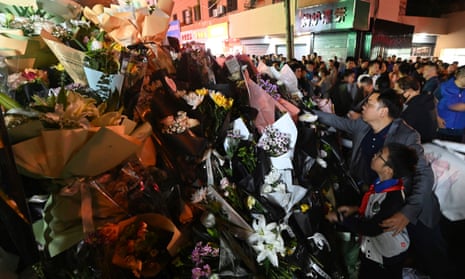
Crowds of people stand looking at a huge pile of flower tributes.
People lay flowers outside a building where the late Chinese premier Li Keqiang lived as a child in Hefei city, Anhui province, China. Remembering Li fondly is a ‘veiled articulation of unhappiness about Xi’, says one expert. Photograph: AP

Public tributes to China’s former premier Li Keqiang, who died on Friday, are being strictly controlled as the government seeks to prevent a mass outpouring of grief that could lead to social unrest.

Li suffered a sudden heart attack in Shanghai and died in the early hours of Friday, according to Xinhua news agency.

There have been public displays of grief, particularly in his home city of Hefei, in Anhui province, where hundreds of mourners laid flowers for one of their most significant sons.

Social media is awash with tributes to Li, who was once seen as a force for economic liberalisation in the highest echelons of the Chinese Communist party (CCP). But discussion online has been strictly censored to ensure that Li’s legacy adheres to the official narrative and does not mention talking points about political or economic reform.

A leaked memo, published by China Digital Times, shows that media outlets have been instructed to “pay particular attention to overly effusive comments” regarding Li’s death.

Many of the comments that referenced Li’s reputation as an economic reformer were deleted. One comment that was censored from Weibo cited a Li quote from his first year as premier: “Whatever the market can handle, let the market do more of.”

A man reads a newspaper with an obituary of Li Keqiang on a bulletin board in Beijing.
A man reads a newspaper with an obituary of Li Keqiang on a bulletin board in Beijing. Photograph: Tingshu Wang/Reuters

Despite being China’s premier for a decade, it is not clear whether Li will receive an official memorial in addition to regular funeral arrangements. At the regular foreign ministry press briefing on Friday, spokesperson Mao Ning declined to elaborate on any plans.

Students, seen by CCP elites as the most volatile demographic when it comes to protests, are being instructed to refrain from public displays that go beyond the official lines. Screenshots circulating on social media show a message from the youth league committee at Hainan University instructing students to “at most” share Li’s official obituary. The notice said any online or offline gatherings were “strictly prohibited”, according to a report in Taiwanese media.

Another notice posted to students at the Guiyang Institute of Aeronautics and Astronautics asked them not to make any comments about the “political situation” and to refrain from any public gatherings.

A man bows in front of the former house of Li Keqiang in Dingyuan county, Chuzhou city, in China’s eastern Anhui province.
A man bows in front of the former house of Li Keqiang in Dingyuan county, Chuzhou city, in China’s eastern Anhui province. Photograph: Rebecca Bailey/AFP/Getty Images

When Li became premier in 2013, he was seen as someone who would embrace private enterprise and allow the free market to flourish. But he was gradually sidelined by Xi Jinping, China’s leader, who has reasserted the CCP’s grip on all parts of the economy. To many, Li now represents the path not taken by China’s increasingly authoritarian government.

The CCP is particularly fearful about reaction to deaths of senior officials or public figures. The deaths of former premier Zhou Enlai in 1976 and Hu Yaobang, a former CCP general secretary, in 1989, prompted widespread outpourings of grief that morphed into protests.

More recently, the deaths of Covid whistleblower Li Wenliang in 2020 and people in an apartment fire in Xinjiang in 2022 triggered expressions of public grief – with the latter becoming the “white paper” protests that spread across several cities at the end of last year. The CCP leaders are “haunted” by these memories, said Jeffrey Wasserstrom, a professor of Chinese history at the University of California, Irvine.

Many people have flocked to the Weibo page of Li Wenliang to pay their tributes to the more recently departed Li Keqiang. “Today, it seems another truth-teller with the surname Li has departed,” wrote one, in a post archived by China Digital Times.

Li Yuan, a columnist for the New York Times, described the public grief as “the most significant outpouring of emotion since the white paper movement”.

New footage from China congress fuels questions about why Hu Jintao was hauled out – video

Wasserstrom added: “There is definitely a lot of discontent in some quarters about Xi Jinping and little room to express it without taking a big risk … Expressing regret for Li’s death provides an opportunity for doing this in at least a veiled way.”

Prof Steve Tsang, the director of the SOAS China Institute, also said that “remembering Li fondly is a veiled articulation of unhappiness about Xi”.

With that in mind, Tsang said there was “no chance” that Xi would allow “anything but a small family affair” for Li.

Additional research by Chi Hui Lin

https://www.theguardian.com/world/2023/oct/30/china-seeks-to-stifle-public-grief-for-former-premier-li-keqiang

Friday, 27 October 2023

Li Keqiang obituary - The Guardian

 Outward-looking economist who served as Chinese premier during Xi Jinping’s first decade as president

Fri 27 Oct 2023 18.07 BST

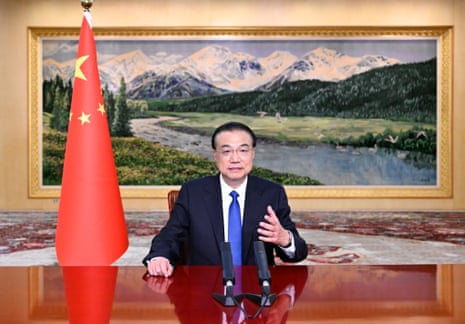
Li Keqiang addressing the eighth China-Japan Business Leader and Former High-Level Government Official Dialogue, November 2022

Li Keqiang was considered a reformist, though was a loyal supporter of the party leader, Xi Jinping. Photograph: Xinhua/Shutterstock

Li Keqiang, who has died aged 68 of a heart attack, was the premier of the People’s Republic of China from 2013 to March 2023. Regarded as a reformist economist, in the decade before his appointment he had figured in many lists of those most likely to be the prime leader of the country after the expected retirement of Hu Jintao. But the final decade of Li’s career was mostly spent in the shadow of the man who eventually prevailed over him, Xi Jinping. Despite this, domestically and internationally he was regarded as a popular figure, and news of his unexpected death was met with respectful comments on Chinese social media.

As premier, Li was the epitome of the loyal, faithful supporter of the main leader. He never dissented publicly from the positions adopted under Xi, who as party secretary and president outranked him. In the early years of his central career, however, he had been supportive of policies which allowed more space to the non-state sector, and which supported further marketisation. As a vice premier in charge of economic affairs from 2007 to 2012, he referred to the need for the country to open up more spaces for growth, through developing its healthcare sector and building better quality infrastructure. He supported a key report issued by the thinktank within the National Development and Reform Commission ministry in 2012 which served as a blueprint for bolder reform. This was co-issued in partnership with the World Bank, and typified an era when Chinese and foreigners were able to collaborate and openly debate ideas about domestic reform.

In the early Xi era, placed in charge of the state ministries, it seemed initially that Li would be allowed large liberty to pursue the ideas of the 2012 report. Party meetings in 2013 and 2014 committed to a framework where the market was taken as key to further development, but with the crucial qualification that this should happen under the guiding hand of the state. That hand was to grow heavier as time went on. “Likonomics”, as Li’s approach was called, was increasingly replaced by “Xiconomics”. Politics took precedence over everything else. Anti-corruption campaigns, ideology training and the primacy of the Communist party above all else in society were the new central tenets. Li, as a technocrat, may have baulked at the wisdom of this approach, but under his stewardship, the economy continued to grow around 6% a year. Only with the onset of the pandemic in 2020 did things falter. By that time, Li was far more of a background figure. It was noticeable that even in overtly economic areas, other figures connected to Xi, such as the vice premier Liu He, took the lead.

Li differed from Xi in that he came from a relatively humble background, for even though his family included party officials, this was only at provincial level. Born in Hefei, the capital of central Anhui province, he was sent from high school for rural labour and joined the Communist party in 1976, and studied law at Beijing University, completing a master’s degree and going on to write a doctorate in economics in 1995. This work, demonstrating his sophisticated analytical skills and familiarity with western jurisprudence, was subsequently published.

Unsubstantiated stories linked him early on in his time at university with the Democracy Wall movement operating in Beijing. In 1978-79, activists responding to the liberalisation after the death of Mao Zedong in 1976 posted demands for political reform, and even democracy. Whether true or not, it is clear that Li made an early commitment to an official career, serving as head of the college Communist Youth League, an organisation that operated as a training ground for the party itself. This figured as an important power base over the 1980s and into the 2000s, and had been the source of support for other elite leaders such as Hu Jintao. Li cemented his position by becoming national leader of the league from 1993 to 1998.

Li inspecting a wheat field in Fangguan in north China's Hebei province, June 2022.
Li inspecting a wheat field in Fangguan in north China's Hebei province, June 2022. Photograph: Chine Nouvelle/SIPA/Shutterstock

This led to him being rewarded with governorship of the massive province of Henan in 1998, until then the youngest appointee to such a position. Six years later he was made party boss of Liaoning province, in the north-east.

But the challenges of these semi-developed places meant his record was not an unblemished one. In Henan he was in charge when an HIV-contaminated blood scandal came to national and international attention. Claims of a cover-up and mismanagement were made, with the population of some villages infected by blood transfusions. In Liaoning he managed a major fire disaster in which dozens of people died and were injured in a nightclub amid claims that health and safety regulations had been violated.

Despite these setbacks, Li’s technocratic ability, his reputation for being uncorrupt and his work ethic made him a contender for central leadership. But his fate was sealed when he emerged at the 17th Party Congress in 2007 one place behind Xi in the communist hierarchy. To this day, it is not known how Xi managed to gain the pole position. The ensuing years reinforced the sense that in Chinese politics, the winner takes everything. Li retired at the 20th Congress in 2022, replaced by Li Qiang. Xi, his colleague for a decade, continued in power, despite being older.

Li was married to Cheng Hong, a professor of English who had been a visiting scholar at Brown University in the US in the mid-90s. They had one daughter, who reportedly also studied in the US.

 Li Keqiang, politician, born 1 July 1955; died 27 October 2023

https://www.theguardian.com/world/2023/oct/27/li-keqiang-obituary

Li Keqiang, former premier of China, dies aged 68

Li served as China’s number two leader for 10 years before being sidelined by Xi Jinping

China’s former premier Li Keqiang has died according to state media.China’s former premier Li Keqiang has died after suffering a heart attack in Shanghai, state media reported. Photograph: Xinhua/Rex/Shutterstock


China’s former premier, Li Keqiang, has died suddenly at the age of 68, according to Chinese state media. Li had a heart attack and died in Shanghai early on Friday, according to China’s Xinhua news agency.

“Comrade Li Keqiang, while resting in Shanghai in recent days, experienced a sudden heart attack on Oct 26 and after all-out efforts to revive him failed, died in Shanghai at ten minutes past midnight on Oct 27,” the state broadcaster CCTV reported.

Observers said Li would be remembered as an advocate for a freer market and China’s more impoverished citizens, but also as a symbol of the political alternative sidelined by the autocratic rise of Xi Jinping.

Li was premier – the second-highest position in China’s political system – for a decade from 2013 until he was replaced by Li Qiang in March.

“No matter how the international winds and clouds change, China will unswervingly expand its opening up,” Li said in March, at his last public appearance in a press conference. “The Yangtze River and the Yellow River will not flow backwards.”

In a sign of how the news of his death was being handled by the authorities, some social media users reported that they had been blocked from posting footage of his remarks. In the past, mourning events after the deaths of former leaders have been used by people to express discontent with the current regime.

On Friday morning Li’s death was the top trending topic on Weibo, China’s Twitter-like social media platform. Many commenters expressed shock and grief but comments on posts – which were mostly limited to news and government accounts – were restricted or controlled, with only a selection visible.

Earlier in the day there had been some posts of a song titled “Unfortunately not you” by Fish Leong, which netizens have taken to sharing when a world leader dies, in an apparent reference to Xi, who cannot be openly criticised safely.

Li was believed to be popular among Chinese people and officials, even after his removal as premier. Seen as former leader Hu Jintao’s preferred successor as president, he was overlooked when the leadership chose Xi Jinping in 2012. Li and Hu were both members of Xi’s rival faction within the Chinese Communist party, but its cohort has been sidelined in recent years as Xi consolidated his personal power and moved acolytes into key positions.

“His decade-long tenure also saw a general inability to prevent the political decline of Li’s and his mentor Hu Jintao’s power base, the Communist Youth League,” said Wen-ti Sung, a China expert at the Australian National University.

The son of a local official in the impoverished province of Anhui, Li was sent to the countryside to work as a manual labourer during the Cultural Revolution. He went on to gain a law degree from Peking University, where classmates say he embraced western and liberal political theory, translating a book on the law by a British judge.

But he became more orthodox after joining the ranks of officialdom in the mid-80s, working as a bureaucrat while his former classmates protested in Tiananmen Square in 1989, and rising up the ranks through his involvement in the Communist party Youth League.

In 1998 he became China’s youngest governor, appointed to the densely populated central province of Henan, where he later become party secretary. His reputation was damaged by his handling of an HIV/Aids epidemic stemming from a tainted blood donation programme while in the role. After a stint as party chief of the northern province of Liaoning, he was promoted to a vice-premier under former premier Wen Jiabao from 2008 to 2013, overseeing economic development and macroeconomic management.

He was known internationally in part for the “Li Keqiang index”, a term coined by the Economist for an informal measurement of China’s economic progress. It was based on a leaked conversation between Li and a US diplomat when Li was party chief in Liaoning. Li reportedly said the province’s GDP figures were “unreliable” and suggested a clearer picture could be taken from electricity consumption, rail cargo and bank lending data.

Sung said Li would likely be remembered as having “looked out for the little guys”, citing Li’s statement during the pandemic that: “600 million Chinese people still make barely 1,000 RMB a month. After Covid people’s livelihood should be our priority.”

But Sung said he would also be remembered for what “could have been”.

Li was a proponent of economic reform, and had at times spoken of China’s economic and social challenges. However, he largely toed the party line, particularly as Xi tightened his grip on power.

During his farewell tour of ministries earlier this year Li renewed calls for economic reform, and videos of him visiting some departments and being warmly greeted were later censored from Chinese social media.

Adam Ni, an independent China political analyst and author, described Li as “a premier who stood powerless as China took a sharp turn away from reform and opening”.

Additional research by Chi Hui Lin

https://www.theguardian.com/world/2023/oct/27/li-keqiang-former-premier-of-china-dies-aged-68-state-media


Most Recent Post

Man charged for borrowing rare Chinese manuscripts from UCLA library, returning fakes

  Suspect Jeffrey Ying allegedly travelled to China after checking works out using several aliases Agence France-Presse Published: 12:11pm, ...

Popular Posts - Last 30 days