China's premier, Li Keqiang, bows to delegates after delivering his work report during the opening session of the National People's Congress. Photograph: Noel Celis/AFP/Getty Images
In a farewell speech after serving 10 years as China’s number two leader, the premier, Li Keqiang, had a cryptic message for his staff: “While people work, heaven watches. Heaven has eyes.”
His unusually candid words, seen in a video clip on social media but unreported by official media, stoked speculation about whether he was making a veiled attack on President Xi Jinping.
Li’s words betrays a deep sense of frustration over a decade in which he could have exerted his largely reformist agenda but was hamstrung by being in the shadow of a political strongman and other crises, according to Dr Wang Juntao, a friend of Li at the prestigious Peking University 40 years ago.
“This is [the voice of] a defeated person … who hopes that the divinity would vindicate him,” said Wang, a political dissident jailed in the 1989 Tiananmen democracy movement and now living in exile in the US.
Li, who is bowing out at the end of the current parliamentary session and will be replaced by a Xi ally, is “the weakest premier after the Chinese Communist party took power in 1949”, said Chen Daoyin, a former professor of political science and law at Shanghai University.
When he became premier in 2013, there were high hopes that Li, who has studied western legal traditions and has a degree in law and a doctorate in economics, would be a liberal reformer.
But he was unable to make headway. Li might have led the world’s second-largest economy through a tough time marred by rising government debt, trade frictions with the US and the Covid pandemic, but his power was curbed by Xi, who placed his allies in key strategic positions over him.
Over the years, Li was increasingly sidelined as Xi – a red aristocrat with a respected party elder father – garnered greater power.
“Li was sidelined by Xi deliberately and in an openly humiliating way,” said Steve Tsang, director of the China Institute at the London University School of Oriental and African Studies. “He did not really have a chance to make much of an impact.”
People who have known Li portray him as an intelligent technocrat but pensive and cautious. They say he entered the Communist party with a noble ambition to contribute towards his country, but was stifled by its rigid bureaucracy.
Wang said it pained him to watch the once quick-witted, outspoken and independent-thinking intellectual deliver his last government work report to the rubber-stamp parliament on Monday. In the report, Li talked flatly on the government’s performance in an hour-long speech that lauded Xi Jinping as “the core of the party leadership” seven times.
Li Keqiang returns to his seat next to Xi Jinping at the opening session of the National People’s Congress in Beijing. Photograph: Thomas Peter/Reuters
“We owe our achievements … to the strong leadership of the party central committee with comrade Xi Jinping at its core and the sound guidance of Xi Jinping Thought,” he told the National People’s Congress.
Wang said: “I think he must have felt heartbroken … having to read out every viewpoint that he must have opposed.”
‘The end of collective leadership’
Li, the son of a local official in the impoverished province of Anhui, rose up the ranks through his involvement in the Communist Youth League. By 1998 he was the country’s youngest governor, in the densely populated central province of Henan, later becoming party secretary.
After a stint as party chief of the northern province of Liaoning, he was promoted to be a vice-premier under former premier Wen Jiabao from 2008 to 2013, overseeing economic development and macroeconomic management.
Li was seen as former leader Hu Jintao’s preferred successor as president, but the leadership chose Xi Jinping, the son of party elder Xi Zhongxun, after weighing up factional interests.
Analysts said Li, constrained by his personality and kept out of the limelight by Xi, largely failed to make the most of the platforms he was given.
One of Li’s biggest faults was his inability to stop Xi from shifting the powers of the state council, China’s cabinet, to party institutions from 2018, Chen said. A further shift to bolster the Communist party’s control in state entities is being deliberated at the current congress meeting. It is expected to involve the incorporation of more government ministries – especially in the realm of finance, policing and the national security apparatus – into the Communist party system.
Chen says it was within Li’s power to stop Xi from “subverting” the spirit of the “reform and opening” policy launched in 1978, which diminished the party’s dominance in the government’s operation and paved the way for China’s stellar economic rise after the Cultural Revolution.
“But he showed no courage in insisting upon the legacy of Deng Xiaoping in separating the powers between the party and the government,” Chen said.
Analysts said Li would nonetheless be remembered for the moderating effect he had on Xi and his concern for ordinary people.
Li promoted the private economy and foreign investment, in contrast to Xi’s focus on state ownership, and he relied on data from private industry to parse the state of China’s economy. He once described China’s official GDP statistics as “man-made”, according to a US diplomatic cable released by WikiLeaks, and said he relied on data such as electricity consumption and rail cargo volumes to understand his own economy.
While party officials often condemn Hong Kong pro-democracy figures as traitors backed by “foreign hostile forces”, Li has stayed silent.
“Li will be remembered as the leader who did not forget the plight of the grassroots, and who advocated for ‘street hawker economy’ to create job opportunities for the underclass,” said Wen-Ti Sung, a political scientist at the Australian National University.
“Without him, China’s leadership may achieve greater consensus, but it may be more prone to mistakes,” said Prof William Hurst, deputy director at the Centre for Geopolitics at the University of Cambridge.
Tsang said Li’s departure would “mark the end of collective leadership”. Dominated by Xi’s loyal allies, elite politics from now on “will be guided by how to please the boss most”.
Billionaire investor Mark Mobius says he cannot take money out of China — FOX Business
Reuters/Reuters
March 05, 2023
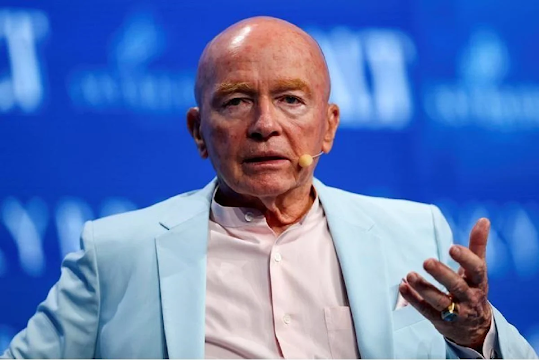
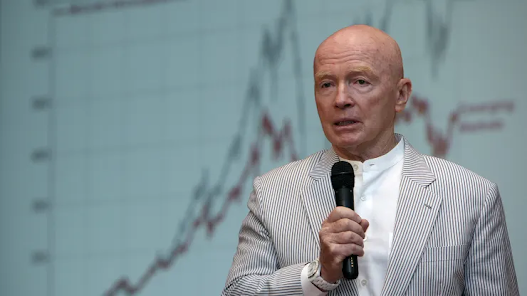
SHANGHAI (March 5): Billionaire investor Mark Mobius told FOX Business he cannot take his money out of China due to the country's capital controls, cautioning investors to be "very, very careful" about investing in an economy under a tight government grip.
"I have an account with HSBC in Shanghai. I can't take my money out. The government is restricting flow of money out of the country," Mobius, founder of Mobius Capital Partners, told FOX Business in an interview published on March 2.
"I can't get an explanation of why they're doing this .... They're putting all kinds of barriers. They don't say: No, you can't get your money out. But they say: give us all the records from 20 years of how you made this money .... This is crazy."
Mobius' comments were circulated on Chinese social media site WeChat at the weekend.
Mobius led emerging market investment at Franklin Templeton Investments for three decades and is known for his bullish view on China. Now, though, he said, he "would be very, very careful" investing in the country.
"The bottom line is that China is moving in a completely different direction than what Deng Xiaoping instituted when they started the big reform programme," he said, referring to the former Chinese leader.
"Now you have a government which is taking golden shares in companies all over China. That means they're going to try to control all of these companies .... So I don't think it's a very good picture when you see the government becoming more and more control-oriented in the economy."
Mobius, who calls himself "the Indiana Jones of Emerging Market investing", told FOX Business he's increasing exposure to alternative markets such as India and Brazil.
Mobius and HSBC could not be reached at the weekend.
Billionaire investor Mark Mobius told Fox Business in an interview last week, “I can’t get my money out.”
Officials at the State Administration on Foreign Exchange (SAFE) told CNBC that it’s a matter of a “basic process and internal control requirements of the bank handling [this] specific business.”
Chinese authorities have denied claims by billionaire investor Mark Mobius, who said he is unable to wire funds out of China due to government restrictions on capital flow.
Asked in an interview with Fox Business last week about whether he’s reduced his exposure to China, Mobius said, “the government is restricting the flow of money out of the country.”
He warned investors of “all kinds of barriers” imposed by the government.
“I’m personally affected because I have an account with HSBC in Shanghai,” he told Fox Business. “I can’t get my money out.”
Mark Mobius, executive chairman of Templeton Asset
Management’s Emerging Markets Group
Dario Pignatelli | Bloomberg | Getty Images
Officials at the State Administration on Foreign Exchange (SAFE) told CNBC in a statement that it’s a matter of a “basic process and internal control requirements of the bank handling specific business.” They did not name HSBC.
“We have noticed that relevant market participants have doubts about the bank’s handling of their personal fund remittance businesses,” SAFE said in its statement. “There is no change in the country’s policy on cross-border remittance of funds.”
HSBC did not immediately respond to CNBC’s request for comment.
SAFE said it will continue guiding and urging commercial banks to optimize cross-border financial services and improve their service levels.
Peter Alexander, managing director of Z-Ben, a Shanghai-based investment management consulting firm, said he did not encounter problems in cross-border capital flows out of China.
“I spent this morning speaking to a dozen clients all of whom confirmed to me that there are no issues in the operations of cross-border capital flows,” he wrote in a LinkedIn post. “Business as usual.”
He said what Mobius is facing may be a process that “any individual looking to conduct overseas transfers” goes through. He added that his business has “never had a single issue” wiring money in and out of China.
“As for Mobius, well the issue raised is with his personal bank account,” Alexander wrote. He pointed out that Mobius is “far from alone in his frustration” as other have experienced the same issues.
Pneumoconiosis, also known as black lung disease, is incurable and caused by long term exposure to dust in workplaces and is most common among coal miners
Last year, households of workers with black lung disease lived on an average monthly per capita income of just 393 yuan, down by 16 per cent from a year earlier, according to a survey by Love Save Pneumoconiosis, with three per cent receiving zero income last year. Photo: AP
The plight of some six million migrant workers in China currently suffering from the disease is set to be discussed at the ‘two sessions’ meetings in Beijing
Chinese migrant workers suffering from incurable black lung disease lived on an average monthly income of just 393 yuan (US$61) last year, far below the national average of over 4,000 yuan a month for other migrant workers, according to an annual survey from a non-governmental organisation.
Pneumoconiosis is caused by long-term exposure to dust in workplaces, and is most common among coal miners. It is the most common occupation-related disease in China, based on government data.
Around six million Chinese migrant workers currently suffer from the disease, according to an estimate by Love Save Pneumoconiosis, a Chinese non-governmental organisation founded by Chinese investigative journalist Wang Keqin in 2011.
Difficulties in the diagnosis of pneumoconiosis have been raised at the NPC and CPPCC for several years, but how much it has been improved is still a questionChen Jingyu
The problems faced by migrant workers with black lung disease will be a topic of discussion by top Chinese officials and advisers of the National People’s Congress (NPC) and the China People’s Political Consultative Conference (CPPCC) – the so-called “two sessions” which starts on Friday in Beijing.
In particular, there may be discussions about the difficulties migrant workers with black lung disease have in being covered by health or work injury insurance.
“From the perspective of our respiratory doctors, pneumoconiosis is pneumoconiosis. The diagnosis is not difficult at all. There is no problem in diagnosing pneumoconiosis based on the patient’s occupational dust exposure history, chest X-ray, and high-resolution spiral CT,” said Chen Jingyu, a doctor and a delegate to the NPC, at a panel discussion this week after the release of the survey.
“Difficulties in the diagnosis of pneumoconiosis have been raised at the NPC and CPPCC for several years, but how much it has been improved is still a question.”
Amid the coronavirus pandemic, migrant workers suffered greater income losses than other income groups, but those battling black lung disease were faced with even greater financial difficulties, according to the organisation’s latest survey of nearly 600 workers with the disease in seven Chinese provinces.
Last year, households of workers with black lung disease lived on an average monthly per capita income of just 393 yuan, down by 16 per cent from a year earlier, according to the survey, with three per cent receiving zero income last year.
This was far below the average for all migrant workers, which rose to 4,072 yuan (US$630) last year, up by 2.8 per cent from a year earlier, according to data from China’s National Bureau of Statistics (NBS).
The survey found that more than 80 per cent of families with workers suffering from black lung disease could not make ends meet last year, a sharp rise from 64 per cent in 2019. On average, the debt of these families was close to double their savings.
Around a third of their total expenditures went to medical bills, but only a small portion could be claimed back through medical and work injury insurance.
Less than 30 per cent of migrant workers were covered by work injury insurance in 2019, according to government data, with the NGO estimating that only 3.5 per cent of workers suffering from black lung disease had work injury insurance.
One of the key problems facing workers in receiving an official diagnosis of pneumoconiosis as an occupational disease is that they need to provide labour contracts to be able to claim work injury insurance.
But according to the survey, three out of four workers with black lung disease did not sign labour contracts and less than 20 per cent of employers provided workers with proof of employment.
In a widely reported case in 2009, a migrant worker from Henan province cut open his chest to reveal black lung disease after futile attempts to prove he was sick.
Even though more migrant workers have moved from industrial sectors to service sectors in recent years, around 46 per cent of workers remained in the construction and manufacturing sectors in 2019, according to the NBS.
The number of migrant workers in China fell to 285 million at the end of 2020, down by 1.8 per cent from a year earlier, partly because of travel restrictions caused by the coronavirus, according to official data. The number of workers who regularly travelled for work also dropped 2.7 per cent last year.