Thursday, 5 June 2025

U.S. Aircraft Carriers “Sitting Ducks” For Chinese Hypersonic Missiles; Is Pete Hegseth Hyping Chinese Threat?


The US Defense Secretary Pete Hegseth has reignited the debate about the safety of the US Navy’s massive aircraft carriers in the face of China’s burgeoning hypersonic missile arsenal. He contends that hypersonic missiles could sink all US aircraft carriers within minutes of a potential conflict.

However, this prognosis contradicts the evidence gathered from the sinking of the only supercarrier ever.

Hegseth’s remarks from an interview have been in the spotlight, where he claimed that China has been building its military prowess for the sole purpose of defeating the US. The arsenal of Hypersonic Missiles is an essential piece in their quest to achieve supremacy over the US, whose power is projected beyond its borders through aircraft carriers.

“So, if our whole power projection platform is aircraft carriers, and the ability to project power that way strategically around the globe. And, yeah, we have a nuclear triad and all that, but [carriers are] a big part of it. And if 15 hypersonic missiles can take out our 10 aircraft carriers in the first 20 minutes of a conflict, what does that look like?” he said in an interview that has recently surfaced.

The defense secretary’s comments have been gaining attention lately, and defense experts have been contending that the US aircraft carrier strike groups have limited defenses against hypersonic missiles.

Trump Sends F-16 Fighting Falcons To Ukraine! There’s A Catch, These Combat Jets Don’t Fly! Here’s Why


Missile attack on an aircraft carrier. AI image.

Globally, the race to develop hypersonic weapons is intensifying. China is touted by the US Department of Defense as the world leader in hypersonic technology, having surpassed the US and Russia in developing both conventional and nuclear-capable hypersonic weapons.

Hypersonic missiles fly at least five times the speed of sound and can change course in flight, challenging defense systems on US Navy ships, especially its floating air bases.

According to a recent intelligence leak, the People’s Liberation Army successfully tested its DF-27 intermediate-range ballistic missile with a hypersonic glide vehicle in 2023, enabling it to effortlessly breach missile defense systems.

According to the 2023 China Military Power Report, the DF-17 HGV-armed medium-range ballistic missile “will transform the PLA’s missile force.” Although it can carry nuclear weapons, it is designed for conventional missions.

“Big Threat” To U.S. Passenger Jets As Nearly One Million Drones Fly In The Country; U.S. Could Use Laser Weapons To Disable Them

China Financial Scandal: Chinese authorities detain investors for speaking to foreign media on Shandong financial scandal


Beijing [China] May 1 (ANI): Dozens of regular investors from China, who lost their investments following the downfall of a government-supported financial services group in Shandong province, have been arrested by authorities for raising awareness about the situation through foreign media and for being “exploited by overseas anti-China elements,” as reported by Radio Free Asia (RFA).

Last month, several investors among the almost 100,000 affected by an alleged 20 billion yuan (approximately USD 2.74 billion) financial fraud connected to the Jianghaihui Group in Shandong province spoke with international media outlets, including RFA, to help bring global attention to the scandal and encourage action, according to RFA.

Chinese officials have detained numerous investors, claiming they are “being exploited by overseas anti-China elements,” after they spoke to reporters and shared articles about the scandal in social media groups or privately, as indicated by the RFA report.

The RFA report highlighted that in recent days, over a dozen depositors from various cities in Shandong province, such as Weifang and Zaozhuang, have been subjected to administrative detention by local law enforcement.
In late March, RFA reported that Jianghaihui’s chairman had fled to the United States with his wife after the company suddenly ceased operations, leaving behind countless distressed investors who had invested their savings in the company’s financial schemes.

The RFA report noted that officials have repeatedly summoned investors for questioning, and they have faced detention and persistent surveillance for sharing information with international journalists.

Law enforcement detained more than a dozen individuals based on news shared on major overseas websites. This included people from other provinces who communicated the reports to one another. Officials from the Public Security Bureau presented me with the reports, labelled them as part of anti-China efforts, reported RFA.

Most of those apprehended are women; some were released two weeks ago, while several others remain in custody, stated the RFA report. (ANI)

https://theprint.in/world/chinese-authorities-detain-investors-for-speaking-to-foreign-media-on-shandong-financial-scandal/2611373/


‘We don’t want them’: Trump signs travel ban on 12 countries after Colorado attack


US President Donald Trump gestures during a ‘Summer Soiree’ held on the South Lawn of the White House in Washington, DC, June 4, 2025. — Reuters pic


https://www.malaymail.com/news/world/2025/06/05/we-dont-want-them-trump-signs-travel-ban-on-12-countries-after-colorado-attack/179306

WASHINGTON, June 5 — US President Donald Trump signed a new travel ban Wednesday targeting 12 countries, saying it was spurred by an attack on a Jewish protest in Colorado that authorities blamed on a man they said was in the country illegally.

The ban, which strongly resembles a similar measure taken in his first presidency, targets nationals of Afghanistan, Burma, Chad, Republic of the Congo, Equatorial Guinea, Eritrea, Haiti, Iran, Libya, Somalia, Sudan and Yemen.

It will go into effect on June 9, the White House said.

Trump also imposed a partial ban on travelers from seven countries: Burundi, Cuba, Laos, Sierra Leone, Togo, Turkmenistan and Venezuela, the White House said.

“The recent terror attack in Boulder, Colorado has underscored the extreme dangers posed to our country by the entry of foreign nationals who are not properly vetted,” Trump said in a video message from the Oval Office posted on X.

“We don’t want them.”

Trump compared the new measures to the “powerful” ban he imposed on a number of mainly Muslim countries in his first term, which he said had stopped the United States suffering attacks that happened in Europe.

“We will not let what happened in Europe happen in America,” Trump said.

“We cannot have open migration from any country where we cannot safely and reliably vet and screen. That is why today I am signing a new executive order placing travel restrictions on countries including Yemen, Somalia, Haiti, Libya, and numerous others.”

Rumours of a new Trump travel ban had circulated following the attack in Colorado, with his administration vowing to pursue “terrorists” living in the US on visas.

Suspect Mohammed Sabry Soliman is alleged to have thrown fire bombs and sprayed burning gasoline at a group of people who had gathered on Sunday in support of Israeli hostages held by Hamas.

US Homeland Security officials said Soliman was in the country illegally, having overstayed a tourist visa, but that he had applied for asylum in September 2022.

“President Trump is fulfilling his promise to protect Americans from dangerous foreign actors that want to come to our country and cause us harm,” White House Deputy Press Secretary Abigail Jackson said on X.

“These commonsense restrictions are country-specific and include places that lack proper vetting, exhibit high visa overstay rates, or fail to share identity and threat information.” — AFP


https://www.malaymail.com/news/world/2025/06/05/we-dont-want-them-trump-signs-travel-ban-on-12-countries-after-colorado-attack/179306

Trump bars foreign students from entering US to study at Harvard, citing national security


Students walk near the statue of John Harvard on the day of the 374th Commencement exercises at Harvard University in Cambridge, Massachusetts, May 29, 2025. US President Donald Trump on Wednesday suspended for an initial six months the entry into the United States of foreign nationals seeking to study or participate in exchange programmes at Harvard University, amid an escalating dispute with the Ivy League school. — Reuters pic

BOSTON, June 5 — US President Donald Trump on Wednesday suspended for an initial six months the entry into the United States of foreign nationals seeking to study or participate in exchange programmes at Harvard University, amid an escalating dispute with the Ivy League school.

Trump’s proclamation cited national security concerns as a justification for barring international students from entering the United States to pursue studies at the Cambridge, Massachusetts-based university.

Harvard in a statement called Trump’s proclamation “yet another illegal retaliatory step taken by the Administration in violation of Harvard’s First Amendment rights.”

“Harvard will continue to protect its international students,” it added.

The suspension can be extended beyond six months. Trump’s proclamation also directs the US State Department to consider revoking academic or exchange visas of any current Harvard students who meet his proclamation’s criteria.

The directive on Wednesday came a week after a federal judge in Boston announced she would issue a broad injunction blocking the administration from revoking Harvard’s ability to enrol international students, who make up about a quarter of its student body.

The administration has launched a multifront attack on the nation’s oldest and wealthiest university, freezing billions of dollars in grants and other funding and proposing to end its tax-exempt status, prompting a series of legal challenges.

Harvard argues the administration is retaliating against it for refusing to accede to its demands to control the school’s governance, curriculum and the ideology of its faculty and students.

Harvard sued after Homeland Security Secretary Kristi Noem on May 22 announced her department was immediately revoking Harvard’s Student and Exchange Visitor Programme certification, which allows it to enrol foreign students.

Her action was almost immediately temporarily blocked by US District Judge Allison Burroughs. On the eve of a hearing before her last week, the department changed course and said it would instead challenge Harvard’s certification through a lengthier administrative process.

Nonetheless, Burroughs said she planned to issue a longer-term preliminary injunction at Harvard’s urging, saying one was necessary to give some protection to Harvard’s international students.

In an internal cable seen by Reuters that was issued a day after that court hearing, the State Department ordered all its consular missions overseas to begin additional vetting of visa applicants looking to travel to Harvard for any purpose.

Wednesday’s two-page directive said Harvard had “demonstrated a history of concerning foreign ties and radicalism,” and had “extensive entanglements with foreign adversaries,” including China.

The FBI had “long warned that foreign adversaries take advantage of easy access to American higher education to steal information, exploit research and development and spread false information,” the proclamation said.

It said Harvard had seen a “drastic rise in crime in recent years while failing to discipline at least some categories of conduct violations on campus,” and had failed to provide sufficient information to the Homeland Security Department about foreign students’ “known illegal or dangerous activities.” — Reuters


https://www.malaymail.com/news/world/2025/06/05/trump-bars-foreign-students-from-entering-us-to-study-at-harvard-citing-national-security/179324

Why the US-China tariff deal may be too little, too late for millions of struggling Chinese workers

Saturday, 17 May 2025 7:00 AM MYT

BEIJING, May 17 — Chinese worker Liu Shengzun lost two jobs in just one month as US import tariffs shot up to triple digits in April, forcing a Guangdong lighting products factory, and then a footwear maker, to reduce output.

Tariffs came down dramatically this week, but Liu has given up on factory jobs and is now back farming in his hometown in southern China.

“It’s been extremely difficult this year to find steady employment,” said the 42-year-old, who used to earn 5,000 to 6,000 yuan (RM2979 to RM3574) a month as a factory worker and now doesn’t have a steady source of income. “I can barely afford food.”

The rapid de-escalation in the US–China trade war after the Geneva talks last weekend has helped Beijing avoid a nightmare scenario: mass job losses that could have endangered social stability — what the ruling Communist Party sees as its top-most priority, key to retaining its legitimacy and ultimately power.

But this year’s US tariff hikes of 145 per cent left lasting economic damage and even after the Geneva talks remain high enough to continue to hurt the job market and slow Chinese growth, say economists and policy advisers.

“It was a win for China,” a policy adviser said of the talks, speaking on condition of anonymity due to the topic’s sensitivity. “Factories will be able to restart operations and there will be no mass layoffs, which will help maintain social stability.”

But China still faces challenging US tariffs of 30 per cent on top of duties already in place.

“It’s difficult to do business at 30 per cent,” the adviser added. “Over time, it will be a burden on China’s economic development.”

Before the meeting in Switzerland, Beijing had grown increasingly alarmed about internal signals that Chinese firms were struggling to avoid bankruptcies, including in labour-intensive industries such as furniture and toys, Reuters reported last week.

Now there’s some relief.

Lu Zhe, chief economist at Soochow Securities, estimates the number of jobs at risk has fallen to less than 1 million from about 1.5 to 6.9 million before the tariff reduction.

Alicia Garcia-Herrero, chief Asia Pacific economist at Natixis, had estimated the triple-digit tariffs could cause 6 to 9 million job losses. Current tariff levels could trigger 4 to 6 million layoffs, while if tariffs drop by a further 20 per cent some 1.5 to 2.5 million jobs could be lost, she said.

China’s 2025 economic growth could slow by 0.7 percentage points in the most optimistic scenario, 1.6 points under the current tariffs, or 2.5 points if the conflict returns to April’s intensity, she estimated.

“When you increase the tariffs to such a high level, many companies decide to stop hiring and to start basically sending the workers back home,” Garcia-Herrero said.

“At 30 per cent, I doubt they will say, okay, come back. Because it’s still high,” she added. “Maybe the Chinese government is saying, wow, this was amazing. But I think many companies are not sure that this is going to work.”

‘Unstable’

Government advisers say China is trying to mitigate manufacturing job losses with higher state investment in labour-absorbing public projects and by using the central bank to channel financial resources where new jobs could be created.

The People’s Bank of China last week unveiled a new tool to provide cheap funds for services and elderly care, among other stimulus measures.

“On employment, the most important driver will come from increased government investment given that the enthusiasm for corporate investment has yet to rise,” said Jia Kang, founding president of the China Academy of New Supply-Side Economics.

Beijing will try to keep the budget deficit ratio at the roughly 4 per cent level agreed in March, but a higher number “cannot be ruled out if a serious situation arises,” he said.

The exact impact of last month’s tariff spike on the job market is unknown. A factory activity survey predicted employment declined in April, but analysts believe Beijing was more concerned about a potential acceleration of job losses than the absolute numbers over the course of a month.

Exporters had already been paring back their workforce to stay competitive in what risks turning into a deflationary spiral.

“It’s hard to give a figure,” a second policy adviser said of job losses. “The economy is already weak and the tariff war is adding frost on top of snow, but it’s just frost.”

A major stumbling block to job creation is the perceived unpredictability of US President Donald Trump’s tariff policies, which is keeping exporters cautious, analysts say.

Li Qiang was among a group of up to 20 people losing their jobs at a company that acted as an intermediary, exporting pneumatic cylinders, which are used in industrial machinery and were made by other Chinese firms.

His company closed after losing US orders and being outcompeted in Japan, where rivals rushed to replace the American market.

He now works as a ride-hailing driver in the southwestern city of Chengdu and has no plans to return to the export sector, even after the easing of US–China tensions.

“Trump’s policies toward China could change at any time, which makes jobs in export-related industries unstable,” said Li. “I don’t plan to put any effort into working in the export sector anymore.” — AFP


https://www.malaymail.com/news/money/2025/05/17/why-the-us-china-tariff-deal-may-be-too-little-too-late-for-millions-of-struggling-chinese-workers/176997

Poorest 75 nations face ‘tidal wave’ of debt repayments to China in 2025, study warns


Helen Davidson in Taipei
3 min read

https://www.yahoo.com/news/poorest-75-nations-face-tidal-055402523.html


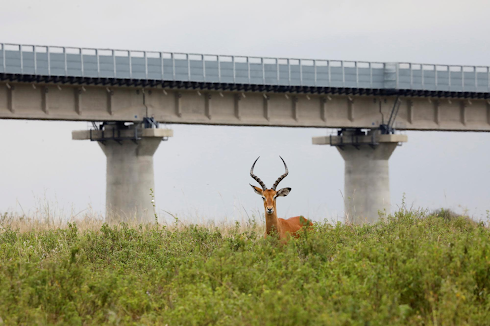
Kenya’s standard gauge railway connecting connecting Mombasa and Nairobi was built using Chinese financing.Photograph: Baz Ratner/Reuters

The most vulnerable nations on Earth are facing a “tidal wave” of debt repayments as a Chinese lending boom starts to be called in, a new report has warned.

The analysis, published on Tuesday by Australian foreign policy thinktank the Lowy Institute, said that in 2025 the poorest 75 countries were on the hook for record high debt repayments US$22bn to China. The 75 nations’ debt formed the bulk of the total $35bn calculated by Lowy for 2025.

“Now, and for the rest of this decade, China will be more debt collector than banker to the developing world,” the report said.

The pressure to repay was putting strain on local funding for health and education as well as climate change mitigation.

Related: China spent $240bn on belt and road bailouts from 2008 to 2021, study finds

“China’s lending has collapsed exactly when it is needed most, instead creating large net financial outflows when countries are already under intense economic pressure,” it said.

The loans were largely issued under President Xi Jinping’s signature belt and road initiative (BRI), a state-backed global infrastructure investment programme which has underwritten national projects from schools, bridges and hospitals to major roads and shipping and air ports.

The lending spree turned China into the largest supplier of bilateral loans, peaking with a total of more than $50bn in 2016 – more than all western creditors combined.

The BRI focused primarily in developing nations, where governments struggled to access private or other state-backed investment. But the practice has raised concerns about Chinese influence and control and drawn accusations that Beijing was seeking to entrap recipient nations with unserviceable debt. Last month another analysis by the Lowy Institute found that Laos was now trapped in a severe debt crisis, in part because of over-investment in the domestic energy sector, mostly financed by China.

China’s government denies accusations it deliberately creates debt traps, and recipient nations have also pushed back, saying China was a more reliable partner and offered crucial loans when others refused.

But the Lowy report said the record high debt now due to China could be used for “political leverage”, noting that it comes amid huge cuts to foreign aid by the Trump administration.


The report also highlighted new large-scale loans given to Honduras, Nicaragua, Solomon Islands, Burkina Faso and the Dominican Republic, all within 18 months of those countries switching diplomatic recognition from Taiwan to Beijing.

China also continues to finance some strategic partners, including Pakistan, Kazakhstan, Laos and Mongolia, as well as countries that produce critical minerals and metals, such as Argentina, Brazil and Indonesia.

But the situation also put China in a bind, pulled between diplomatic pressure to restructure unsustainable debt in vulnerable nations and domestic pressure to recall loans amid China’s own economic downturn.

China publishes little data on its BRI scheme, and the Lowy Institute said its estimates – based on World Bank data – likely underestimated the full scale of China’s lending. In 2021 AidData estimated China was owed a “hidden debt” of about $385bn.


Sort by 
  • I’m wondering what will happen when these countries don’t pay their bills. China built a geothermal power plant in Jordan that was more expensive to use than the facilities that they already had so they don’t use it. An empty unused power plant just sits. I wonder if they’ll pay for it.

https://www.yahoo.com/news/poorest-75-nations-face-tidal-055402523.html?


Most Recent Post

Man charged for borrowing rare Chinese manuscripts from UCLA library, returning fakes

  Suspect Jeffrey Ying allegedly travelled to China after checking works out using several aliases Agence France-Presse Published: 12:11pm, ...

Popular Posts - Last 30 days