Showing posts with label CNN. Show all posts

Monday, 15 May 2023

China’s ‘unprecedented’ crackdown stunned private enterprise MUST READ

 One year on, it may have to cut business some slack

Updated 3:02 AM EDT, Wed November 3, 2021


On November 2, 2020, Jack Ma’s Ant Group was gearing up for the biggest initial public offering in history.

One day later, it all fell apart.

Beijing’s decision to yank the $37 billion IPO was just the start of a sweeping crackdown that has become one of the most consequential realignments of private enterprise in China’s history.
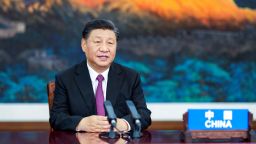


President Xi Jinping turns his fire on China's rich in push to redistribute wealth


In the year that followed, the Chinese government’s regulatory might has changed industries ranging from tech and finance to gaming, entertainment and private education.

China’s regulators aren’t alone in moving to restrict what they see as overly powerful companies, especially in Big Tech. Authorities in the United States and Europe have also moved over the last year to rein in unruly players by proposing new antitrust laws or trying to regulate data and online content.

But the speed and ferocity with which Chinese authorities have acted against the country’s corporate titans have startled even the closest China watchers.

“The latest regulatory tightening cycle is unprecedented in terms of duration, intensity, scope, and velocity,” analysts from Goldman Sachs wrote in a recent research report.

The campaign has wiped out more than $1 trillion worldwide from the market value of Chinese companies. It has sent chills through the wider economy and stoked fears about the prospects of future innovation and growth in China.

Some of China’s most successful entrepreneurs have quit high profile jobs in the past several months — decisions they’ve claimed are unrelated to the turmoil, but which analysts find hard to separate completely. Several tech firms have pledged to hand billions of dollars worth of their own profits to government-backed social causes. And some big proponents of Chinese investment have reconsidered plans to pour more money into the market until the outcome of the political interference is clear.

While China’s decisions have rocked the corporate world and rattled foreign investors, Xi appears undeterred. To him, reining in private enterprise is the solution to fixing longstanding concerns about consumer rights, data privacy, excess debt and economic inequality.

In other words, for the Chinese Communist Party it’s not about killing the private sector: It’s about taming the excesses of capitalism and embracing the country’s history of socialism.

“Common prosperity is the prosperity of all the people, the material and spiritual life of the people being rich,” Xi wrote in an article published last month by a Communist Party journal, invoking a historically significant phrase that dates back to the time of Chairman Mao Zedong. “It is not the prosperity of a few people.”


Ant Group's highly anticipated IPO was suspended just over a week after founder Jack Ma accused China's conventional, state-controlled banks of having a "pawn shop" mentality.

Dividing the ‘cake’

China is one of the world’s most unequal major economies, according to the World Bank. Its Gini coefficient — a popular measure of inequality — has increased significantly over the past four decades, coinciding with the country’s staggering rate of economic growth.

That meteoric rise accelerated under the leadership of Deng Xiaoping, who took power in the late 1970s after the death of Mao.Under Deng, the country embraced the free market and opened up to global trade. He famously said in 1985 that “some people can get rich first” to help poorer people in the long run, so that the society can gradually achieve “common prosperity” — a use of the phrase that differed significantly from its invocation by Mao, who advocated for wealth redistribution nearly 70 years ago as he worked to cement the party’s control.
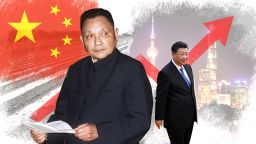


Worsening inequality now appears to be vexing Xi, the country’s most powerful leader in decades. Just last year, his government concluded a five-year long fight against absolute poverty. Now he’s widely expected to seek a third presidential term next year, and has focused his time on reducing the wealth gap.

“We must divide the cake well,” Xi wrote in last month’s article, adding that his goal is to “achieve common prosperity of all people by the middle of this century.”

Xi Jinping delivers a speech at a ceremony marking the 100th anniversary of the founding of the Chinese Communist Party. Worsening inequality now appears to be vexing the country's most powerful leader in decades.


A desire for control

Analysts widely believe that Xi’s concerns about inequality are real, but that the unfolding crackdown also signals the ruling Chinese Communist Party’s desire for control.

Xi is “aware that a Communist Party regime only enjoys legitimacy as long as common people feel represented,” said Sonja Opper, a professor at Bocconi University in Italy who studies China’s economy and the private sector. “The ultimate motivation is more likely to gain control over powerful parts of the economy.”

The business crackdown that dominated much of this year is believed to have started after Ma — easily the most recognizable of China’s business elite — blasted China’s financial system during a controversial speech in October 2020.

Founder of Alibaba Group Jack Ma has all but disappeared from public life as the tech crackdown has taken shape over the last year.

Ma criticized China’s regulatory system at the time as being outdated and risk averse, an obstacle to the high flying, innovative tech firms that he said could bring banking to poor populations and smaller businesses that are otherwise locked out of traditional finance.

The tech entrepreneur also accused China’s conventional, state-controlled banks of having a “pawn shop” mentality by lending only to borrowers who could provide collateral. He touted more innovative, data-heavy approaches as capable of bringing banking to marginalized groups.

Those words likely spurred Beijing to retaliate swiftly. The Ant Group IPO was suspended just over a week later.

Since then, life has only gotten more difficult for Ma, Ant Group and China’s other corporate giants. The usually flamboyant Ma has all but disappeared from public life, and has even reportedly left the helm of an elite business school he founded.
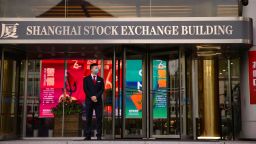


Ant Group was forced to overhaul its business and become a financial holding company, meaning it is much more heavily regulated than it ever was before. Ma’s Alibaba (BABA), meanwhile, was hit earlier this year with a record $2.8 billion fine for behaving like a monopoly, and the company has lost roughly $400 billion in market value in the last year as it navigates a slew of new regulations from Beijing.


More than Jack Ma

Ma’s business empire isn’t the only one affected. Meituan, Tencent (TCEHY), Pinduoduo (PDD) and other tech firms have also been investigated or fined over alleged anti-competitive behavior. And the ride-hailing app Didi — which went public in the United States despite reported concerns from Chinese regulators — was banned from app stores and probed over questions about data security.

The Communist Party “seems increasingly concerned that China’s tech sector has become so globally prominent that it runs the danger of outrunning the Party itself,” said Rana Mitter, a professor who specializes in the history and politics of modern China at the University of Oxford. “The crackdown helps to bring it down to size.”
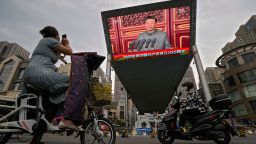


The clampdown has extended well beyond tech. Rules published in July upended China’s $120 billion for-profit tutoring sector. Additional guidelines released that month tightened oversight of the country’s massive food delivery industry.

The real estate market, which was already being roiled by government efforts to curb excessive borrowing by developers, has also been under intense scrutiny this year. Authorities have announced more than 400 regulations on the sector this year as they try to cut down on property debt and bring home prices under control, according to statistics compiled by Centaline Property, a Hong Kong-based property agency.

The government has also turned its attention to cultural and societal issues that authorities have deemed “unhealthy” or “toxic,” including overwork, unruly celebrity behavior and excessive time spent with video games. Other areas of pop culture have been scrutinized as well.


Wary of private tech’s power

Experts point to the crackdown — and especially the measures directed at technology — as the start of a new era for regulation in China.

Companies like Ant Group and Didi have rapidly ascended in recent years to become powerhouses in their fields. Alipay, operated by Ant Group, dominates China’s mobile payment market with a 56% share. Didi has a near monopoly of the ride-hailing market, with about a 90% share.

Beijing encouraged their rise at first. Such firms have been huge job creators and have attracted vast amounts of foreign and domestic capital. China’s influence as a hub for technological innovation has also exploded in recent years because of these firms, which compete head to head with Western rivals.

But now the government is growing wary of their size and power.

Firms like Alibaba, Tencent and Didi “will no longer be able to stay under the protective umbrella of Internet or technology, outside of supervision from the Chinese government,” said Doug Guthrie, a professor and director of China Initiatives at Arizona State University’s Thunderbird School of Global Management.

Beijing is also clearly concerned about the collection of data by these private firms. The technology they have created is so prevalent in Chinese life that they have access to sensitive information about hundreds of millions of people, ranging from where and when they travel to specific details about how they spend their money.

“It cannot go unnoticed that the industries and sectors that came under fire are all part of the modern tech economy, controlling vast amounts of individual level data,” said Opper from Bocconi University. She added that data “is an invaluable resource for any government wishing to control all walks of life.”

Beijing’s interest in Big Data was apparent this summer, as the government’s probe of Didi and other Chinese companies that trade in the United States took shape. Authorities focused on allegations that those firms mishandled sensitive data about their users in China, posing risks to personal privacy and national cybersecurity.

Those regulations “may therefore simply reflect the desire to gain control over the type of data and technology that is currently controlled by China’s most innovative, private technology corporations,” Opper said.


Economic slump may bring change of pace

Beijing has signaled the crackdown may not be over yet.

In August, the party’s top leaders unveiled a major policy blueprint for the next five years, in which they pledged to strengthen regulations on tech, financial services, education, and tutoring firms — areas of what they called “vital interest.”

But other factors might force the government to slow the pace and scale at which it is trying to transform private enterprise.

The world’s second largest economy has encountered a slew of challenges that are weighing heavily on economic growth, including disruptions due to the global shipping crisis, a massive energy crunch and concerns about a debt crisis in real estate. Last quarter marked the slowest pace of GDP growth in a year.

The crackdown on tech and education firms hasn’t helped, with demands for rapid change resulting in job losses and a drag on retail sales.

“My prediction: The ‘crackdown’ is going to stop now,” Guthrie said.

“The Xi administration is very committed to economic growth,” he added. “They have made their point about the coordination between the government and the private sector. But they know they need an entrepreneurial private sector to continue to drive China’s growth.”
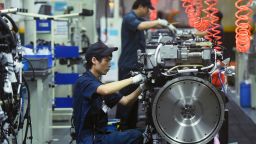


There has been some indication that the regulatory push is slowing down.

Guo Shuqing, chairman of the China Banking and Insurance Regulatory Commission, told state broadcaster CCTV last month that the new regulations for financial tech firms have “yielded initial results.” He said he expects to achieve “even more significant progress” before the end of the year.

Even Ma is reportedly turning up in public again. Reuters reported last month that the tech billionaire was spotted on a cruise in Spain, his first trip outside China since the crackdown began.

The government wants companies to understand that they need to be in “lock step” with authorities, said Guthrie, who added that “no one gets to think of themselves as bigger or more global than the Chinese government.”

But he acknowledged that Beijing knows it needs Chinese tech to flourish.

“My sense is that the support and coordination between the government and the private sector is coming back into alignment,” he added.

- - - - - - - - - - 


China’s yearlong crackdown on private business


NOVEMBER 3, 2020

Chinese regulators suspend Ant Group’s $37 billion IPO citing “major issues,” days before the company was scheduled to start trading. It was the largest IPO in history.

FEBRUARY 7, 2021

Chinese regulators revealed new anti-monopoly guidelines aimed at the country’s biggest tech companies, sending a chill through global markets. Chinese firms have lost more than $1 trillion in market value this year as the crackdown has intensified.

APRIL 10, 2021

After a months-long antitrust investigation, Chinese regulators slap Alibaba with a record $2.8 billion fine for behaving like a monopoly.

APRIL 12, 2021

Ant Group is ordered by regulators to restructure itself as a financial holding company supervised by China’s central bank — a major readjustment for the high flying tech company, which now has to follow rules similar to those required of traditional banks.

JULY 4, 2021

China bans ride-hailing giant Didi from app stores, days after the company went public in the United States. The move was widely seen as a punishment for Didi’s decision to list overseas.

JULY 10, 2021

A major Chinese regulator proposes strict listing rules for companies that keep data on more than one million users. Companies that meet that requirement must seek the agency’s approval before listing shares overseas, according to the proposal.

JULY 24, 2021

China unveils wide-ranging rules on education and private tutoring in the country, essentially upending a $120 billion industry. Chinese markets are roiled by the announcement, and billions of dollars in market value are wiped off the value of several major, publicly traded education firms.

AUGUST 2021

China cracks down on what authorities call “chaos” in celebrity fan culture, following a series of scandals involving top artists like Kris Wu, Zheng Shuang and Zhao Wei. Some celebrities were effectively erased from the Chinese internet entirely, while others were slapped with fines or arrested on criminal charges.

AUGUST 17, 2021

President Xi Jinping pushes for the redistribution of wealth in China as part of a call for “common prosperity,” a phrase steeped in historical significance.

AUGUST 26, 2021

China blasts an excessive work culture known as “996,” which is pervasive in the country’s tech industry. The condemnation from the country’s top court signaled an intensifying pressure for companies to curtail the practice.

AUGUST 30, 2021

China bans kids from playing online games for more than three hours a week in a significant escalation of restrictions on the country’s massive gaming industry.


Source: The Shanghai Stock Exchange, The State Administration for Market Regulation, The Central Commission for Discipline Inspection, The Supreme People’s Court, The Ministry of Human Resources and Social Security, The People’s Bank of China, The Cyberspace Administration of China, China’s Ministry of Education, Xinhua News Agency, Goldman Sachs and Eikon Refinitiv data


Some of China’s most successful entrepreneurs have quit high profile jobs in the past several months — decisions they’ve claimed are unrelated to the turmoil, but which analysts find hard to separate completely. Several tech firms have pledged to hand billions of dollars worth of their own profits to government-backed social causes. And some big proponents of Chinese investment have reconsidered plans to pour more money into the market until the outcome of the political interference is clear.

While China’s decisions have rocked the corporate world and rattled foreign investors, Xi appears undeterred. To him, reining in private enterprise is the solution to fixing longstanding concerns about consumer rights, data privacy, excess debt and economic inequality.

In other words, for the Chinese Communist Party it’s not about killing the private sector: It’s about taming the excesses of capitalism and embracing the country’s history of socialism.

Enter your email to subscribe to the CNN Business Newsletter.


https://edition.cnn.com/2021/11/02/tech/china-economy-crackdown-private-companies-intl-hnk/index.html

Thursday, 4 May 2023

Wuhan citizen journalist who documented Covid outbreak released after three years detained

 Fang disappeared after sharing videos showing the on-the-ground situation in the central Chinese city ...

By  and , CNN

Published 1:55 AM EDT, Thu May 4, 2023

A pro-democracy activist in Hong Kong holds a placard of missing citizen journalist Fang Bin, during a February 2020 protest.

Hong KongCNN — 

Fang Bin, a retailer turned citizen journalist who documented the early outbreak of Covid-19 in Wuhan, has been released after more than three years’ detention in China, a family member told CNN.

Fang disappeared after sharing videos showing the on-the-ground situation in the central Chinese city, the epicenter of the original outbreak, as authorities sought to suppress information about the true extent of the unfolding global emergency.

He was released on Sunday and was in Wuhan, according to a family member who declined to be named due to concerns about repercussions.

Fang’s health had suffered while in detention, where he had trouble eating and sleeping, and he had lost weight, the person said.

His videos posted to social media in early 2020 laid bare the realities of the virus’ deadly spread, contradicting the official narrative presented on China’s tightly controlled state media.

Authorities locked down the city of Wuhan on January 23 of that year, but there had been a period of roughly three weeks between when health officials announced a mysterious illness and confirmed it was spreading between people.

In one video, Fang, a Wuhan resident who sold clothing, showed hospital corridors crowded with patients and their desperate relatives. During one segment, Fang counts body bags piled in a van – images that garnered significant attention in China, where the public was desperate to understand what was happening in the epicenter city.

In his final videos, Fang recorded people coming to his door to ask questions and said his home was surrounded by plainclothes policemen.

He appeared emotional in one recording, referencing the death from the virus of Covid whistleblower doctor Li Wenliang – who was reprimanded by police for sharing information about early patients – and the silencing of fellow citizen journalist Chen Qiushi, saying the reason he had not been taken away was due to his viewers’ attention.

“Let’s revolt – bring the power back to the people,” Fang can be heard saying in a February 9 video – a highly rare public expression of such sentiment in China.

Then, he disappeared.

The relative of Fang told CNN he had been charged with “picking quarrels and provoking trouble” and was sentenced to three years. The charge is commonly used to silence activists and government critics.

CNN was not able to independently confirm the details of Fang’s case, including whether he was formally charged or the circumstances of his release.

The Wuhan public security bureau did not answer repeated phone calls from CNN. The Ministry of Justice in Beijing did not immediately respond to a faxed request for comment.

China’s justice system is notoriously opaque, especially when it comes to those detained for political or social activism. Rights groups had repeatedly called for Fang’s release and information about his case and of others who were also detained after sharing information about Wuhan outbreak.

“Instead of being celebrated for his courageous efforts to expose what happened in Wuhan hospitals in those early days of the pandemic, Chinese government authorities simply made him disappear in an effort to silence those trying to share critical information,” Elaine Pearson, Asia Director of Human Rights Watch said in a statement to CNN.

“The opacity of his trial and secret detention are hallmarks of how the Chinese government deals with government critics with no due process,” she said, pointing to reports that Fang had been charged after his detention.

Crackdown on truth-tellers

Fang was among a handful of citizen journalists who were caught up China’s crackdown on truth telling in the early phase of the outbreak.

Others include Chen, the lawyer and citizen journalist who disappeared in early February and re-emerged in September 2021 when he briefly appeared in a friend’s YouTube video, and Zhang Zhan, a former lawyer. Both had reported on China’s initial Covid outbreak in Wuhan in early 2020.

Rights groups have repeatedly voiced concerns about the health and treatment of Zhang, who was detained in May 2020 and sentenced to four years in prison for “picking quarrels and provoking trouble.” She has been on multiple hunger strikes since being detained.

“While Fang Bin’s release is obviously positive for him and his family, he should never have been detained in the first place. And others who reported on the Covid-19 pandemic like former lawyer Zhang Zhan remain in prison despite the grave risk to her health,” HRW’s Pearson said.

Authorities have never confirmed how many people had been detained or prosecuted in connection with sharing information on the pandemic.

In a lengthy statement issued in July 2020, the Foreign Ministry denied the Chinese government had cracked down on journalists who “exercised their right to freedom of speech on the Internet” during the pandemic.

The government has attempted to frame its handling of the pandemic as a national success, first after it brought the initial outbreak in Wuhan under control in 2020 and again earlier this year when its top political body called China’s handling of the pandemic “a miracle in human history.”

China relaxed its stringent system of Covid controls – which included lockdowns, digital tracking and border restrictions – late last year, prompting a wave of infections that swept the country.

According to figures from the World Health Organization, around 120,000 people have died from Covid in China, though experts believe the true number is much higher.

https://edition.cnn.com/2023/05/04/china/fang-bin-wuhan-covid-19-citizen-journalist-released-intl-hnk/index.html

Friday, 4 November 2022

Germany need China more than ever

 Germany’s leader and top CEOs have arrived in Beijing. They need China more than ever

Analysis by  and , CNN Business
Updated 6:28 AM EDT, Fri November 4, 2022

Hong Kong/LondonCNN Business — 

German Chancellor Olaf Scholz arrived in China on Friday with a team of top executives, sending a clear message: business with the world’s second-largest economy must continue.

Scholz met with Chinese leader Xi Jinping at Beijing’s Great Hall of the People after landing in the capital Friday morning and was received by Premier Li Keqiang in the afternoon.

Joining Scholz for the whirlwind one-day visit is a delegation of 12 German industry titans, including the CEOs of Volkswagen (VLKAF), Deutsche Bank (DB), Siemens (SIEGY) and chemicals giant BASF (BASFY), according to a person familiar with the matter. They were expected to meet with Chinese companies behind closed doors.

The group entered China without undergoing a mandatory seven-day hotel quarantine standard for most arrivals. Images showed hazmat-clad medical workers greeting Scholz’s jet at Beijing’s Capital International Airport to test the official delegation for Covid-19 upon their arrival.

During the Friday morning meeting between the two leaders, Xi called for Germany and China to work together amid a “complex and volatile” international situation, and said the visit would “enhance mutual understanding and trust, deepen pragmatic cooperation in various fields and plan for the next phase of Sino-German relations,” according to a readout from state broadcaster CCTV.

Speaking at a press conference with Premier Li, Scholz said that Germany’s economic relationship with China had recently become “more difficult” because Beijing was making access to some of its markets more difficult.

“We are seeing discussions in China tending more towards autonomy and less economic ties. And these views are ones that need discussing,” Scholz said.

German Chancellor Olaf Scholz arrives at Beijing Capital International Airport on November 4, 2022.

Scholz’s visit — the first by a G7 leader to China in roughly three years — comes as Germany slides towards recession. But it has fired up concerns that the interests of Europe’s biggest economy are still too closely tied to those of Beijing.

Since Moscow’s invasion of Ukraine this year, Germany has been forced to ditch its long dependence on Russian energy. Beijing has declared its friendship with Moscow has “no limits,” while China’s relations with the United States are deteriorating.

Now, some in Scholz’s coalition government are growing nervous about Germany’s ties with China.

The tension was highlighted recently by a fierce debate over a bid by Chinese state shipping giant Cosco to buy a 35% stake in the operator of one of the four terminals at the port of Hamburg. Under pressure from some members of the government, the size of the investment was limited to 24.9%.

The potential deal has raised concerns in Germany that closer ties with China will leave critical infrastructure exposed to political pressure from Beijing, and disproportionately benefit Chinese companies.

But Germany is hardly in a position to rock the boat with Beijing as it grapples with the challenge of reviving its struggling economy. Its consumers and companies have borne the brunt of Europe’s energy crisis, and a deep recession is looming.

If the European Union and Germany were to decouple from China, it would lead to “large GDP losses” for the German economy, Lisandra Flach, director of the ifo Center for International Economics, told CNN Business.

The Kiel Institute for the World Economy estimates that a major reduction in trade between the European Union and China would shave 1% off of Germany’s GDP.

Germany needs to shore up its export markets as ties with Russia, once its main supplier of natural gas, continue to unravel.

When it comes to China, Germany won’t want to “lose also this market, this economic partner,” said Rafal Ulatowski, an assistant professor of political science and international studies at the University of Warsaw.

“They [will] try to keep these relations as long as it’s possible.”

Pressure on Berlin

As Western countries have imposed swingeing economic sanctions on Russia, China has publicly maintained its “neutrality” in the war while ramping up its trade with Moscow.

That has triggered a backlash in Europe, where some companies are already becoming wary of doing business in China because of its stringent “zero Covid” restrictions.

Pressure on Berlin is also mounting over China’s human rights record. In an open letter Wednesday, a coalition of 70 civil rights groups urged Scholz to “rethink” his trip to Beijing.

“The invitation of a German trade delegation to join your visit will be viewed as an indication that Germany is ready to deepen trade and economic links, at the cost of human rights and international law,” they wrote in the memo, published by the World Uyghur Congress. Based in Germany, the organization is run by Uyghurs raising awareness of allegations of genocide in China’s Xinjiang region.

It suggested Berlin was “loosening economic dependence on one authoritarian power, only to deepen economic dependence on another.”

In an op-ed published in a German newspaper on Wednesday, Scholz said he would use his visit to “address difficult issues,” including “respect for civil and political liberties and the rights of ethnic minorities in Xinjiang province.”

A spokesperson for the German government addressed wider criticism last week, saying at a press conference that it had no intention of “decoupling” from its most important trading partner.

“[The chancellor] has basically said again and again that he is not a friend of decoupling, or turning away, from China. But he also says: diversify and minimize risk,” the spokesperson said.

Last year, China was Germany’s biggest trading partner for the sixth year in a row, with the value of trade up over 15% from 2020, according to official statistics Chinese trade with Germany was worth a combined €245 billion ($242 billion) in 2021.

A new flashpoint

Still, the furor surrounding the Hamburg port deal is a reminder of the tradeoffs Germany has to confront if it wants to maintain close ties with such a vital export market and supplier.

A spokesperson for Hamburger Hafen und Logistik (HHLA), the company operating the port terminal, told CNN Business on Thursday that it was still negotiating the deal with Cosco.

Flach, of the ifo Center for International Economics, said the deal warranted scrutiny because “there is no reciprocity: Germany cannot invest in Chinese ports, for instance.”


A container ship from Cosco Shipping moored at the Tollerort Container Terminal owned by HHLA, in the harbor of Hamburg, Germany on Oct. 26.

However, it is easy to overstate the impact of the potential agreement, said Alexander-Nikolai Sandkamp, assistant professor of economics at the Kiel Institute for the World Economy.

“We’re not talking about a 25% stake in the Hamburg harbor, or even the operator of the harbor, but a 25% stake in the operator of a terminal,” he told CNN Business.

Jürgen Matthes, head of global and regional markets at the German Economic Institute, told CNN Business that critics were no longer simply weighing the business benefits of Chinese investment in the country.

“Politics and economics have to be looked at together and cannot be taken separately any longer,” he said. “When geopolitics comes into play, the view of China has very much declined and become much more negative.”

China’s recent treatment of Lithuania has also deepened concerns that Beijing “does not hesitate to simply break trade rules,” Matthes added. The small, Eastern European nation claimed last year that Beijing had erected trade barriers in retaliation for its support for Taiwan.

China has defended its downgrading of relations with Lithuania, saying it is acting in response to the European nation undermining its “sovereignty and territorial integrity.” This year, after a Lithuanian official visited Taiwan, Beijing also announced sanctions against her and vowed to “suspend all forms of exchange” with her ministry.

What’s on the table

As the German delegation touched down on Friday, they were faced with another issue, which has become the single biggest headache for companies across China.

“The biggest challenge for German businesses remains China’s zero-Covid policy,” said Maximilian Butek of the German Chamber of Commerce in China.

“The restrictions are suffocating economic growth and heavily impact China’s attractiveness as a destination for foreign direct investment,” he told CNN Business.


An aerial view of the urban landscape in Shanghai on Sept. 25. The city underwent a months-long Covid lockdown earlier this year.

He said the broader restrictions were so stifling that some companies had moved their regional headquarters to other locations, such as Singapore. “Managing the whole region without being able to travel freely is almost impossible,” he added.

In a brief statement, Volkswagen told CNN Business that its CEO was attending the trip since “there have been no direct meetings for almost three years” due to the coronavirus pandemic.

“In view of the completely changed geopolitical and global economic situation, the trip to Beijing offers the opportunity for a personal exchange of views,” the automaker said.

End of a golden era?

Despite Beijing’s Covid curbs and geopolitical tensions, Germany has every economic incentive to stay close to China.

Its dependency on China can be seen across industries. While about 12% of total imports came from China last year, the country was responsible for 80% of imported laptops and 70% of mobile phones, Sandkamp said.

The automobile, chemical and electrical industries are also reliant on Chinese trade.

“If we were to stop trading with China, we would run into trouble,” Sandkamp added.

China made up 40% of Volkswagen’s worldwide deliveries in the first three quarters of this year, and it’s also the top market for other automakers such as Mercedes.

Wariness among some German officials over the country’s closeness with China could filter into a more restrictive trade policy, though economic cooperation is still in both parties’ interests.

In September, Germany’s economy minister Robert Habeck told Reuters that the government was working on a new trade policy with China to reduce dependence on Chinese raw materials, batteries and semiconductors.

Unidentified sources also told the news agency that the ministry was weighing new rules that would make business with China less attractive. The ministry did not respond to a request for comment from CNN Business.

But “despite all odds and challenges, China remains unrivaled in terms of market size and market growth opportunities for many German companies,” said Butek, of the German Chamber.

He predicted that “the large majority will stay committed to the Chinese market and is expecting to expand their business.”

Companies appear to be toeing that line. Last week, BASF CEO Martin Brudermüller was quoted in Chinese state media as saying that Germans should “step away from China-bashing and look at ourselves a bit self-critically.”

“We benefit from China’s policies of widening market access,” he said at a company event, according to state-run news agency Xinhua, pointing to the construction of a BASF chemical engineering site in southern China.

— CNN’s Simone McCarthy, Chris Stern, Lauren Kent, Nadine Schmidt, Claudia Otto and Arnaud Siad contributed to this report.

Most Recent Post

Man charged for borrowing rare Chinese manuscripts from UCLA library, returning fakes

  Suspect Jeffrey Ying allegedly travelled to China after checking works out using several aliases Agence France-Presse Published: 12:11pm, ...

Popular Posts - Last 30 days