Showing posts with label Climate. Show all posts

Thursday, 2 November 2023

Why China Can’t Break Its Coal Addiction

The CCP Prioritizes Energy Security Over Fighting Climate Change


By 


A coal-fired heating station in Harbin, China, November 2019
Jason Lee / Reuters

For years, environmentalists and energy policymakers have seen China’s reliance on coal as a major impediment to reducing global carbon emissions. Burning coal is the world’s single largest source of carbon dioxide emissions, and half of all coal-fired power stations are located in China.

Despite insisting that the country will turn away from coal, Chinese officials have wavered. In September 2021, for example, Chinese President Xi Jinping announced that China would no longer fund coal-fired power plants abroad. But today coal use is on the rise domestically. In the past year, Chinese provincial governments have greenlighted more coal power capacity than they did in the previous six years combined. If these plants are built and operated as usual, China would blow past its climate change commitments, putting global temperature goals out of reach.

The odd truth about China’s coal addiction is that it makes little financial sense. China insists on investing in coal even though coal plants have posted record losses in the past few years. Several factors, including the need for energy security, the structure of China’s climate goals, and the local interests of local governments, help account for this uneconomical behavior. The costs of China’s commitment to coal, however, could be very steep as the planet tries to stave off the worst effects of climate change.

LIGHTS OUT?

In 2021, China experienced its worst power shortages in decades, affecting more than 20 provinces. The following year, the combination of drought and heat waves led to major electricity restrictions in regions that rely on hydropower. Thanks to these power crises, concerns about climate change are now tempered by those about energy security. Xi espouses the slogan “Build first, destroy later,” a reference to his plan to keep traditional energy sources in place for now. Beijing has relaxed its previous “traffic light” system of oversight, whereby the central government in Beijing allowed some local governments to build coal plants only if the capacity were needed and financially viable. As the country’s economy struggles, China will further deprioritize its climate commitments.

In the short term, China has increased its coal production to allay concerns about the security of its energy supply. In the east and south of China, where most of the newly planned coal plants will be located, provinces justify the plant approvals by citing the need for reliable sources of power. Some western provinces say that they need new coal plants in their region to help the integration of new renewable energy sources into their power supplies.

The structure of China’s medium-term climate targets gives provincial governments the leeway to issue more permits for coal plants. China has said that its coal use will peak by 2025 and its carbon emissions will peak by 2030. But Beijing has not specified the level of either peak, so energy companies and provincial governments see a brief window to lock in high-carbon investments. Targets to reduce the levels of carbon intensity—a measure of carbon emissions per unit of GDP—have not stopped authorities from approving new coal plants. Economic growth could give more room for emissions growth without harming carbon intensity metrics.

But China’s looming economic downturn may be another reason that localities are handing out so many coal permits. Some provincial governments have justified new approvals by arguing that the plants will stimulate the economy. Authorities employed a similar rationale nearly a decade ago to draw investment and create jobs; when Beijing gave local governments the authority to permit coal plants in 2014, a wave of new constructions ensued until the traffic light system instituted in 2016 slowed the boom.

POOR PAYOFF

And yet investing in coal-fired power is not an economical choice. Indeed, today many power companies seem reluctant to continue building plants because their future profitability is doubtful. China’s coal capacity has grown faster than coal generation, so the revenues made by coal plants may not justify their large upfront costs. State-owned companies largely shoulder the responsibility of expanding coal mining and building more coal power capacity because they are partially insulated from losses by the government. Even after Chinese coal power companies lost unprecedented amounts of money in 2021 because of power shortages, they still have strong credit ratings because they are backstopped by the state.

Many of these new coal plants may fail to become financially viable. Medium-term growth projections do not support the need for so many. Before the COVID-19 pandemic, analysis by grid planning groups and industry associations suggested that coal capacity would peak at 1,200 gigawatts, but recent permitting could raise capacity above 1,400 gigawatts. The pandemic led to a temporary slowdown in energy demand, followed by a resurgence that contributed to power shortages. The demand for electricity in China is projected to grow by six percent in 2023, but no authoritative analyses suggest that China has to build such a large number of new coal plants to meet its energy needs.

China’s slow reforms to energy markets exacerbate the situation. Today, markets such as bilateral contracts and centralized auctions make up about half of all electricity generation in the country, with the rest of the electricity sold through government plans. Still the government caps the price of most electricity sales so that any plant that mostly provides backup capacity will lose money. Shortfalls could be made up for by raising the price of energy at peak times or by having consumers pay for capacity, but so far these efforts have been slow going. New plants, as well as some older ones, may meet the same fate as Beijing’s Gaobeidian coal plant, which was mothballed in 2017, ostensibly to meet air pollution goals, and whose coal units are now kept on standby, operating only a few hundred hours per year.

Given these headwinds, it is still unclear if all the permitted coal plants will actually be built. Some localities that have approved plans for new plants may decide against building them in the near future. It is also unclear how much carbon these plants will emit: most of a coal plant’s lifetime emissions come from how much electricity it generates, not how much capacity it has. If these plants are built but operated only infrequently—used, for instance, as a reserve—they may not have a devastating climate impact in the long run. One thing is for sure: replacing older facilities with newer, more efficient generators can lead to marginal short-term reductions in emissions, but at the expense of cementing a long-term commitment to coal.

ALL EYES ON CHINA

China’s approach to coal will have major knock-on effects to the profitability of its renewable energy industry. If coal growth exceeds demand, the appetite for building renewables might wane. So far, that hasn’t happened. China keeps building wind and solar plants at record rates. On the other hand, if many of China’s coal plants simply become backup energy sources, it could spur renewable energy growth by allowing provinces and clean energy developers to build faster without worrying about energy security.

No country will turn out the lights to meet climate change goals. But there are other ways that China can secure its energy supply while accelerating the transition to low-carbon energy. Expanding energy storage can help smooth the variability of renewable energy. Some localities are hoping to better space out electricity demand, for instance by encouraging people to charge electric vehicles at night and to reduce the use of air-conditioning during periods of peak energy consumption. Building wind and solar plants can also make energy more affordable, a key component of energy security. Once a renewable energy plant is built, most of its future energy costs are locked in, which creates more predictable balance sheets and makes the whole power sector less vulnerable to global fossil fuel volatility.

China is entering a period when emissions trajectories can be dramatically altered based on the interaction of many competing factors. To keep the country on track with its climate goals, Beijing will have to help moderate enthusiasm for coal by providing provinces with road maps to enhance their energy security. Reforming power markets could help manage a large overcapacity in coal power while encouraging low-carbon alternatives to overtake fossil fuels. In either case, the successes and failures of China’s transition from coal will reverberate globally. If China fails to move away from coal while maintaining economic growth, other countries with less advanced power systems might think twice about leapfrogging fossil fuels for cleaner energies. China’s impact on global emissions is therefore a matter not just of how much carbon it pumps into the atmosphere but also of the power of its example.

  • MICHAEL DAVIDSON is Assistant Professor at the School of Global Policy and Strategy and the Jacobs School of Engineering at the University of California, San Diego.

https://www.foreignaffairs.com/china/why-china-cant-break-its-coal-addiction

Sunday, 16 October 2022

China is building more than half of the world's new coal power plants

 Some 176 gigawatts of coal capacity was under construction in 2021, and more than half of that was being built in China


ENVIRONMENT 26 April 2022

https://www.newscientist.com/article/2317274-china-is-building-more-than-half-of-the-worlds-new-coal-power-plants/

A coal-fired power plant in Datong, Shanxi province, China

Imaginechina Limited/Alamy Stock Photo


China was responsible for more than half of the new coal power station capacity being built around the world last year, showing how much the country is propping up one of the worst drivers of climate change.

Nearly 200 countries pledged a “phasing down” of coal at the COP26 climate summit last year. But figures from a report by the non-profit Global Energy Monitor show that is nowhere near being realised yet. Globally, the number of coal power stations is actually growing as new constructions more than offset the closure of old plants.

Construction of new coal-fired stations is occurring overwhelmingly in Asia, with China accounting for 52 per cent of the 176 gigawatts of coal capacity under construction in 20 countries last year. The global figure is barely changed from the 181 GW that was under construction in 2020, despite authoritative analyses showing that no more new coal projects can be built if climate goals are to be met.

“It’s a mixed story. Everywhere outside of China, plans for new coal-fired power plants have been scaled back dramatically,” says one of the report’s authors, Lauri Myllyvirta at the Centre for Research on Energy and Clean Air. “However, Chinese firms have continued to announce new coal-fired power stations and there is very clear government backing for that. That’s a worrying sign.”


There is no expectation that China will change course on coal this year, says Myllyvirta, though he says its promise last year to stop financing coal projects overseas has already seen 13 GW of plants cancelled. He expects a further 37 GW to be cancelled this year because of the move.

Outside of China, the report shows plans for new coal have been curtailed in emerging markets including Bangladesh, India and Vietnam due to a combination of policies and economics. Vietnam, along with Indonesia, is frequently cited as a candidate for a future deal modelled on one with South Africa last year, where rich countries provided finance for a shift away from coal.

A record amount of coal was burned last year, triggering bumper profits for coal mining companies and prompting talk of a “coal comeback”. However, Myllyvirta says it is “delusional” to think this is a “new normal”, arguing the fuel only became temporarily attractive because gas became so expensive.

https://www.newscientist.com/article/2317274-china-is-building-more-than-half-of-the-worlds-new-coal-power-plants/


Tuesday, 26 April 2022

China is building more than half of the world's new coal power plants

  Some 176 gigawatts of coal capacity was under construction in 2021, and more than half of that was being built in China


ENVIRONMENT 26 April 2022

https://www.newscientist.com/article/2317274-china-is-building-more-than-half-of-the-worlds-new-coal-power-plants/

A coal-fired power plant in Datong, Shanxi province, China

Imaginechina Limited/Alamy Stock Photo


China was responsible for more than half of the new coal power station capacity being built around the world last year, showing how much the country is propping up one of the worst drivers of climate change.

Nearly 200 countries pledged a “phasing down” of coal at the COP26 climate summit last year. But figures from a report by the non-profit Global Energy Monitor show that is nowhere near being realised yet. Globally, the number of coal power stations is actually growing as new constructions more than offset the closure of old plants.

Construction of new coal-fired stations is occurring overwhelmingly in Asia, with China accounting for 52 per cent of the 176 gigawatts of coal capacity under construction in 20 countries last year. The global figure is barely changed from the 181 GW that was under construction in 2020, despite authoritative analyses showing that no more new coal projects can be built if climate goals are to be met.

“It’s a mixed story. Everywhere outside of China, plans for new coal-fired power plants have been scaled back dramatically,” says one of the report’s authors, Lauri Myllyvirta at the Centre for Research on Energy and Clean Air. “However, Chinese firms have continued to announce new coal-fired power stations and there is very clear government backing for that. That’s a worrying sign.”


There is no expectation that China will change course on coal this year, says Myllyvirta, though he says its promise last year to stop financing coal projects overseas has already seen 13 GW of plants cancelled. He expects a further 37 GW to be cancelled this year because of the move.

Outside of China, the report shows plans for new coal have been curtailed in emerging markets including Bangladesh, India and Vietnam due to a combination of policies and economics. Vietnam, along with Indonesia, is frequently cited as a candidate for a future deal modelled on one with South Africa last year, where rich countries provided finance for a shift away from coal.

A record amount of coal was burned last year, triggering bumper profits for coal mining companies and prompting talk of a “coal comeback”. However, Myllyvirta says it is “delusional” to think this is a “new normal”, arguing the fuel only became temporarily attractive because gas became so expensive.

https://www.newscientist.com/article/2317274-china-is-building-more-than-half-of-the-worlds-new-coal-power-plants/


Thursday, 8 October 2020

China just stunned the world with its step-up on climate action

 China’s President Xi Jinping surprised the global community recently by committing his country to net-zero emissions by 2060. Prior to this announcement, the prospect of becoming “carbon neutral” barely rated a mention in China’s national policies.

October 8, 2020

China currently accounts for about 28% of global carbon emissions – double the US contribution and three times the European Union’s. Meeting the pledge will demand a deep transition of not just China’s energy system, but its entire economy.

Importantly, China’s use of coal, oil and gas must be slashed, and its industrial production stripped of emissions. This will affect demand for Australia’s exports in coming decades.

It remains to be seen whether China’s climate promise is genuine, or simply a ploy to win international favour. But it puts pressure on many other nations – not least Australia – to follow.

It remains to be seen whether China will deliver on its climate pledge. Da qing/AP

Goodbye, fossil fuels

Coal is currently used to generate about 60% of China’s electricity. Coal must be phased out for China to meet its climate target, unless technologies such as carbon-capture and storage become commercially viable.

Natural gas is increasingly used in China for heating and transport, as an alternative to coal and petrol. To achieve carbon neutrality, China must dramatically reduce its gas use.

Electric vehicles and hydrogen fuel-cell vehicles must also come to dominate road transport - currently they account for less than 2% of the total fleet.


Read more: New research: nitrous oxide emissions 300 times more powerful than CO₂ are jeopardising Earth's future


China must also slash the production of carbon-intensive steel, cement and chemicals, unless they can be powered by renewable electricity or zero-emissions hydrogen. One report suggests meeting the target will mean most of China’s steel is produced using recycled steel, in a process powered by renewable electricity.

Modelling in that report suggests China’s use of iron ore – and the coking coal required to process it into steel – will decrease by 75%. The implications for Australia’s mining industry would be huge; around 80% of our iron ore is exported to China.

It is critically important for Australian industries and policymakers to assess the seriousness of China’s pledge and the likelihood it will be delivered. Investment plans for large mining projects should then be reconsidered accordingly.

Conversely, China’s path towards a carbon neutral economy may open up new export opportunities for Australia, such as “green” hydrogen.


To meet its pledge, China must decarbonise its transport system. DIEGO AZUBEL/EPA

A renewables revolution

Solar and wind currently account for 10% of China’s total power generation. For China to meet the net-zero goal, renewable energy generation would have to ramp up dramatically. This is needed for two reasons: to replace the lost coal-fired power capacity, and to provide the larger electricity needs of transport and heavy industry.

Two factors are likely to reduce energy demand in China in coming years. First, energy efficiency in the building, transport and manufacturing sectors is likely to improve. Second, the economy is moving away from energy- and pollution-intensive production, towards an economy based on services and digital technologies.

It’s in China’s interests to take greater action on climate change. Developing renewable energy helps China build new “green” export industries, secure its energy supplies and improve air and water quality.

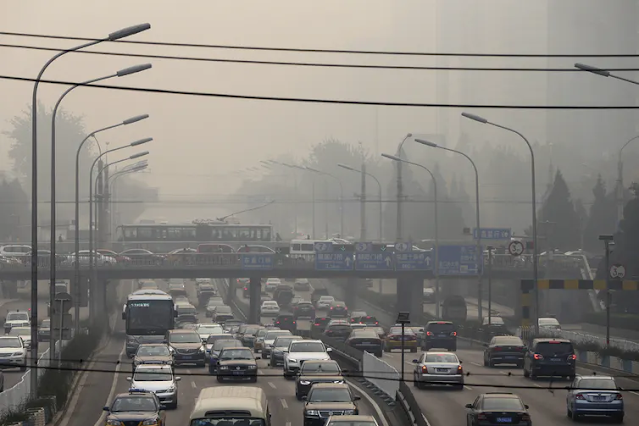
A transition to renewable energy would improve air pollution in China. Sam McNeil/AP

The global picture

It’s worth considering what factors may have motivated China’s announcement, beyond the desire to do good for the climate.

In recent years, China has been viewed with increasing hostility on the world stage, especially by Western nations. Some commentators have suggested China’s climate pledge is a bid to improve its global image.

The pledge also gives China the high ground over a major antagonist, the US, which under President Donald Trump has walked away from its international obligations on climate action. China’s pledge follows similar ones by the European Union, New Zealand, California and others. It sets an example for other developing nations to follow, and puts pressure on Australia to do the same.


Read more: South Korea's Green New Deal shows the world what a smart economic recovery looks like


The European Union has also been urging China to take stronger climate action. The fact Xi made the net-zero pledge at a United Nations meeting suggests it was largely targeted at an international, rather than Chinese, audience.

However, the international community will judge China’s pledge on how quickly it can implement specific, measurable short- and mid-term targets for net-zero emissions, and whether it has the policies in place to ensure the goal is delivered by 2060.

Much is resting on China’s next Five Year Plan – a policy blueprint created every five years to steer the economy towards various priorities. The latest plan, covering 2021–25, is being developed. It will be examined closely for measures such as phasing out coal and more ambitious targets for renewables.

Also key is whether the recent rebound of China’s carbon emissions – following a fall from 2013 to 2016 – can be reversed.


President Xi, left, has taken the high ground over the Trump-led US with its bold climate plan. AP

Wriggle room

The 2060 commitment is bold, but China may look to leave itself wriggle room in several ways.

First, Xi declared in his speech that China will “aim to” achieve carbon neutrality, leaving open the option his nation may not meet the target.

Second, the Paris Agreement states that developed nations should provide financial resources and technological support to help developing countries reduce their emissions. China may make its delivery of the pledge conditional on this support.

Third, China may seek to game the way carbon neutrality is measured – for example, by insisting it excludes carbon emissions “embodied” in imports and exports. This move is quite likely, given exports account for a significant share of China’s total greenhouse gas emissions.

So for the time being, the world is holding its applause for China’s commitment to carbon neutrality. Like every nation, China will be judged not on its climate promises, but on its delivery.

Most Recent Post

Man charged for borrowing rare Chinese manuscripts from UCLA library, returning fakes

  Suspect Jeffrey Ying allegedly travelled to China after checking works out using several aliases Agence France-Presse Published: 12:11pm, ...

Popular Posts - Last 30 days