The 1989 Tiananmen massacre and crackdown are set to be erased from Hong Kong school books, as Beijing seeks to crush the city’s pro-democracy movement
Hong Kong Watch responds to plans by Beijing to suppress information regarding the Tiananmen Square massacre in Hong Kong textbooks
20 August 2020
According to a report in The Times, the Chinese Communist Party has removed mention of the 1989 Tiananmen Square massacre from Hong Kong school textbooks submitted for government review.
Three out of five of the text books make no mention of the massacre itself, while the other two have removed significant details including the number of protestors who were killed and the motives behind their discontent.
This development follows the introduction of the National Security Law on June 30th, which requires national security education be introduced into the Hong Kong curriculum. Since the introduction of the law, the Chinese Government has set up a national security centre in Shenzhen for students and teachers who are deemed unpatriotic to be ‘re-educated’, banned the singing of protest anthems in the classroom, and encouraged universities to fire pro-democracy academics, including Benny Tai, one of the organisers of the Umbrella Movement protests in 2014.
Commenting on reports of the censorship of textbooks, Hong Kong Watch’s Chair and co-founder Benedict Rogers, said:
“This is a deeply disturbing development which signposts the death of academic freedom in Hong Kong. It is increasingly clear that the Chinese Communist Party plans not only to silence dissent on the streets but also in the classroom by censoring textbooks, purging academics, and sending students for patriotic ‘re-education’.
The international community must stand in defence of academic freedom in Hong Kong and act to prevent the further destruction of Hong Kong's autonomy and openness, which has already been so severely undermined by recent events. Hong Kong is rapidly coming under the direct control of the Chinese Communist Party, its surveillance state and draconian punishments, which threaten the future for students' freedom of intellectual inquiry and expression, and the free world must stand against that and with those who cherish Hong Kong's fundamental freedoms."
For the first time, Beijing leaves open the possibility of an extended military occupation after unification, adding to fears that Taiwanese would be subject to a “re-education” campaign.
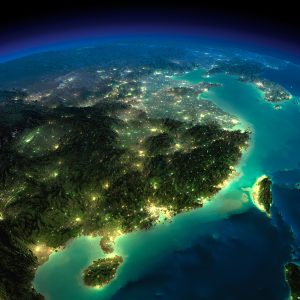
Amid the worst security crisis in the Taiwan Strait in over 20 years, China’s State Council has released a new white paper on “The Taiwan Question and China’s Reunification in the New Era.” The paper outlines, in detail, Beijing’s approach to Taiwan under the “new era” of Xi Jinping’s leadership, and serves as an update to previous white papers on Taiwan issued in 1993 and 2000.
The paper begins by underscoring China’s commitment to “Resolving the Taiwan question and realizing China’s complete reunification,” calling this goal “a shared aspiration of all the sons and daughters of the Chinese nation,” “indispensable for the realization of China’s rejuvenation,” and “a historic mission” of the Chinese Communist Party (CCP).
As justification for the CCP’s claim over Taiwan, the white paper includes a lengthy discussion of historical ties between China and Taiwan. In this telling of history, “Japan’s 50-year occupation of Taiwan epitomized” China’s period of “national humiliation” and is thus a historical wrong that must be righted. The white paper emphasizes that “The fact that we have not yet been reunified is a scar left by history on the Chinese nation.”
Importantly, though, the white paper also provides a realpolitik justification: “National reunification is the only way to avoid the risk of Taiwan being invaded and occupied again by foreign countries, to foil the attempts of external forces to contain China, and to safeguard the sovereignty, security, and development interests of our country.” Later, the white paper repeats accusations that the U.S. is “using Taiwan to contain China” and “undermine China’s development and progress.”
The white paper maintains China’s preference for “peaceful reunification,” which is identified as “the first choice of the [CCP] and the Chinese government.” However, as is long-standing CCP policy, the paper reiterates that China “will not renounce the use of force” in pursuing the goal of unification. It does attempt to reassure readers on that point by pledging that the “[u]se of force would be the last resort taken under compelling circumstances.”
In another point of consistency, the white paper maintains the “One Country, Two Systems” framework for a post-unification Taiwan, pledging that “Taiwan may continue its current social system and enjoy a high degree of autonomy in accordance with the law.” Yet the paper also repeats more recent assertions made in the Hong Kong context that “Two Systems is subordinate to and derives from One Country.” In Hong Kong that logic has been used to restrict free speech and limit political participation to vetted “patriots.”
Beijing seems aware of the arguments that its Hong Kong policy since 2019 has destroyed any chance of Taiwan accepting a similar model for unification. However, rather than providing reassurances that Taiwan would be treated different, the white paper instead flatly denies that there was any problem in its handling of Hong Kong. “The practice of One Country, Two Systems has been a resounding success” in Hong Kong, where “Order was restored and prosperity returned” thanks to intervention from the central government, the paper claims.
As Crisis Group analyst Amanda Hsiao pointed out on Twitter, the 2022 white paper represents a diluting of previous descriptions of “One Country, Two Systems,” which included more detailed commitments about Taiwan’s autonomy. The 1993 white paper said that Taiwan would maintain “administrative, legislative, independent judicial, final adjudication rights” as well as “autonomy over party, govt, mil, econ, financial matters,” Hsiao tweeted. Similarly, both the 1993 and 2000 white papers on Taiwan specifically stated that China would “not send troops or administrative personnel to be stationed in Taiwan” following unification. That pledge is conspicuously absent in the latest version.
The 2022 white paper does pledge that “Taiwan’s social system and its way of life will be fully respected, and the private property, religious beliefs, and lawful rights and interests of the people in Taiwan will be fully protected” – but with the all-important disclaimer that this is only possible “Provided that China’s sovereignty, security and development interests are guaranteed.” In other words, “respect” for Taiwan’s “way of life” is subordinated to security interests as defined by the CCP. The guarantee of rights in particular seems limited to “All Taiwan compatriots who support reunification of the country and rejuvenation of the nation,” whom China says “will be the masters of the region.”
Left largely unspoken is the fate of those Taiwanese who do not “support reunification.” China has already taken legal action against “diehard separatists” on Taiwan, including several members of the ruling Democratic Progression Party.“The Chinese mainland will seek criminal responsibility for them, valid for life,” the Taiwan Affairs Office said while making the announcement. Indeed, there have been clear signals that any unification scenario on Taiwan would involve prosecution and jail time for Taiwan’s current leadership. That is the latent threat behind China’s repeated accusations that the DPP is “separatist” or “secessionist” – both crimes under the National Security Law adopted in 2015.
The 2022 white paper notes explicitly that “[m]oves to separate Taiwan from China represent the serious crime of secession” before saying that “The DPP authorities have adopted a separatist stance, and colluded with external forces in successive provocative actions designed to divide the country.”
In that sense, the white paper will only add to concerns raised by China’s ambassador to France, Lu Shaye. The diplomat recently made headlines for casually suggesting that China “will do re-education” in Taiwan “after reunification.”
Those comments are particularly alarming given the Chinese government’s massive re-education campaign in Xinjiang, which has involved involuntarily (and extrajudicially) detaining hundreds of thousands of Uyghurs, Kazakhs, and other Muslim minority group members. Survivors report being forced to undergo long “education” sessions praising the Chinese Communist Party and denouncing themselves for being overly religious or questioning the CCP’s benevolence.
Despite the controversy, Ambassador Lu doubled down on his comments in a second interview, claiming that “the Taiwan authorities” have “effectively indoctrinated and intoxicated” the population through “desinicization” policies.
“It’s necessary to reeducate [Taiwan’s population] to eliminate the separatist thought and secessionist theory,” he added.
It’s clear from his follow-up comments that Lu did not misspeak or misrepresent official thinking on “re-education” in Taiwan. Indeed, Lu’s comments have an indirect echo in the white paper’s pledge to “to increase our compatriots’ knowledge of the mainland and reduce these misconceptions and misgivings, in order to help them resist the manipulation of separatists.”
The white paper openly acknowledges that “[t]he long-standing political differences between the two sides are the fundamental obstacles to the steady improvement of cross-Straits relations.” To solve that issue, it suggests “flexible forms of consultation and discussion” to gradually reach consensus. But it is hard to reconcile Beijing’s promise that “We are ready to engage with all parties, groups, or individuals in Taiwan in a broad exchange of views aimed at resolving the political differences” with its flat refusal to engage in cross-strait talks with the DPP government.
China’s willingness to engage comes with the explicit caveat that such talks must be “based on the one-China principle and the 1992 Consensus” – which would rule out a large part of Taiwan’s population. President Tsai Ing-wen of the DPP has consistently refused to embrace the 1992 Consensus, despite repeated insistence from Beijing – and she won re-election in 2020 by a landslide.
The white paper maintains the stance that time is on China’s side when it comes to Taiwan. The rise of China’s economic and military might is seen as “a key factor” in “the realization of complete national reunification” – both as a deterrent to “separatist activities” on Taiwan and as a positive force attracting more Taiwanese to China.
“[T]he overall strength and international influence of the mainland will continue to increase, and its influence over and appeal to Taiwan society will keep growing,” the white paper declares. While the hard deterrent factor may indeed be growing, China’s “appeal to Taiwan society” has nosedived under Xi’s leadership.
Repeated references to politically-motivated prosecutions and “re-education” in a post-unification scenario are only adding to Taiwanese resistance. Taken to its extreme, this sentiment is summed up in a phrase often seen on Chinese social media: “留岛不留人” (“keep the island, don’t keep the people”).
For Taiwan’s 23 million people, that’s a chilling prospect, and one the white paper does little to assuage.
AUTHORS
STAFF AUTHOR
Shannon Tiezzi
Shannon Tiezzi is Editor-in-Chief at The Diplomat.
Which Asian Countries Support China in the Taiwan Strait Crisis – and Which Don’t?
BySHANNON TIEZZI
An analysis of foreign ministry statements from across the Asia-Pacific region reveals which countries are hewing close to China's line, which lean toward the U.S., and which are staying neutral.
AUGUST 10, 2022
Will We See North Korean Forces in Eastern Ukraine?
By A.B. ABRAMS
How a military commitment by Pyongyang could materialize.
AUGUST 09, 2022
The War in Ukraine: Lessons for Mongolia
By TUVSHINZAYA GANTULGA
The war reminded Mongolians that they now have no choice but to prepare for all eventualities, because no other country will step in to save them.
The Pillar of Shame statue at the University of Hong Kong. (Miguel Candela / Anadolu Agency / Getty)
Under the relentless crush of Beijing, the courtrooms of Hong Kong have become some of the few venues safe for protest in the city. Defendants accused or convicted of political crimes have turned otherwise banal hearings and bail applications into opportunities to voice dissent and challenge the arduous legal process.
In mid-November Lee Cheuk-yan, a veteran prodemocracy figure, used his mitigation hearing, where defendants can address the court in hopes of obtaining a lesser sentence, to deliver a stirring and defiant speech. He recounted his memories of the 1989 Tiananmen Square massacre, exalted Hong Kongers for never forgetting the tragedy, and excoriated city officials for curtailing basic freedoms. Lee, who for decades helped organize the annual vigil held in Hong Kong’s Victoria Park to mourn the crackdown, choked up as he addressed the courtroom.
“I want to thank the people of Hong Kong who kept the promise of 1989,” he said. “In the face of suppression, they persisted, honoring the memory of the June Fourth Massacre in Victoria Park with their candlelight. Your Honor, the people of Hong Kong who took part needed no person or organization to incite them. If there was a provocateur, it is the regime that fired at its own people.
“For 31 years,” he continued, “our unyielding memory and unrelenting conscience drove us to keep the promise, persist in honoring their memory, demand truth and accountability, and carry on the pursuit of freedom and democracy of the Chinese people.”
Yet the unyielding memory of which Lee spoke has come under sustained attack this year, part of a broader effort by Beijing, its loyalists in the city, and an ever-growing list of collaborators to erase Tiananmen from public memory. Weaponizing pandemic protocols and vague threats of possible national-security violations, authorities have canceled the once-annual vigil for the past two years. Prominent activists, Lee included, who took part in prior gatherings have been arrested. A museum dedicated to Tiananmen was abruptly closed. Its contents were hauled away by police as evidence against members of the Hong Kong Alliance in Support of Patriotic Democratic Movements of China, which organized the vigil and ran the museum. The group disbanded as a result. Unsatisfied with residents being only physically barred from viewing its displays, Hong Kong officials blocked access to the museum’s website as well. An investigation by Hong Kong Free Press found that dozens of books on the topic of Tiananmen have disappeared from the city’s libraries.
One monument that has escaped erasure, just barely and perhaps only briefly, is also the city’s most prominent dedicated to Tiananmen, the Pillar of Shame statue. An orange cenotaph of pained, contorted bodies constructed as a memorial to protesters killed in the massacre, it was put on permanent public display to serve, as its creator, Jen Galschiøt, wrote in 1997, as a test of the authorities’ “guarantees for human rights and freedom of expression in Hong Kong.” The pillar was staged at the University of Hong Kong, the city’s oldest and most prestigious institute of higher learning, in 1998, after being displayed at other campuses.
For more than two decades, the city passed Galschiøt’s assessment. Students and activists gathered every spring to ceremonially wash the structure, which across its base reads the old cannot kill the young forever. The ritual was the first in a sequence of events held every year in Hong Kong to mark the anniversary of the Tiananmen massacre culminating with the candlelight vigil. Now, though, the pillar is caught in a sort of purgatory—unwanted by the university, which has tried to remove it but faced fierce resistance, and Galschiøt’s attempts to retrieve it have gone unanswered. The awkward situation is representative of the city itself, not entirely subjugated by Beijing but not as free, open, or vibrant as it once was.
“Many things in the past in Hong Kong that were treated as normal and being a kind of symbol that Hong Kong is still enjoying freedom and a high degree of autonomy … are now facing challenges,” Richard Tsoi, the secretary of the now-dissolved alliance, told me.
The attempts at removing the horrors of Tiananmen from the popular consciousness follow a full-scale effort to rewrite more recent history in Hong Kong. Officials have consistently attempted to twist the narrative of the city’s protest movement, portraying the demonstrations as organized by a small, violent group, conspicuously omitting the occasions when more than 1 million people marched peacefully. The reasons behind the protests have been obfuscated as well. Blame, officials now say, lies with the United States and astronomical housing prices, not the continued erosion of freedoms and broken promises from Beijing. The police have taken part in some of the most blatant acts of historical revisionism, hoping that residents will forget violent actions they witnessed with their own eyes.
“The authorities … are working overtime to teach us what is the official position,” John P. Burns, an emeritus professor at HKU and the former dean of its faculty of social sciences, who has written in support of keeping the statue, told me. “Making Hong Kong more like the rest of China, that is the name of the game.”
In 1989, residents of Hong Kong were horrified by Beijing crushing the protests at Tiananmen Square. Hundreds of thousands of people marched in what The New York Times described as a “long ribbon of humanity” that stretched through the city’s streets. The outrage extended beyond those who supported full democracy. Many who signed published petitions denouncing Beijing’s actions and who took part in demonstrations are pro-Beijing stalwarts today. David Ford, then the territory’s chief secretary, wrote in a letter to the city’s vaunted civil service that residents felt a “profound feeling of shock and grief,” at what had occurred. Authorities in Beijing believed then that the city’s protests would be a one-off event, according to a former Hong Kong government official who requested anonymity because of the sensitivity of the topic, and that the territory would revert to being a purely “economic city,” whose inhabitants were uninterested in politics. This hypothesis—like many made by Beijing about Hong Kong—was totally incorrect. Instead, Hong Kong fostered a lively tradition of protests and demonstrations.
Galschiøt’s two-ton sculpture was unveiled in downtown Victoria Park eight years after the massacre and 28 days before the city’s July 1, 1997, handover to China. It was eventually relocated to HKU’s campus, and activists painted it bright orange in 2008. The artist wrote at the time of its installation that “no ban on the sculpture can diminish its symbolic value. No attack, not even the destruction of the sculpture can obliterate the symbolism of the Pillar of Shame.” One of his tenets is now being tested: “No authority will ever succeed in preventing the mounting of the Pillar of Shame in Hong Kong.”
Following the disbandment of the alliance, HKU tried to have the sculpture removed, enlisting the global law firm Mayer Brown to help. In a statement to news outlets, Lisa Sachdev, a spokesperson for the firm, said that Mayer Brown was “asked to provide a specific service on a real-estate matter for our long-term client, the University of Hong Kong.” She continued: “Our role as outside counsel is to help our clients understand and comply with current law. Our legal advice is not intended as commentary on current or historical events.” (The firm regularly comments on U.S. news events, though, including the death of George Floyd and voting-rights issues, and Mayer Brown later relented after its involvement drew considerable press and condemnation, saying, “Going forward, Mayer Brown will not be representing its long-time client in this matter.”)
Galschiøt hired his own lawyers in an effort to reclaim the statue himself. He said in an open letter this month that he would travel to Hong Kong to remove the statue but would need assurances from authorities that he wouldn’t face any legal issues. This seems highly unlikely because Galschiøt has been barred from entering Hong Kong on two previous occasions. He added that HKU has not responded to his inquiries. The university did not address the contents of Galschiøt’s letter and, when asked for comment, said only that it was working to resolve the issue in a “legal and reasonable manner.”
HKU and other universities in the territory have quickly moved to submit to Hong Kong’s new, more authoritarian political order. Maintenance workers at the university removed colorful walls of protest art, and the administration cut ties with the students’ union and barred some of its members from campus because of a union motion expressing sympathy for the “sacrifice” of a man who had killed himself after stabbing a police officer in July. The students later apologized and retracted the statement, but four were arrested under the national-security law and charged with advocating terrorism.
Burns told me that by moving to remove the sculpture, the university is “acknowledging its dependence on the mainland and on authorities in the mainland for the things the university wants.” One professor, who asked not to be named for fear of repercussions, told me that the threat of removal was part of “a wholesale embrace of the wider crackdown that we have seen in the media, civil society, and the general public,” and that the university was in “free fall into a totalitarian-friendly tertiary institution.” Another professor, who also spoke on condition of anonymity, told me about recently going out of their way to walk by the statue with colleagues to confirm that it was still standing. “I find campus very depressing,” the academic said, “because of everything that is no longer there.”
In court, Lee said that even while in jail earlier this year after being convicted for his role in a 2019 protest, he continued to uphold the memory of June Fourth by fasting and, without access to a candle, lighting a single match.
“I am proud to be a Hong Konger,” he said. “For 32 years, we have marched together in the fight to bring justice to those who put their lives on the line on 4 June 1989, and in the struggle for democracy.”
In the end, he told the judge that he was at peace with any sentence that might be handed down: “If I must go to jail to affirm my will,” he said, “then so be it.”