Showing posts with label Freedom. Show all posts

Tuesday, 31 October 2023

China’s billionaires looking to move their cash, and themselves, out | China | The Guardian

 Crackdowns on financiers, roiling political climate and slowing economy under Xi Jinping has many seeking exit plans

 Senior China correspondent   @amyhawk_

Mon 30 Oct 2023 23.10 GMT
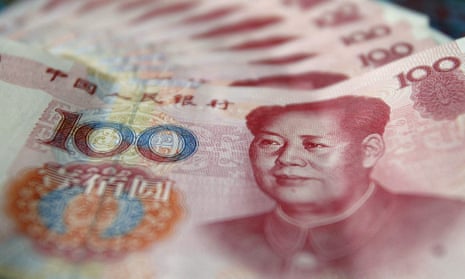
Chinese 100 yuan notes

Chinese 100 yuan notes. Of the world’s estimated 2,640 billionaires, at least 562 are thought to be in China, down from 607 last year, according to Forbes. Photograph: Frederic J Brown/AFP/Getty Images

Billionaires are notoriously difficult to track. It’s no surprise – the easier they and their assets are to find, the easier they are to tax. But by all accounts, the number of uber-wealthy people in China is in decline. Of the world’s estimated 2,640 billionaires, at least 562 are thought to be in China, according to Forbes, down from 607 last year.

With crackdowns on financiers and a roiling political climate, many of China’s rich people are looking to move their money, and themselves, out of the country.

China’s elites have long looked for ways to take their money overseas. Officially, individuals are only allowed to transfer $50,000 (£41,000) out of the country each year. But in practice wealthy people have a range of official and unofficial ways of shifting their funds, whether that is through money exchanges in Hong Kong, where capital controls do not apply, or funnelling cash into overseas businesses.

In August, police in Shanghai arrested five people who worked at an immigration consultancy, including the company’s boss, on suspicion of facilitating illegal foreign exchange transactions in excess of 100m yuan (£11m). In a state media report, the police said “illegal foreign exchange trading seriously disrupts the order of the country’s financial market”.

Before the pandemic, about $150bn flowed out of China each year via tourists taking their funds overseas, according to estimates from the Natixis, a bank. Although international travel has not returned to pre-pandemic levels, high US interest rates and a weak yuan are a strong incentive for cash-rich Chinese to move their money out of the country, economists say.

In the first half of 2023, there was a shortfall of $19.5bn in China’s balance of payments data, which economists use as an indicator of capital flight, although the true value of money unofficially leaving the economy may be higher.

Alicia Garcia Herrero, the chief economist for Asia Pacific at Natixis, says that “a high level of uncertainty about future economic policies and business opportunities in China” also encourages people to take their savings out of the country.

In 2021, Xi Jinping, China’s leader, resurrected a call for “common prosperity”, which was widely interpreted as a call for tycoons to share their wealth more widely. That year Alibaba, the tech company founded by Jack Ma, once one of China’s most high-profile entrepreneurs, donated 100bn yuan to the cause.

Xi is thought to be particularly mistrustful of China’s financial elites since more than $600bn fled the economy in 2015, after a surprise devaluation of the yuan. Since then Beijing has sought to tighten its grip on China’s wealth – and the people who have most of it. The Chinese Communist party (CCP) was particularly spooked when billionaires like Ma started to openly question China’s regulators (after Ma made his comments in 2020, he disappeared from public view for several years).

The “common prosperity” slogan has faded from view as Beijing seeks to promote China as a place that is open for business after three years of zero-Covid. But the pressure on business elites has not relented, and now that borders are open many are looking at exit plans. Last month Hui Ka Yan, the founder of the embattled property developer Evergrande and once Asia’s richest man, was arrested for unspecified crimes. Bao Fan, a renowned investment banker once seen as a kingmaker in the world of technology deals, was detained in February and has not been seen since. Other executives have been placed under exit bans.

The environment now is a marked shift from the 1990s and early 2000s, when China was preparing for entry into the World Trade Organization in 2001 and introducing a host of market reforms that allowed China’s entrepreneurs to amass huge wealth. That was an era in which money-making could come before anything else. But under Xi, who has consolidated his personal power more than any leader since Mao, the emphasis has returned to political control, rather than economic freedom.

“The arbitrary punishment being meted out to the wealthy class is unlike anything we have seen since the 1990s,” says Victor Shih, a professor of China’s political economy at the University of California San Diego. “This has prompted many in that class to think about diversifying out of China.”

There are increasing signs of wealthy Chinese decamping to nearby hotspots. More than 10% of luxury condos sold in Singapore in the first three months of this year went to mainland Chinese buyers, up from about 5% in the first quarter of 2022, according to data from OrangeTee, a real estate company. There are now about 1,100 single-family offices – firms set up to manage the wealth of a specific family – in Singapore, up from 50 in 2018, with around half of that boom estimated to come from Chinese clients.

Wealthy Chinese are also looking for ways to move themselves as well as their money out of China. About 13,500 high-net-worth individuals are expected to leave China this year, up from 10,800 last year, according to Henley & Partners, an immigration consultancy.

“The Chinese government plays for keeps, as Jack Ma and numerous others have discovered,” says David Lesperance, an independent consultant who helps ultra-high-net worth people to relocate. “So we have to look at how to protect your wealth and your wellbeing”.

Lesperance says he receives an increasing number of inquiries from businesspeople who want to move their whole teams out of China, not just their families. As well as the political risks, entrepreneurs no longer feel that China is a land of opportunity, he says. In 2017, China was minting two new billionaires a week. Now, economic growth has slowed.

“Before they would stay because they were making a ton of money in China,” says Lesperance. “Now they’re not making as much money. So they’re like, why am I staying again? Why am I risking this?”

 Additional research by Chi Hui Lin

https://www.theguardian.com/world/2023/oct/31/chinas-billionaires-looking-to-move-their-cash-and-themselves-out

Saturday, 25 March 2023

New Zealand raises concerns with China on South China Sea, Taiwan

 New Zealand ... expressed concerns over the South China Sea and tensions in the Taiwan Strait ...

New Zealand Foreign Minister Nanaia Mahuta speaks during a session of the UN Human Rights Council, which voted to hold an urgent debate about Russia's deadly invasion of Ukraine at Kyiv's request, amid widespread international condemnation of Moscow's attack, in Geneva, Switzerland February 28, 2022. Fabrice Coffrini/Pool via REUTERS


SYDNEY, March 25 (Reuters) - New Zealand Foreign Affairs Minister Nanaia Mahuta said on Saturday she had expressed concerns over the South China Sea and tensions in the Taiwan Strait during talks with her Chinese counterpart at the end of a visit to Beijing.

Mahuta also said in a statement she "noted New Zealand’s deep concerns regarding the human rights situation in Xinjiang and the erosion of rights and freedoms in Hong Kong", during her meeting with Chinese Foreign Affairs Minister Qin Gang.

"Nanaia Mahuta expressed concerns over developments in the South China Sea and increasing tensions in the Taiwan Strait," the foreign minister's statement said.Mahuta said she reiterated New Zealand’s condemnation of Russia’s invasion of Ukraine. China is a key ally of Russia and both have criticised the U.S. and NATO for undermining global stability.

Mahuta arrived in China on Wednesday for the four-day trip, the first by a New Zealand minister since 2019, and also met China's top diplomat Wang Yi as well as business and women leaders.

Wang told Mahuta that China and New Zealand had always respected and trusted each other, according to a statement by the Chinese foreign ministry.

New Zealand has long been seen as the moderate voice on China in the Five Eyes intelligence-sharing alliance also involving the United States, Australia, Britain, and Canada. But New Zealand's tone on security and China's growing presence in the South Pacific toughened in the past year after China and the Solomon Islands struck a security pact.

New Zealand has consistently expressed concerns about the potential militarisation of the Pacific, amid China's military buildup in the South China Sea.

China views democratically governed Taiwan as its own territory and has never renounced the option of using force to take the island under its control, and claims a large part of the South China Sea.

Mahuta said the countries looked forward to resuming in-person dialogue on a range of issues following a gap of several years in face-to-face contacts.

She invited Qin to visit New Zealand, and also flagged a potential visit by New Zealand Prime Minister Chris Hipkins to China, perhaps this year. Hipkins became prime minister in January after Jacinda Ardern resigned.

Reporting by Sam McKeith; Editing by Stephen Coates

https://www.reuters.com/world/asia-pacific/new-zealand-raises-concerns-with-china-south-china-sea-taiwan-2023-03-25/

Monday, 15 August 2022

Tiananmen massacre ‘erased from Hong Kong textbooks’

Suppression of 1989 events is latest crackdown on pro-democracy movement


The 1989 Tiananmen massacre and crackdown are set to be erased from Hong Kong school books, as Beijing seeks to crush the city’s pro-democracy movement


https://www.thetimes.co.uk/article/tiananmen-massacre-erased-from-hong-kong-textbooks-j6lmsjnch


- - - - - - -


Hong Kong Watch responds to plans by Beijing to suppress information regarding the Tiananmen Square massacre in Hong Kong textbooks

20 August 2020

According to a report in The Times, the Chinese Communist Party has removed mention of the 1989 Tiananmen Square massacre from Hong Kong school textbooks submitted for government review.

Three out of five of the text books make no mention of the massacre itself, while the other two have removed significant details including the number of protestors who were killed and the motives behind their discontent.

This development follows the introduction of the National Security Law on June 30th, which requires national security education be introduced into the Hong Kong curriculum. Since the introduction of the law, the Chinese Government has set up a national security centre in Shenzhen for students and teachers who are deemed unpatriotic to be ‘re-educated’, banned the singing of protest anthems in the classroom, and encouraged universities to fire pro-democracy academics, including Benny Tai, one of the organisers of the Umbrella Movement protests in 2014.

Commenting on reports of the censorship of textbooks, Hong Kong Watch’s Chair and co-founder Benedict Rogers, said:

“This is a deeply disturbing development which signposts the death of academic freedom in Hong Kong. It is increasingly clear that the Chinese Communist Party plans not only to silence dissent on the streets but also in the classroom by censoring textbooks, purging academics, and sending students for patriotic ‘re-education’.

The international community must stand in defence of academic freedom in Hong Kong and act to prevent the further destruction of Hong Kong's autonomy and openness, which has already been so severely undermined by recent events. Hong Kong is rapidly coming under the direct control of the Chinese Communist Party, its surveillance state and draconian punishments, which threaten the future for students' freedom of intellectual inquiry and expression, and the free world must stand against that and with those who cherish Hong Kong's fundamental freedoms."

For further information:

https://www.thetimes.co.uk/edition/world/tiananmen-massacre-erased-from-hong-kong-textbooks-j6lmsjnch

https://www.hongkongwatch.org/all-posts/2020/8/12/briefing-developments-in-hong-kong-under-the-national-security-law

Source:


Others:

https://arisechina.blogspot.com/2022/05/tiananmen-masses-axed-as-crackdown.html

https://arisechina.blogspot.com/2022/08/tiananmen-massacre-erased-from-hong.html

https://arisechina.blogspot.com/2021/12/renowned-tiananmen-massacre-monument.html

https://arisechina.blogspot.com/2022/08/beijing-keeps-trying-to-rewrite-history.html

Thursday, 11 August 2022

China’s New White Paper Lays out Vision for Post ‘Reunification’ Taiwan MUST READ

 For the first time, Beijing leaves open the possibility of an extended military occupation after unification, adding to fears that Taiwanese would be subject to a “re-education” campaign.


China’s New White Paper Lays out Vision for Post ‘Reunification’ Taiwan
Credit: Depositphotos


Amid the worst security crisis in the Taiwan Strait in over 20 years, China’s State Council has released a new white paper on “The Taiwan Question and China’s Reunification in the New Era.” The paper outlines, in detail, Beijing’s approach to Taiwan under the “new era” of Xi Jinping’s leadership, and serves as an update to previous white papers on Taiwan issued in 1993 and 2000.

The paper begins by underscoring China’s commitment to “Resolving the Taiwan question and realizing China’s complete reunification,” calling this goal “a shared aspiration of all the sons and daughters of the Chinese nation,” “indispensable for the realization of China’s rejuvenation,” and “a historic mission” of the Chinese Communist Party (CCP).

As justification for the CCP’s claim over Taiwan, the white paper includes a lengthy discussion of historical ties between China and Taiwan. In this telling of history, “Japan’s 50-year occupation of Taiwan epitomized” China’s period of “national humiliation” and is thus a historical wrong that must be righted. The white paper emphasizes that “The fact that we have not yet been reunified is a scar left by history on the Chinese nation.”

Importantly, though, the white paper also provides a realpolitik justification: “National reunification is the only way to avoid the risk of Taiwan being invaded and occupied again by foreign countries, to foil the attempts of external forces to contain China, and to safeguard the sovereignty, security, and development interests of our country.” Later, the white paper repeats accusations that the U.S. is “using Taiwan to contain China” and “undermine China’s development and progress.”

The white paper maintains China’s preference for “peaceful reunification,” which is identified as “the first choice of the [CCP] and the Chinese government.” However, as is long-standing CCP policy, the paper reiterates that China “will not renounce the use of force” in pursuing the goal of unification. It does attempt to reassure readers on that point by pledging that the “[u]se of force would be the last resort taken under compelling circumstances.”

Enjoying this article? Click here to subscribe for full access. Just $5 a month.

In another point of consistency, the white paper maintains the “One Country, Two Systems” framework for a post-unification Taiwan, pledging that “Taiwan may continue its current social system and enjoy a high degree of autonomy in accordance with the law.” Yet the paper also repeats more recent assertions made in the Hong Kong context that “Two Systems is subordinate to and derives from One Country.” In Hong Kong that logic has been used to restrict free speech and limit political participation to vetted “patriots.”

Beijing seems aware of the arguments that its Hong Kong policy since 2019 has destroyed any chance of Taiwan accepting a similar model for unification. However, rather than providing reassurances that Taiwan would be treated different, the white paper instead flatly denies that there was any problem in its handling of Hong Kong. “The practice of One Country, Two Systems has been a resounding success” in Hong Kong, where “Order was restored and prosperity returned” thanks to intervention from the central government, the paper claims.

As Crisis Group analyst Amanda Hsiao pointed out on Twitter, the 2022 white paper represents a diluting of previous descriptions of “One Country, Two Systems,” which included more detailed commitments about Taiwan’s autonomy. The 1993 white paper said that Taiwan would maintain “administrative, legislative, independent judicial, final adjudication rights” as well as “autonomy over party, govt, mil, econ, financial matters,” Hsiao tweeted. Similarly, both the 1993 and 2000 white papers on Taiwan specifically stated that China would “not send troops or administrative personnel to be stationed in Taiwan” following unification. That pledge is conspicuously absent in the latest version.

The 2022 white paper does pledge that “Taiwan’s social system and its way of life will be fully respected, and the private property, religious beliefs, and lawful rights and interests of the people in Taiwan will be fully protected” – but with the all-important disclaimer that this is only possible “Provided that China’s sovereignty, security and development interests are guaranteed.” In other words, “respect” for Taiwan’s “way of life” is subordinated to security interests as defined by the CCP. The guarantee of rights in particular seems limited to “All Taiwan compatriots who support reunification of the country and rejuvenation of the nation,” whom China says “will be the masters of the region.”

Left largely unspoken is the fate of those Taiwanese who do not “support reunification.” China has already taken legal action against “diehard separatists” on Taiwan, including several members of the ruling Democratic Progression Party. “The Chinese mainland will seek criminal responsibility for them, valid for life,” the Taiwan Affairs Office said while making the announcement. Indeed, there have been clear signals that any unification scenario on Taiwan would involve prosecution and jail time for Taiwan’s current leadership. That is the latent threat behind China’s repeated accusations that the DPP is “separatist” or “secessionist” – both crimes under the National Security Law adopted in 2015.

The 2022 white paper notes explicitly that “[m]oves to separate Taiwan from China represent the serious crime of secession” before saying that “The DPP authorities have adopted a separatist stance, and colluded with external forces in successive provocative actions designed to divide the country.”

In that sense, the white paper will only add to concerns raised by China’s ambassador to France, Lu Shaye. The diplomat recently made headlines for casually suggesting that China “will do re-education” in Taiwan “after reunification.”

Those comments are particularly alarming given the Chinese government’s massive re-education campaign in Xinjiang, which has involved involuntarily (and extrajudicially) detaining hundreds of thousands of Uyghurs, Kazakhs, and other Muslim minority group members. Survivors report being forced to undergo long “education” sessions praising the Chinese Communist Party and denouncing themselves for being overly religious or questioning the CCP’s benevolence.

Despite the controversy, Ambassador Lu doubled down on his comments in a second interview, claiming that “the Taiwan authorities” have “effectively indoctrinated and intoxicated” the population through “desinicization” policies.

“It’s necessary to reeducate [Taiwan’s population] to eliminate the separatist thought and secessionist theory,” he added.

Enjoying this article? Click here to subscribe for full access. Just $5 a month.

It’s clear from his follow-up comments that Lu did not misspeak or misrepresent official thinking on “re-education” in Taiwan. Indeed, Lu’s comments have an indirect echo in the white paper’s pledge to “to increase our compatriots’ knowledge of the mainland and reduce these misconceptions and misgivings, in order to help them resist the manipulation of separatists.”

The white paper openly acknowledges that “[t]he long-standing political differences between the two sides are the fundamental obstacles to the steady improvement of cross-Straits relations.” To solve that issue, it suggests “flexible forms of consultation and discussion” to gradually reach consensus. But it is hard to reconcile Beijing’s promise that “We are ready to engage with all parties, groups, or individuals in Taiwan in a broad exchange of views aimed at resolving the political differences” with its flat refusal to engage in cross-strait talks with the DPP government.

China’s willingness to engage comes with the explicit caveat that such talks must be “based on the one-China principle and the 1992 Consensus” – which would rule out a large part of Taiwan’s population. President Tsai Ing-wen of the DPP has consistently refused to embrace the 1992 Consensus, despite repeated insistence from Beijing – and she won re-election in 2020 by a landslide.

The white paper maintains the stance that time is on China’s side when it comes to Taiwan. The rise of China’s economic and military might is seen as “a key factor” in “the realization of complete national reunification” – both as a deterrent to “separatist activities” on Taiwan and as a positive force attracting more Taiwanese to China.

“[T]he overall strength and international influence of the mainland will continue to increase, and its influence over and appeal to Taiwan society will keep growing,” the white paper declares. While the hard deterrent factor may indeed be growing, China’s “appeal to Taiwan society” has nosedived under Xi’s leadership.

Repeated references to politically-motivated prosecutions and “re-education” in a post-unification scenario are only adding to Taiwanese resistance. Taken to its extreme, this sentiment is summed up in a phrase often seen on Chinese social media: “留岛不留人” (“keep the island, don’t keep the people”).

For Taiwan’s 23 million people, that’s a chilling prospect, and one the white paper does little to assuage.

AUTHORS
Shannon Tiezzi
STAFF AUTHOR

Shannon Tiezzi

Shannon Tiezzi is Editor-in-Chief at The Diplomat.

https://thediplomat.com/2022/08/chinas-new-white-paper-lays-out-vision-for-post-reunification-taiwan/


RELATED

Hong Kong National Security Law: The View From Taiwan
JULY 02, 2020

Hong Kong National Security Law: The View From Taiwan

By T.Y. WANG
China’s new national security legislation for Hong Kong will only harden Taiwan citizens’ determination to resist Beijing’s unification offer.

Where Does China’s ‘One Country, Two Systems’ Stand in 2020?
FEBRUARY 13, 2020

Where Does China’s ‘One Country, Two Systems’ Stand in 2020?

By DEREK GROSSMAN
The framework for governing Hong Kong and Macau – and, Beijing hopes, one day Taiwan – is battered but unbroken.

Is This the End of the 1992 Consensus?
JANUARY 30, 2020

Is This the End of the 1992 Consensus?

By ZIHAO LIU

The 1992 Consensus is being challenged by each of the three major forces shaping cross-strait relations: the DPP, the KMT, and Beijing.

TOP STORIES

Which Asian Countries Support China in the Taiwan Strait Crisis – and Which Don’t?
AUGUST 13, 2022

Which Asian Countries Support China in the Taiwan Strait Crisis – and Which Don’t?

By SHANNON TIEZZI
An analysis of foreign ministry statements from across the Asia-Pacific region reveals which countries are hewing close to China's line, which lean toward the U.S., and which are staying neutral.

Will We See North Korean Forces in Eastern Ukraine?
AUGUST 10, 2022

Will We See North Korean Forces in Eastern Ukraine?

By A.B. ABRAMS
How a military commitment by Pyongyang could materialize.

The War in Ukraine: Lessons for Mongolia
AUGUST 09, 2022

The War in Ukraine: Lessons for Mongolia

By TUVSHINZAYA GANTULGA

The war reminded Mongolians that they now have no choice but to prepare for all eventualities, because no other country will step in to save them.


Most Recent Post

Man charged for borrowing rare Chinese manuscripts from UCLA library, returning fakes

  Suspect Jeffrey Ying allegedly travelled to China after checking works out using several aliases Agence France-Presse Published: 12:11pm, ...

Popular Posts - Last 30 days