Brazil has become the second BRICS nation after India to reject China's Belt and Road Initiative, citing concerns over potential debt traps and seeking alternative collaborations with Chinese investors.
By K J M Varma, Beijing Oct 29, 2024 10:46
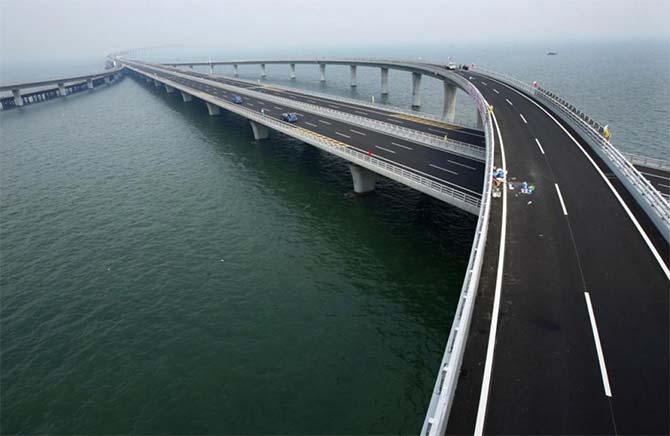
Beijing, Oct 29 (PTI) In a major setback to China's BRI, Brazil has decided against joining Beijing's multi-billion-dollar initiative becoming the second country after India in the BRICS bloc not to endorse the mega project.
Brazil, headed by President Lula da Silva, will not join the Belt and Road Initiative (BRI) and instead seek alternative ways to collaborate with Chinese investors, Celso Amorim, special presidential adviser for international affairs, said on Monday.
Brazil wants to “take the relationship with China to a new level, without having to sign an accession contract”, he told Brazilian newspaper O Globo.
“We are not entering into a treaty,” Amorim said, explaining that Brazil does not want to take Chinese infrastructure and trade projects as “an insurance policy”.
According to Amorim, the aim is to use some of the Belt and Road framework to find “synergy” between Brazilian infrastructure projects and the investment funds associated with the initiative, without necessarily formally joining the group, the Hong Kong-based South China Morning Post quoted him as saying.
The Chinese “call it the belt [and road] … and they can give whatever names they want, but what matters is that there are projects that Brazil has defined as a priority and that may or may not be accepted [by Beijing]”, Amorim said.
The decision contradicts China's plans to make Brazil's joining of the initiative a centrepiece of Chinese President Xi Jinping's state visit to Brasilia on November 20, the Post reported.
Officials from Brazil's economy and foreign affairs ministries recently voiced opposition to the idea, it said.
The prevailing opinion in Brazil was that joining China's flagship infrastructure project would not only fail to bring any tangible benefits for Brazil in the short term but could also make relations with a potential Trump administration more difficult.
Last week, Amorim and the president's chief of staff Rui Costa travelled to Beijing to discuss the initiative. According to sources, they returned “unconvinced and unimpressed” by China's offers, the Post reported.
Lula did not attend this month's BRICS summit at Kazan due to an injury and his close associate and former Brazilian President Dilma Rousseff currently heads the Shanghai-based BRICS New Development Bank (NDB).
BRICS originally consisted of Brazil, Russia, India, China and South Africa. Egypt, Ethiopia, Iran, Saudi Arabia, and the United Arab Emirates have been admitted as new members.
Brazil will be the second member of the BRICS after India not to endorse the BRI.
India was the first country to voice reservations and stood steadfast in its opposition to BRI, a pet project of Chinese President Xi Jinping to further the global influence of China with investments to build infrastructure projects.
India has protested against China for building the USD 60 billion China-Pakistan Economic Corridor (CPEC), stated to be the flagship project of the BRI through the Pakistan-occupied Kashmir (POK) in violation of its sovereignty.
India is also vocal about its criticism of BRI projects stating they should be based on universally recognised international norms, good governance, and the rule of law and follow principles of openness, transparency and financial sustainability.
China subsequently faced criticism that the BRI projects in smaller countries like Sri Lanka, especially for its take-over of the Hambantota for a 99-year lease as a debt swap turned out to be debt traps resulting in a deep financial crisis in both smaller countries.
Indian diplomats here point out that besides staying away from three annual high-profile meetings of the BRI in Beijing in the past few years, India continued to voice its opposition to it both in the BRICS and Shanghai Cooperation Organisation, (SCO).
US Trade Representative Katherine Tai recently urged Brazil to view the proposal to join BRI through an “objective lens” and “risk management".
The Chinese embassy in Brasilia called her remarks “irresponsible” and “disrespectful”.
China's state-run Global Times in an editorial on Monday termed Tai's comments against BRI as “steeped in the spectre of "Monroe Doctrine".
“Brazil does not need others to dictate who to cooperate with or what kind of partnerships to conduct, and the normal economic and trade cooperation between China and Latin American countries should not be subject to scrutiny from third countries," it said.
“Currently, the US is attempting to build a "small yard, high fence" against China in Brazil and other Latin American countries”, it said.
"The cooperation between China and Brazil not only aligns with the interests of both countries but also meets the need for the Global South to build a more just and equitable international economic order. This trend is something that Washington cannot stop,” it said.
Brazil, headed by President Lula da Silva, will not join the Belt and Road Initiative (BRI) and instead seek alternative ways to collaborate with Chinese investors, Celso Amorim, special presidential adviser for international affairs, said on Monday.
Brazil wants to “take the relationship with China to a new level, without having to sign an accession contract”, he told Brazilian newspaper O Globo.
“We are not entering into a treaty,” Amorim said, explaining that Brazil does not want to take Chinese infrastructure and trade projects as “an insurance policy”.
According to Amorim, the aim is to use some of the Belt and Road framework to find “synergy” between Brazilian infrastructure projects and the investment funds associated with the initiative, without necessarily formally joining the group, the Hong Kong-based South China Morning Post quoted him as saying.
The Chinese “call it the belt [and road] … and they can give whatever names they want, but what matters is that there are projects that Brazil has defined as a priority and that may or may not be accepted [by Beijing]”, Amorim said.
The decision contradicts China's plans to make Brazil's joining of the initiative a centrepiece of Chinese President Xi Jinping's state visit to Brasilia on November 20, the Post reported.
Officials from Brazil's economy and foreign affairs ministries recently voiced opposition to the idea, it said.
The prevailing opinion in Brazil was that joining China's flagship infrastructure project would not only fail to bring any tangible benefits for Brazil in the short term but could also make relations with a potential Trump administration more difficult.
Last week, Amorim and the president's chief of staff Rui Costa travelled to Beijing to discuss the initiative. According to sources, they returned “unconvinced and unimpressed” by China's offers, the Post reported.
Lula did not attend this month's BRICS summit at Kazan due to an injury and his close associate and former Brazilian President Dilma Rousseff currently heads the Shanghai-based BRICS New Development Bank (NDB).
BRICS originally consisted of Brazil, Russia, India, China and South Africa. Egypt, Ethiopia, Iran, Saudi Arabia, and the United Arab Emirates have been admitted as new members.
Brazil will be the second member of the BRICS after India not to endorse the BRI.
India was the first country to voice reservations and stood steadfast in its opposition to BRI, a pet project of Chinese President Xi Jinping to further the global influence of China with investments to build infrastructure projects.
India has protested against China for building the USD 60 billion China-Pakistan Economic Corridor (CPEC), stated to be the flagship project of the BRI through the Pakistan-occupied Kashmir (POK) in violation of its sovereignty.
India is also vocal about its criticism of BRI projects stating they should be based on universally recognised international norms, good governance, and the rule of law and follow principles of openness, transparency and financial sustainability.
China subsequently faced criticism that the BRI projects in smaller countries like Sri Lanka, especially for its take-over of the Hambantota for a 99-year lease as a debt swap turned out to be debt traps resulting in a deep financial crisis in both smaller countries.
Indian diplomats here point out that besides staying away from three annual high-profile meetings of the BRI in Beijing in the past few years, India continued to voice its opposition to it both in the BRICS and Shanghai Cooperation Organisation, (SCO).
US Trade Representative Katherine Tai recently urged Brazil to view the proposal to join BRI through an “objective lens” and “risk management".
The Chinese embassy in Brasilia called her remarks “irresponsible” and “disrespectful”.
China's state-run Global Times in an editorial on Monday termed Tai's comments against BRI as “steeped in the spectre of "Monroe Doctrine".
“Brazil does not need others to dictate who to cooperate with or what kind of partnerships to conduct, and the normal economic and trade cooperation between China and Latin American countries should not be subject to scrutiny from third countries," it said.
“Currently, the US is attempting to build a "small yard, high fence" against China in Brazil and other Latin American countries”, it said.
"The cooperation between China and Brazil not only aligns with the interests of both countries but also meets the need for the Global South to build a more just and equitable international economic order. This trend is something that Washington cannot stop,” it said.
Source: PTI
https://money.rediff.com/news/market/brazil-joins-india-rejects-china-s-bri/17780120241029