Showing posts with label India. Show all posts

Thursday, 19 June 2025

Troubled by Beijing, Philippines invites India to join 'Squad' to counter world's biggest navy in South China Sea

Last Updated: Mar 20, 2025, 12:29:00 PM IST


Synopsis

The Philippines wants India to join the Squad alliance with the US, Australia, and Japan to counter China's tactics in the South China Sea. China is creating militarized artificial islands and asserting territorial control. Top military officers from the Quad countries and the Philippines discussed these challenges.


In this photo released by Xinhua News Agency, conventionally powered Chinese aircraft carriers Liaoning and Shandong carry out a dual aircraft carrier formation exercise for the first time in the South China Sea in late October 2024.


The Philippines has urged India to join the 'Squad' alliance alongside the US, Australia, and Japan to counter China's aggressive expansion in the South China Sea. General Romeo S. Brawner, chief of staff of the Philippine armed forces, highlighted China's "illegal, coercive, and disruptive Grey Zone" tactics, including militarized artificial islands, and called for India and South Korea to be included in the alliance. "Together with Japan and our partners, we are trying to expand the Squad to include India and probably South Korea," General Brawner said at the Raisina Dialogue, a multilateral conference in New Delhi.


China’s Influence in the Indo-PacificDuring the Raisina Dialogue in New Delhi, senior military officials from the Quad nations and the Philippines discussed regional security challenges. General Brawner pointed to China's construction of three artificial islands, including a 2.7-km runway with air defense and missile systems on Mischief Reef. He warned, "Moving forward, it is our belief that they will take full control of the South China Sea."


China continues to assert its territorial claims in the South and East China Seas, as well as the Taiwan Strait, often in violation of international norms. In response, Japan is doubling its defense budget to enhance its war-fighting capabilities, said Japanese Chief of Joint Staff General Yoshihide Yoshida. The Philippines and Japan, which both face challenges from China's growing military presence, aim to counter Beijing and keep it in check, General Brawner added.


https://economictimes.indiatimes.com/news/defence/troubled-by-beijing-philippines-wants-india-in-squad-to-counter-worlds-biggest-navy-in-south-china-sea/articleshow/119244325.cms?from=mdr

Friday, 8 November 2024

Brazil Joins India, Rejects China's BRI

Brazil has become the second BRICS nation after India to reject China's Belt and Road Initiative, citing concerns over potential debt traps and seeking alternative collaborations with Chinese investors.

By K J M VarmaBeijing   Oct 29, 2024 10:46


Brazil Joins India, Rejects China's BRI

Beijing, Oct 29 (PTI) In a major setback to China's BRI, Brazil has decided against joining Beijing's multi-billion-dollar initiative becoming the second country after India in the BRICS bloc not to endorse the mega project.

Brazil, headed by President Lula da Silva, will not join the Belt and Road Initiative (BRI) and instead seek alternative ways to collaborate with Chinese investors, Celso Amorim, special presidential adviser for international affairs, said on Monday.

Brazil wants to “take the relationship with China to a new level, without having to sign an accession contract”, he told Brazilian newspaper O Globo.

“We are not entering into a treaty,” Amorim said, explaining that Brazil does not want to take Chinese infrastructure and trade projects as “an insurance policy”.

According to Amorim, the aim is to use some of the Belt and Road framework to find “synergy” between Brazilian infrastructure projects and the investment funds associated with the initiative, without necessarily formally joining the group, the Hong Kong-based South China Morning Post quoted him as saying.

The Chinese “call it the belt [and road] … and they can give whatever names they want, but what matters is that there are projects that Brazil has defined as a priority and that may or may not be accepted [by Beijing]”, Amorim said.

The decision contradicts China's plans to make Brazil's joining of the initiative a centrepiece of Chinese President Xi Jinping's state visit to Brasilia on November 20, the Post reported.

Officials from Brazil's economy and foreign affairs ministries recently voiced opposition to the idea, it said.

The prevailing opinion in Brazil was that joining China's flagship infrastructure project would not only fail to bring any tangible benefits for Brazil in the short term but could also make relations with a potential Trump administration more difficult.

Last week, Amorim and the president's chief of staff Rui Costa travelled to Beijing to discuss the initiative. According to sources, they returned “unconvinced and unimpressed” by China's offers, the Post reported.

Lula did not attend this month's BRICS summit at Kazan due to an injury and his close associate and former Brazilian President Dilma Rousseff currently heads the Shanghai-based BRICS New Development Bank (NDB).

BRICS originally consisted of Brazil, Russia, India, China and South Africa. Egypt, Ethiopia, Iran, Saudi Arabia, and the United Arab Emirates have been admitted as new members.

Brazil will be the second member of the BRICS after India not to endorse the BRI.

India was the first country to voice reservations and stood steadfast in its opposition to BRI, a pet project of Chinese President Xi Jinping to further the global influence of China with investments to build infrastructure projects.

India has protested against China for building the USD 60 billion China-Pakistan Economic Corridor (CPEC), stated to be the flagship project of the BRI through the Pakistan-occupied Kashmir (POK) in violation of its sovereignty.

India is also vocal about its criticism of BRI projects stating they should be based on universally recognised international norms, good governance, and the rule of law and follow principles of openness, transparency and financial sustainability.

China subsequently faced criticism that the BRI projects in smaller countries like Sri Lanka, especially for its take-over of the Hambantota for a 99-year lease as a debt swap turned out to be debt traps resulting in a deep financial crisis in both smaller countries.

Indian diplomats here point out that besides staying away from three annual high-profile meetings of the BRI in Beijing in the past few years, India continued to voice its opposition to it both in the BRICS and Shanghai Cooperation Organisation, (SCO).

US Trade Representative Katherine Tai recently urged Brazil to view the proposal to join BRI through an “objective lens” and “risk management".

The Chinese embassy in Brasilia called her remarks “irresponsible” and “disrespectful”.

China's state-run Global Times in an editorial on Monday termed Tai's comments against BRI as “steeped in the spectre of "Monroe Doctrine".

“Brazil does not need others to dictate who to cooperate with or what kind of partnerships to conduct, and the normal economic and trade cooperation between China and Latin American countries should not be subject to scrutiny from third countries," it said.

“Currently, the US is attempting to build a "small yard, high fence" against China in Brazil and other Latin American countries”, it said.

"The cooperation between China and Brazil not only aligns with the interests of both countries but also meets the need for the Global South to build a more just and equitable international economic order. This trend is something that Washington cannot stop,” it said.
Source: PTI

https://money.rediff.com/news/market/brazil-joins-india-rejects-china-s-bri/17780120241029

Tuesday, 16 July 2024

China’s border dispute with India

 The Sino-Indian border dispute remains one of the most complex and enduring border issues in the world. Unlike China’s borders with Russia and Vietnam, which have seen conflicts, but eventually led to settled agreements, the border with India, particularly the region of Arunachal Pradesh, remains a point of contention. This op-ed explores the historical and geopolitical nuances that contribute to this unresolved border dispute.

  • By Khedroob Thondup
  • Wed, Jul 17, 2024 page8

https://www.taipeitimes.com/News/editorials/archives/2024/07/17/2003820901


The crux of the Sino-Indian border dispute lies in the differing interpretations of historical boundaries. The McMahon Line, established by the 1914 Simla Convention, was accepted by British India and Tibet, but never recognized by China, which argues that Tibet was not a sovereign state capable of entering into international agreements. This line demarcates what India considers the boundary of Arunachal Pradesh, a region China refers to as South Tibet.

China has historically shown a willingness to engage in warfare to resolve border disputes, as evidenced by the Sino-Soviet border conflict of 1969 and the Sino-Vietnamese War of 1979.

These conflicts, although violent, eventually led to negotiations and settled borders. The resolution with Russia was finalized in 2003, and with Vietnam, despite ongoing tensions, there has been a formal demarcation of the border.

In contrast, the Sino-Indian border remains unsettled. Several factors contribute to this impasse:

The region holds significant strategic importance for both nations. It serves as a buffer zone and is crucial for the security of India’s northeastern states and China’s sensitive Tibetan region.

Both countries view the control of the disputed area as a matter of national pride and territorial integrity. China’s claim over Arunachal Pradesh as South Tibet is rooted in its assertion of sovereignty over the historical region of Tibet. Both nations have been competing to build infrastructure along the border, which exacerbates tensions and leads to frequent standoffs.

The stalemate persists due to a combination of historical grievances, nationalistic sentiments and geopolitical strategies. Unlike its settled borders with Russia and Vietnam, where pragmatic diplomacy eventually prevailed, the Sino-Indian border is mired in a complex interplay of history and politics. The lack of a mutually recognized legal framework, such as the McMahon Line for India, and China’s insistence on historical claims complicate the dispute.

For a resolution to be reached, it will require sustained diplomatic engagement, mutual respect for each other’s concerns and a willingness to compromise. The resolution of the Tibet issue, as suggested by the Tibetan government-in-exile, could potentially pave the way for a broader settlement of the border dispute. However, this would necessitate a significant shift in China’s stance on Tibet, which seems unlikely in the near future.

The Sino-Indian border dispute over Arunachal Pradesh stands out as an unresolved issue in China’s border history due to its unique historical, cultural and geopolitical complexities. While China has settled its border disputes with other nations through war and subsequent diplomacy, the path to resolution with India remains fraught with challenges that go beyond the mere demarcation of a boundary line.

Khedroob Thondup is a former member of the Tibetan parliament in exile.

https://www.taipeitimes.com/News/editorials/archives/2024/07/17/2003820901


Saturday, 13 May 2023

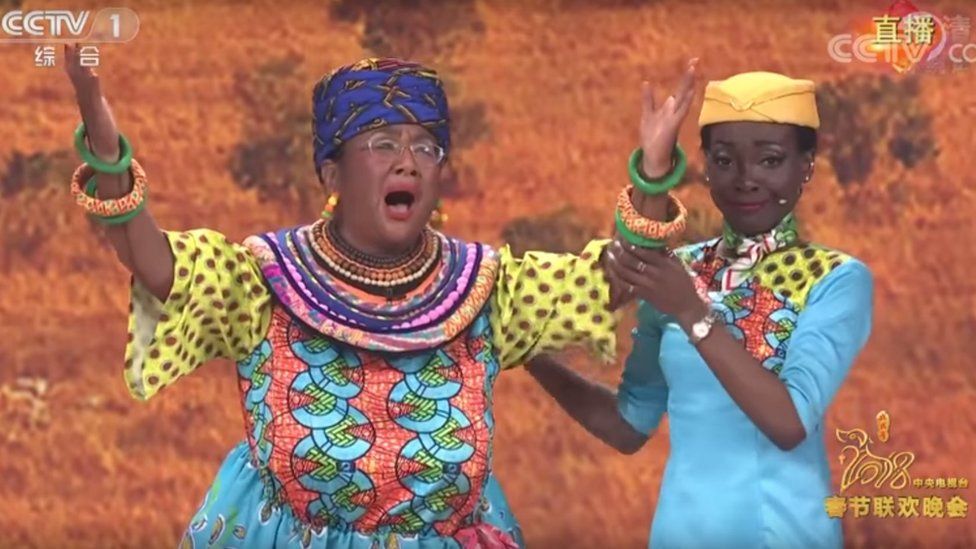
Chinese ministry deletes brownface video post after criticism

 A Chinese government ministry appears to have taken down an online video post which featured people in brownface singing an Indian song.

By Fan Wang

BBC News 12 May 2023


The row caused outrage in India, where online users accused China of mocking the country


The video - by a popular influencer - had been shared by an official account under the Ministry of Public Security (MPS) to promote road safety.

The post drew criticism outside of the country.

It follows other racism controversies in China, where brownface and similar concepts are unfamiliar to many.

Brownface - like blackface - involves people painting their faces darker, and is condemned in much of the world as a racist caricature.

The video was created by Hao Ge Ge, an influencer with a big following on Douyin, the country's domestic version of TikTok. It has been liked more than 1.2 million times on the short video platform.

It features men in brownface wearing turbans, as well as several women in what appear to be south or central Asian costumes.

Warning: This story contains an image some people may find offensive

Divided into two groups, they sing the Indian song Tunak Tunak Tun, with Chinese lyrics debating whose vehicle is better.

The Bureau of Public Order - which comes under the MPS - shared the video last week with its more than 32 million followers on Weibo, a Twitter-like platform.

"Reminder from the police: You should fasten your seat belt even when you are sitting at the back of a car. Always remember when you ride a motorbike, don't hit the road without a helmet!" said the post.

It drew hundreds of shares and mainly positive comments within China. "This is effective law popularisation," said one comment.

But there was criticism elsewhere. Aadil Brar, a columnist for The Print India, wrote on Twitter: "They are very much mocking India, Bollywood and Indians."

Some Chinese commenters had warned of a possible backlash, with one saying: "This will definitely cause trouble if you put it up in India, they won't find it humorous."

Other lower-level Chinese police agencies also shared the video on Weibo, but these posts - along with the original - are no longer visible on their feeds.

In 2018, a skit on China's biggest Lunar New Year TV show sparked widespread criticism after a Chinese actress appeared in blackface and with exaggerated buttocks.

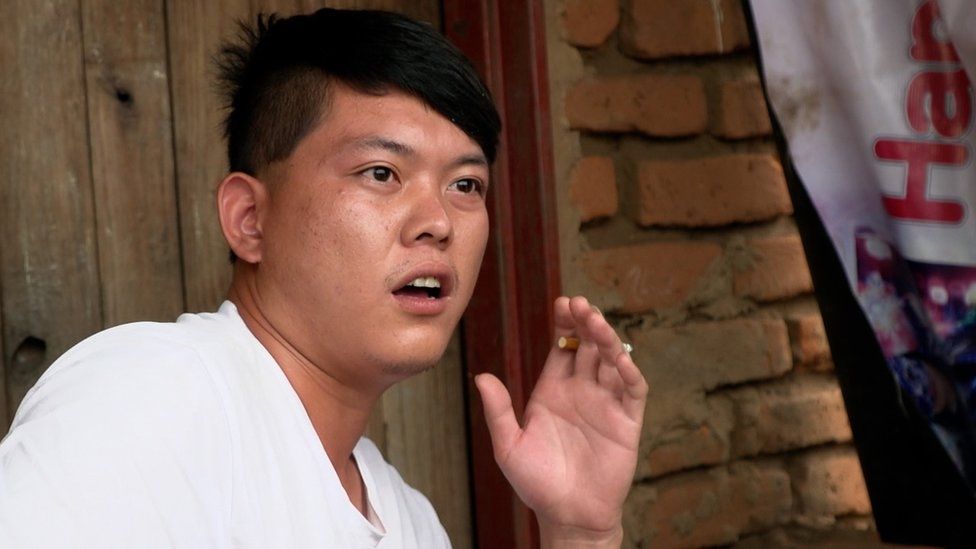
Last year, a Ministry of Foreign Affairs official said China had zero tolerance for racism and would crack down on racial discrimination videos, after a BBC investigation exposed a Chinese filmmaker who had used Malawian children to film personalised greetings - some of which included racist content.


One online user said the video would "definitely cause trouble if you put it up in India"

https://www.bbc.com/news/world-asia-china-65541628


Sunday, 22 January 2023

China providing modern weaponry to Taliban: Report

 Synopsis

China-Taliban engagement is not new. The Taliban have been frequent visitors to China for years. Even in the 1990s, Beijing engaged with the Taliban to curb militants' infiltration into western China.

Jan 22, 2023, 07:31 AM IST
TalibanReuters

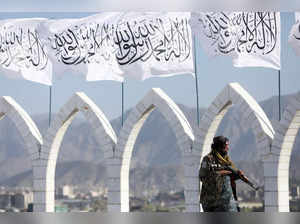
China has economic, political, security and strategic interests in Afghanistan and has maintained close contact with the Taliban over the last decade.

China is providing modern weaponry to the Taliban in the wake of the recent attack by the Islamic State Khorasan Province (ISKP) on a hotel in Kabul that mostly housed Chinese nationals, writes Zafar Iqbal Yousafzai, author of The Troubled Triangle: US-Pakistan Relations under the Taliban's Shadow in The Jamestown Foundation.

The move comes as unstable and volatile Afghanistan threatens Chinese interests and could be a hurdle to the success of the Belt and Road Initiative (BRI).

Moreover, Chinese sources have expressed concern that uncertainty and unrest could lead to Afghanistan becoming a hotbed for terrorists "targeting China's Xinjiang and its interests overseas, such as the China-Pakistan Economic Corridor (CPEC) projects, where enhanced communication and coordination between China and Pakistan is required to tackle potential threats," reported Global Times.

On December 12, members of ISKP attacked a local hotel in Kabul, where several Chinese nationals were staying. The attack injured five Chinese nationals along with 18 other victims, while the three attackers were killed by security forces.

It was reported that Chinese businesspeople run the hotel, which is frequently visited by Chinese diplomats and business people, reported Global Times.

In response, People's Republic of China (PRC) Foreign Ministry spokesperson Wang Wenbin stated, "China is deeply shocked at the attack, which is highly egregious, and firmly opposes terrorism in any form."

In response to these challenges, China has sought to provide the Taliban with enough support to combat all forms of terrorism and extremism in Afghanistan, said Yousafzai.

Several factors have recently driven China to deepen its engagement with and support for the Taliban. When Kabul fell to the Taliban, the world was stunned and concerned about the Taliban in power; however, some countries like Iran, Russia, China, and Pakistan were among those expecting stability in Afghanistan and asking the international community to help the Taliban stabilize the country.

In addition, China saw the US presence in Afghanistan as a strategic threat to China. As a result, the US withdrawal and the return to power of the Taliban, with whom Beijing has close ties, were generally seen as advantageous geopolitical developments for China, reported The Jamestown Foundation.

China has strategic, political, economic, and security interests in Afghanistan that it wants to secure. The existence of any central administration ruling Kabul that is comfortable with China is favorable to the latter.

China-Taliban engagement is not new. The Taliban have been frequent visitors to China for years. Even in the 1990s, Beijing engaged with the Taliban to curb militants' infiltration into western China.

Afghanistan is important to Beijing strategically and economically as it connects China with the Persian Gulf and Iran. Similarly, Afghanistan is a potential route for BRI with extensive natural resources.

Hence, China had been pressing the Taliban to take a clear stance vis-a-vis militancy, i.e., East Turkistan Islamic Movement (ETIM). So far, the Taliban have stated unequivocally that they will not interfere in the internal affairs of any country, said Yousafzai.

China is providing humanitarian aid and concessions to the Taliban government; however, several developments are still off the record.

One such behind-the-scenes development is China's provision of Unmanned Aerial Vehicles (UAVs) to the Taliban, which has significantly boosted its forces' combat capabilities, reported The Jamestown Foundation.

The first drone was attained through a front company from China and cost USD 60,000, which engineers tailored to carry four mortar rounds, reported New Lines Magazine on September 15, 2021.

However, the drone unit still uses modified commercial drones for surveillance and operations. In order to upgrade its UAV capabilities, the Taliban have struck a deal with China to purchase Blowfish attack drones.

The Blowfish strengthens the Taliban's combat capability in operations against its opponents, especially ISKP. It will also put considerable pressure on other resistance movements, including the National Resistance Front in the Panjshir Valley, reported The Jamestown Foundation.

China has economic, political, security and strategic interests in Afghanistan and has maintained close contact with the Taliban over the last decade.

Moreover, Beijing wants the Taliban not to allow Afghanistan's soil to be used as a base for operations targeting China.

However, China's reported delivery of combat drones to the Taliban will considerably impact US-China relations and the Taliban's combat capability to target ISKP and other adversaries, said Yousafzai.


Saturday, 17 September 2022

US’ support for Pak emboldens China to block blacklisting of terrorists

 China is at it again. Beijing has once again put a hold on a proposal moved ... to designate ... one of India’s most wanted terrorists

T. Brajesh
  • Published
  •  
  • :
  •  
  • September 17, 2022,
  •  
  • 11:51 pm
  •  
  • |
  •  
  • Updated
  •  
  • :
  •  
  • September 17, 2022,
  •  
  • 11:51 PM

https://www.sundayguardianlive.com/news/us-support-pak-emboldens-china-block-blacklisting-terrorists

Beijing has put a hold on a proposal moved at the United Nations by the United States and co-supported by India to designate LeT terrorist Sajid Mir, the main handler of the deadly 2008 Mumbai attacks.

NEW DELHI: China is at it again. Beijing has once again put a hold on a proposal moved at the United Nations (UN) by the United States and co-supported by India to designate Lashkar-e-Tayyaba (LeT) terrorist Sajid Mir, one of India’s most wanted terrorists and the main handler of the deadly 2008 Mumbai attacks, as a global terrorist. 

India has a reason to slam China this time too. But apart from flaying Beijing for blocking the bid once again, New Delhi is upset and annoyed with the United States as well. India is of the view that the Biden administration’s several decisions over the past few months, suggesting the US’ strong desire to support Pakistan despite the country harbouring terror outfits, in fact, emboldened China to throw a spanner in the joint effort to get the LeT handler of 26/11 attacks in Mumbai declared a global terrorist. “This is being viewed as the US coddling or pampering Pakistan despite the fact that Islamabad is backing terrorists, their organisations and terror infrastructure,” top diplomatic sources told The Sunday Guardian. “With Washington adopting such an approach towards Pakistan, Beijing remains hardly under any pressure when it comes to taking a call on any proposal against terrorists,” sources said. “Instead of mounting pressure on both China and Pakistan, the US behaved in such a way that eased pressure on both of them,” added the sources. 

In fact, China is observing that the US is moving a proposal for blacklisting of a terrorist at the UN, and, at the same time, it is reaching out with help to Pakistan where the outfit of that terrorist is flourishing, said an official. “All this diffuses whatever pressure India has been able to build on China diplomatically,” he added. Such a situation suits China, which is always eager to help its friend Pakistan.

Last month, China had put a hold on a proposal by the US and India at the United Nations to blacklist Abdul Rauf Azhar, the brother of Jaish-e Mohammed (JEM) chief Masood Azhar and a senior leader of the Pakistan-based terror organisation. Beijing, an all-weather friend of Islamabad, has repeatedly put a hold on listings to blacklist Pakistan-based terrorists under the sanctions committee of the UN Security Council. In June this year, China had put a hold, at the last moment, on a joint proposal by India and the US to list Pakistan-based terrorist Abdul Rehman Makki under the 1267 Al-Qaida Sanctions Committee of the UN Security Council.

However, it was the result of sustained pressure mounted by the international community after the Pulwama attack that China vacated objections, leading to the blacklisting of Masood Azhar as a terrorist at the UN. India had worked hard that time to garner the international community’s support to build pressure on China. The US, UK and France had supported India’s bid to designate Azhar as a terrorist. That time, the US rushed to claim Azhar’s blacklisting as a victory of American diplomacy. “Where is the same diplomatic campaign by America now? Why is the US showing excessive care for Pakistan?” diplomats ask now. India wants America to work with it to create massive international pressure on China, which was seen at the time of blacklisting of Azhar. China’s move to block the proposal should be portrayed in larger perspective on world forums as Beijing’s double-standard on counter-terrorism, which is hurting the global fight against this menace, say officials. The Chinese government should be criticised for hampering the war on terror. “But to achieve this objective, the US must be tough on Pakistan from where terrorism emanates,” an official pointed out.

On previous occasions, MEA spokesperson Arindam Bagchi had said that “China’s actions expose its doublespeak and double standards when it comes to the international community’s shared battle against terrorism.” The most important part of the statement was that “the international community has been unable to speak in one common voice.” Sources say that this is a message for the US also, which is not going tough on Pakistan in terms of tackling terrorism.

What upset India the most was the recent decision of the Biden administration to help Pakistan secure an IMF bailout. Moreover, the US’ move to unveil a $450 million deal to modernize Pakistan’s F-16 fleet has also annoyed India. While helping Pakistan to secure the IMF package, the US should have compelled Islamabad to first dismantle the terror infrastructure on its soil. Sources said that China is trying to help Pakistan to be dropped from the grey list of the Financial Action Task Force (FATF). The US should counter this Chinese move immediately. What is being seen, however, is Washington’s efforts to enhance ties with Islamabad, regardless of the fact that it played a crucial role in the Afghanistan debacle, sources said. As a result, India’s campaign against Pakistan based terrorists at the UN gets weakened, with Beijing continuing to support Islamabad in the absence of requisite internal pressure.

https://www.sundayguardianlive.com/news/us-support-pak-emboldens-china-block-blacklisting-terrorists

Most Recent Post

Man charged for borrowing rare Chinese manuscripts from UCLA library, returning fakes

  Suspect Jeffrey Ying allegedly travelled to China after checking works out using several aliases Agence France-Presse Published: 12:11pm, ...

Popular Posts - Last 30 days