Showing posts with label ETIM. Show all posts

Sunday, 22 January 2023

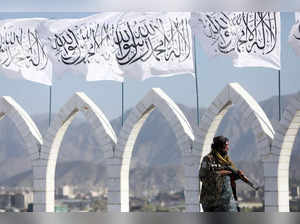
China providing modern weaponry to Taliban: Report

 Synopsis

China-Taliban engagement is not new. The Taliban have been frequent visitors to China for years. Even in the 1990s, Beijing engaged with the Taliban to curb militants' infiltration into western China.

Jan 22, 2023, 07:31 AM IST

TalibanReuters

China has economic, political, security and strategic interests in Afghanistan and has maintained close contact with the Taliban over the last decade.

China is providing modern weaponry to the Taliban in the wake of the recent attack by the Islamic State Khorasan Province (ISKP) on a hotel in Kabul that mostly housed Chinese nationals, writes Zafar Iqbal Yousafzai, author of The Troubled Triangle: US-Pakistan Relations under the Taliban's Shadow in The Jamestown Foundation.

The move comes as unstable and volatile Afghanistan threatens Chinese interests and could be a hurdle to the success of the Belt and Road Initiative (BRI).

Moreover, Chinese sources have expressed concern that uncertainty and unrest could lead to Afghanistan becoming a hotbed for terrorists "targeting China's Xinjiang and its interests overseas, such as the China-Pakistan Economic Corridor (CPEC) projects, where enhanced communication and coordination between China and Pakistan is required to tackle potential threats," reported Global Times.

On December 12, members of ISKP attacked a local hotel in Kabul, where several Chinese nationals were staying. The attack injured five Chinese nationals along with 18 other victims, while the three attackers were killed by security forces.

It was reported that Chinese businesspeople run the hotel, which is frequently visited by Chinese diplomats and business people, reported Global Times.

In response, People's Republic of China (PRC) Foreign Ministry spokesperson Wang Wenbin stated, "China is deeply shocked at the attack, which is highly egregious, and firmly opposes terrorism in any form."

In response to these challenges, China has sought to provide the Taliban with enough support to combat all forms of terrorism and extremism in Afghanistan, said Yousafzai.

Several factors have recently driven China to deepen its engagement with and support for the Taliban. When Kabul fell to the Taliban, the world was stunned and concerned about the Taliban in power; however, some countries like Iran, Russia, China, and Pakistan were among those expecting stability in Afghanistan and asking the international community to help the Taliban stabilize the country.

In addition, China saw the US presence in Afghanistan as a strategic threat to China. As a result, the US withdrawal and the return to power of the Taliban, with whom Beijing has close ties, were generally seen as advantageous geopolitical developments for China, reported The Jamestown Foundation.

China has strategic, political, economic, and security interests in Afghanistan that it wants to secure. The existence of any central administration ruling Kabul that is comfortable with China is favorable to the latter.

China-Taliban engagement is not new. The Taliban have been frequent visitors to China for years. Even in the 1990s, Beijing engaged with the Taliban to curb militants' infiltration into western China.

Afghanistan is important to Beijing strategically and economically as it connects China with the Persian Gulf and Iran. Similarly, Afghanistan is a potential route for BRI with extensive natural resources.

Hence, China had been pressing the Taliban to take a clear stance vis-a-vis militancy, i.e., East Turkistan Islamic Movement (ETIM). So far, the Taliban have stated unequivocally that they will not interfere in the internal affairs of any country, said Yousafzai.

China is providing humanitarian aid and concessions to the Taliban government; however, several developments are still off the record.

One such behind-the-scenes development is China's provision of Unmanned Aerial Vehicles (UAVs) to the Taliban, which has significantly boosted its forces' combat capabilities, reported The Jamestown Foundation.

The first drone was attained through a front company from China and cost USD 60,000, which engineers tailored to carry four mortar rounds, reported New Lines Magazine on September 15, 2021.

However, the drone unit still uses modified commercial drones for surveillance and operations. In order to upgrade its UAV capabilities, the Taliban have struck a deal with China to purchase Blowfish attack drones.

The Blowfish strengthens the Taliban's combat capability in operations against its opponents, especially ISKP. It will also put considerable pressure on other resistance movements, including the National Resistance Front in the Panjshir Valley, reported The Jamestown Foundation.

China has economic, political, security and strategic interests in Afghanistan and has maintained close contact with the Taliban over the last decade.

Moreover, Beijing wants the Taliban not to allow Afghanistan's soil to be used as a base for operations targeting China.

However, China's reported delivery of combat drones to the Taliban will considerably impact US-China relations and the Taliban's combat capability to target ISKP and other adversaries, said Yousafzai.


Wednesday, 9 February 2022

Chinese envoy urges world to pay close attention to terrorist threats posed by ETIM/TIP

UNITED NATIONS, Feb. 9 (Xinhua) -- A Chinese envoy on Wednesday called on the international community to pay close attention to the terrorist threats posed by the East Turkestan Islamic Movement/Turkistan Islamic Party (ETIM/TIP).

"We call on the Security Council and the international community to pay close attention to the active and developing terrorist threats posed by ETIM/TIP, to cut off its connection with ISIS and erase the space for it to breed and do harm," Zhang Jun, China's permanent representative to the United Nations, told the Security Council briefing on Threats to International Peace and Security Caused by Terrorist Acts.

Citing the secretary-general's report, which points out that ISIS continued to recruit from ETIM/TIP, Zhang said that China "is deeply concerned" about this.


"ETIM is a terrorist organization designated by the 1267 Committee of the Council. It has carried out many inhumane terrorist attacks in Xinjiang, China, resulting in mass casualties of innocent people," said Zhang.

The ambassador said that in recent years, this organization has spread and grown in Central Asia, South Asia, the Middle East and other regions, adding that the report released by the monitoring group of the 1267 Committee earlier this month further points out that there are 1,000 to 3,000 ETIM/TIP fighters in Syria.

"They not only launched attacks on the ground, but also recruited, trained and sent terrorists for terrorist attacks in Central Asian countries and China. The ETIM fighters in Afghanistan even clamored to 'return to Xinjiang for Jihad,'" he said.

Speaking about the effort to curb the new wave of terrorism, the ambassador said that ISIS is still active in regions such as Iraq, Syria, and Libya, and is spreading at a faster pace in many parts of Africa.

"In Afghanistan, the withdrawal of foreign troops has created a vacuum in the security situation, and such chaos has provided an opportunity for terrorist forces to expand their presence. We hoped the Taliban will fulfill relevant counter-terrorism commitments to prevent Afghanistan from again becoming the breeding ground of terrorism," said Zhang.

"China supports the international community in continuing coordinated actions to combat terrorism in all its forms," the envoy noted.

On civilian protection, Zhang said that "counter-terrorism operations must abide by international law and uphold the principle of protecting civilians."

"The overuse of military force will not help eradicate terrorist threats. On the contrary, it may weaken the legitimacy and effectiveness of counter-terrorism actions, and cause the dilemma of the more counter-terrorism, the more terrorism," he said.

"Military intervention in the name of counter-terrorism is a blatant violation of national security and territorial integrity, and will lead to major disasters and civilian casualties, and create a breeding ground for terrorists. We call on the countries concerned to prudently use military means in counter-terrorism operations, and give priority to the protection of civilians," the envoy stressed.

Zhang also called on the international community to "vigorously help African countries strengthen counter-terrorism capacity-building."

"Terrorism and violent extremism are expanding in many places in Africa, posing a severe challenge to national security of regional countries," he said.

"China has always been committed to supporting the capacity-building of African countries that are at the forefront of counter-terrorism ... We stand ready to continue our practical support for African countries in their pursuit of peace and security," said the ambassador. ■

http://www.xinhuanet.com/english/20220210/d4bc2525fdc444949712bb3d784c0f1a/c.html

Friday, 1 October 2021

Why is it essential for China, Pakistan to enhance coordination against terrorists, safeguard regional stability

OPINION / VIEWPOINT

In recent years, the global and regional structure has undergone major changes. At present, the change of strategic situations in South Asia and its neighboring regions is mainly reflected in the Afghan issue.

By Liu Zongyi   Global Times
Oct 02.2021


Soldiers from China and Pakistan prepare to conduct assault during a joint anti-terrorism training. File photo:81.cn


The US hastily withdrew its troops from Afghanistan on the pretext of concentrating resources to contain China, and the Afghan Taliban quickly took over Kabul and are now in control of all Afghan territory. Many strategists and media in the West and India have linked the Afghan Taliban's seizure of power with China-US relations, China-India relations and India-Pakistan relations. They believe that the successful seizure of power by the Afghan Taliban is a success of China and Pakistan, but a strategic failure of the US, the West and India. The reason why they have this faulty interpretation is mainly due to their geopolitical-competition thinking and zero-sum game thinking.

On a larger regional level, in order to contain China, the US is trying its best to promote military competition and even confrontation in the whole Indo-Pacific region. The US not only continues to promote the institutionalization of the Quad, but it has also established a new group AUKUS, a pure military bloc. India is an important pillar of the Indo-Pacific strategy. India also has the ambition to achieve its goal of becoming a global power through the Indo-Pacific strategy of the US and attempts to use the US' dependence on it to implement Hindu nationalist policies at home and in the region. To achieve its geo-strategic objectives, the US encourages India to play a greater role on the Afghan issue. The US attempts to sacrifice Pakistan's interests in exchange for India's strategic cooperation and make India its agent in the region.

As we know, India has long been marginalized on the Afghan issue. If India is to play a role in Afghanistan, it is unlikely to play a positive one. India is likely to use its intelligence agencies and some forces cultivated in Afghanistan and its surrounding areas in the past more than 20 years to undermine and disrupt the stability of Afghanistan. This is unfavorable to Afghanistan and its close neighbors, including China and Pakistan. 

As all-weather strategic partners, China and Pakistan must work together to maintain and promote regional security and stability.

First of all, China and Pakistan must cooperate closely on the Afghan issue to persuade the Afghan Taliban to establish an open and inclusive government and implement a moderate domestic and foreign policy. At present, the verbal expression of the Afghan Taliban is very different from that in the past, but we do not know what specific policies they will champion in the future. The Afghan Taliban are now facing a series of severe challenges. First, the unity of Afghan Taliban itself; Second, whether the Afghan Taliban can establish an open and inclusive government; Third, food shortage is likely to lead to humanitarian disasters and refugees; Fourth, they hope to win the recognition and assistance of the international community, but at the same time, they also face the hatred, blockade, sanctions and even subversion of some hostile forces in the world. 

China, Pakistan, Russia and Iran all hope that the Afghan Taliban can establish an open and inclusive regime so that all ethnic groups and parties in Afghanistan can have their own representatives, which is the key for the Afghan Taliban to win domestic and international support. China does not want Afghanistan to fall into turmoil again due to domestic political struggle that always leads to humanitarian crises, nor does China want Afghanistan to become a shelter for Eastern Turkistan forces such as the ETIM. China does not want Afghanistan to become a source of regional unrest due to the excessive intervention of some external forces, affecting the security of CPEC. Therefore, on the issue of Afghanistan, China and Pakistan should coordinate with Russia, Iran and Central Asian countries. These countries together should warn Europe of a possible refugee crisis, and put pressure on the US, India and some European countries to take responsible actions to provide humanitarian assistance to Afghanistan.

While strengthening strategic and security coordination against terrorist supporters, China and Pakistan should work with countries inside and outside the region to promote the construction of an open, inclusiterrve, democratic and equal regional governance structure and security structure. 

While cooperating to deal with the pandemic, China and Pakistan should also accelerate the building of CPEC. The 10th Joint Coordination Committee (JCC) meeting of CPEC has been held, and a new IT working group has been established, which will bolster CPEC. The success of CPEC will effectively enhance Pakistan's comprehensive national strength and international status. The key to the success of CPEC is that Pakistan needs to form its own industrial advantages through reform and development that can provide a safer environment for the construction of CPEC.

The author is secretary-general of the Research Center for China-South Asia Cooperation at Shanghai Institutes for International Studies, a visiting fellow of the Chongyang Institute for Financial Studies, Renmin University of China, and a distinguished fellow of the China (Kunming) South Asia & Southeast Asia Institute. opinion@globaltimes.com.cn

https://www.globaltimes.cn/page/202110/1235584.shtml

Thursday, 8 July 2021

China fear 'Terror group' in Xinjiang amid US withdrawal from Afghanistan: Report

 Amid the ongoing US troop withdrawal from Afghanistan, China is worried about the instability to come in the country, a revival of the East Turkestan Islamic Movement (ETIM), its cross-border agitation and terrorism in Xinjiang region, said scholar Salman Rafi Sheikh. 

Jul 08, 2021


The ETIM, also known as the Turkistan Islamic Movement, is an ethnic Uighur group active in Afghanistan that has long sought to achieve independence for Xinjiang, which it envisions as a future "East Turkestan." 

The ETIM is also active in Syria's civil war, where battle-hardened fighters have largely been grouped in Idlib and other northern regions. The United Nations has categorised the group as a "terror organisation" since 2002. 

In November 2020, the former Donald Trump administration removed ETIM from America's terror list, saying at the time there was "no credible evidence" that ETIM still exists. 

In an opinion piece in Asia Times, Sheikh said as the Taliban surges north in the wake of America's troop withdrawal, it seems likely only a matter of time before the group overruns Kabul and its US-backed government, and establishes in its place a new "Islamic Emirate", as it has repeatedly said it aims to do. 

"A Taliban takeover, analysts and observers believe, will open new space for groups like ETIM to recruit and radicalize Uighur youth, many of whom are already reportedly deeply disaffected by reports of Beijing's Uighur "vocational camps" and authoritarian control of Muslim religious practices in Xinjiang," Sheikh added. 

He further stated that for Beijing, however, the concern is not merely the spread of radical ideas among Uighur Muslims in neighboring Afghanistan. Rather, it is the threat a resurgence of extremism could pose to its strategic Belt and Road Initiative in the region, not least in Pakistan. Four of China's six so-called Silk Road networks, including the China-Pakistan Economic Corridor (CPEC), emanate from or pass through Xinjiang. Those roads aim to connect China with Russia, Central, Southern, and Western Asia, reaching the Mediterranean Sea.

Specifically, Silk Road networks other than the CPEC that run through Xinjiang include the China-Central Asia-West Asia Economic Corridor, the New Eurasia Land Bridge Economic Corridor, and the China-Mongolia-Russia Economic Corridor. 

Sheikh said that while the departure of US and NATO forces from neighboring Afghanistan is no doubt broadly welcomed by China, it also puts Beijing in a new strategic quandary - one that could make or break its BRI ambitions in the region. 

"Beijing's concerns about the ETIM in Afghanistan are not simply an exaggerated threat assessment to justify its authoritarian control of Uighurs in Xinjiang. In 2008, China's Ministry of Public Security released a list of eight "terrorists" linked to ETIM with detailed charges against them, including threats to bomb the 2008 Beijing Olympics," Sheikh added. 

Citing the recent United Nations Security Council report, Sheikh said, despite the Trump administration's denials ETIM not only exists and operates in Afghanistan but is also pursuing a "transnational agenda." 

According to the report, ETIM is among the "foremost" foreign terror groups operating in Afghanistan. The report said ETIM is situated mainly in Badakhshan, Kunduz and Takhar provinces and that Abdul Haq (Memet Amin Memet) remains the group's leader, he said. 

The report goes on to say approximately 500 ETIM operate in the north and northeast of Afghanistan, primarily in Raghistan and Warduj districts, Badakhshan, with financing based in Raghistan. 

Those northern areas connect with China through the narrow Wakhan Corridor, a potential passageway for Xinjiang-bound militants. The UN report said ETIM collaborates with Lashkar-e-Islam and Tehrik-e-Taliban Pakistan, two banned Pakistani groups. 

It also said ETIM "has a transnational agenda to target Xinjiang, China, and the China-Pakistan Economic Corridor, as well as Chitral, Pakistan, which poses a threat to China, Pakistan and other regional states," he said. 

Citing another report, Sheikh said that it indicates Beijing is trying to get a grip on the situation in Afghanistan. According to media reports, in December 2020, a Chinese spy ring was arrested in Afghanistan. 

Although Beijing denied the allegation, Ahmad Zia Saraj, the chief of Afghanistan's National Directorate Security, confirmed to the Afghan Parliament that the arrests had indeed been made. What information the reputed spies may have gathered and transmitted to Beijing before their apprehensions, however, is unknown, he added. (ANI)

https://www.aninews.in/news/world/asia/china-fear-terror-group-in-xinjiang-amid-us-withdrawal-from-afghanistan-report20210708053010/
Most Recent Post

Man charged for borrowing rare Chinese manuscripts from UCLA library, returning fakes

  Suspect Jeffrey Ying allegedly travelled to China after checking works out using several aliases Agence France-Presse Published: 12:11pm, ...

Popular Posts - Last 30 days