Monday, 15 May 2023

Why George Soros is obsessed with defeating Xi Jinping’s China

 Chinese academic Sun Peisong notes that renowned financier George Soros has always been critical of China’s social system. While "the man who broke the Bank of England" has a keen eye for finance, Sun feels that Soros’s criticism of China’s “closed society” sheds light on his penchant for globalisation and dated means of making the wealthy wealthier.

09 Jun 2022

Director, Lianyungang Development Research Institute

Hungary-born US investor and philanthropist George Soros answers to questions after delivering a speech on the sidelines of the World Economic Forum annual meeting in Davos on 24 May 2022. (Photo: Fabrice Coffrini/AFP)

At the recent World Economic Forum in Davos, renowned Hungary-born American investor George Soros restated his views on the struggle between open and closed societies. 

He said, “In an open society, the role of the state is to protect the freedom of the individual; in a closed society the role of the individual is to serve the rulers of the state.” In his view, China and Russia are the “greatest threat” to open societies today, and the world is increasingly engaged in “a struggle between two systems of governance that are diametrically opposed to each other”.

This is not the first time that the 92-year-old has criticised China. Soros has been expressing his negative views in articles and speeches since the latter half of 2021. He sees China’s recent economic regulations and market supervision as “a systematic campaign to remove or neutralise people who have amassed a fortune”, and wants open societies to transform China.   

“As founder of the Open Society Foundations, my interest in defeating Xi Jinping’s China goes beyond US national interests.” 

Soros said at a seminar in January this year that China, controlled by “a true believer in Communism”, is the “greatest threat that open societies face today”. Hence, he believes that the Chinese leader should be replaced by someone who follows the Western model, and urges international society to do everything in its power to encourage China to move in the “desired direction”.  

Soros also wrote in The Wall Street Journal in 2019, “As founder of the Open Society Foundations, my interest in defeating Xi Jinping’s China goes beyond US national interests.” 

Visitors walk by images of Chinese President Xi Jinping displayed at the Museum of the Communist Party of China in Beijing, China November 11, 2021. REUTERS/Carlos Garcia Rawlins
Visitors walk by images of Chinese President Xi Jinping displayed at the Museum of the Communist Party of China in Beijing, China, 11 November 2021. (Carlos Garcia Rawlins/Reuters)

While such outright opposition to China is rare among global financiers, his desire to change the nature of the Chinese regime is clear.

Taking advantage of the Western market system

China’s economic progress over the past 40 years has fuelled global growth and benefited both developing and developed countries. This is a view held by many experts in the financial and investment fields. 

However, Soros’s remarks represent the views of another group of people — the financial tycoons. Soros’s hostility towards China stems from his uncertainty as to whether he can continue to amass wealth the way he used to, his frustrations with China, and his attachment to the era when multinational capital could get him anything he wanted.      

Indeed, Soros is a man whose worldview is shaped by money and has a unique way of grabbing wealth.

In reality, Soros is a paradox. On the one hand, he appears to be a political figure: he supports dissidents from some countries and helps them seek “democracy”. On the other hand, he also appears to be an idealistic intellectual who flies high the banner for “open societies”, like an enlightened social pioneer. A man who stays ahead of the curve in the stock markets, in his prime, Soros would meet “one president for breakfast and another for dinner”. 

Soros's trademark is his ability to cloak his identity as a businessman under the halo of advocating an ideal political order through political and philosophical discourse, and to amass great wealth by taking advantage of the Western market system. 

People walk through the financial district of Canary Wharf in London, Britain, 18 May 2022. (Kevin Coombs/Reuters)
People walk through the financial district of Canary Wharf in London, UK, 18 May 2022. (Kevin Coombs/Reuters)

In 1992, Soros launched a speculative attack on the British pound, despite claiming to love Britain. He was chastised for taking money from every British taxpayer, reportedly making a profit of US$1 billion. Indeed, he came to be known as “the man who broke the Bank of England”.

He claims to love the people of the Soviet Union and thus started a foundation in the Soviet Union in 1987. However, he made a fortune in 1994 during a mass privatisation programme, when the shares of state-owned Soviet enterprises were distributed to the people at very low prices and there was a serious lack of private investment funds. When accused of robber capitalism, he replied that he had “no sense of guilt” in the markets.

Soros set up various foundations across 25 countries, mostly in Eastern Europe. The combination of unprecedented opportunities and abundant capital produced a profit explosion. Most of the Open Society Foundations (OSFs) he set up in numerous countries also include his own business plans.

Soros's trademark is his ability to cloak his identity as a businessman under the halo of advocating an ideal political order through political and philosophical discourse, and to amass great wealth by taking advantage of the Western market system.

Frustrations with China

China’s rise no doubt provides a reference case for replacing the Western model and presents a possible end to wealthy Westerners being able to freely amass wealth from all over the world. This is indeed a frightening prospect for people like Soros, and also a reason why he opposes China.

Chinese culture does not advocate putting the wealthy in charge.   

Pedestrians near the Bund in Shanghai, China, on 1 June 2022. (Qilai Shen/Bloomberg)

Soros’s hatred for the Chinese system also stems from the frustrations he has faced in the country. During the Asian financial crisis in 1988, he learnt a painful lesson in Hong Kong. Later in 2011, his covetous plans for the Chinese financial market failed again. Throughout his career, China has been a hurdle he has not overcome. 

Thus, he made “defeating China” his life goal. He believes that open societies are where people like him can live and thrive. He acknowledges that his behaviour interferes in the internal affairs of other countries as the act of advocating open societies extends beyond national sovereignty. Evidently, the Chinese system and Soros’s pursuits are at odds.    

While Soros's plan to defeat China is consistent with the US’s current geopolitical strategy, he is out of touch with reality if he thinks that China, under the pressure of the US and its allies, will turn into the kind of society that he can profit from.

China today does not think that the US — a social system where the richest 1% own more wealth than the bottom 95% — is democratic, universal or a model that should be emulated. Indeed, Chinese culture does not advocate putting the wealthy in charge.   

The era in which Soros found success — and is attached to — is one where the concept of globalisation was oversold.

Even though Soros is a Jew who once lived under Nazi rule, he fails to understand that his and the US’s attempt at transforming China is in fact similar to the Nazi belief in German supremacy and that the world must be healed by the German spirit. 

People stand on a platform at Berlin Central Station, in Berlin, Germany, 1 June 2022. (Annegret Hilse/Reuters)

The era in which Soros found success — and is attached to — is one where the concept of globalisation was oversold. He believes that China’s rise against the wishes of the West has caused global economic decoupling. For him, a defeated China would be better for the “open society”. 

When the globalisation mantra was at its peak, public opinion described social realities and changes in terms of “the world is flat”, open and connected. Proponents of globalisation questioned the organising principle of the state and society, and believed that borders and barriers would obstruct progress and prosperity. 

Under such a paradigm, not only would trade and investment be globalised in the future, but also cultures, shared knowledge, principles and norms. Adapting to this trend, countries of Europe, one of the most developed regions in the Western world, put aside national sovereignty and formed a union.      

Thus, at that time, it was not only forms of government with clear national identities that could play a role in international politics. Non-governmental organisations (NGOs) could also pay a major role, encroach on national structures, interfere in matters within the scope of state authority, and share political authority. 

Now, the world has reached a point where it needs to “reclaim its sovereignty”.

Hence, by setting up NGOs such as the OSFs in the name of advocating “social openness”, Soros was able to interfere in the political agendas of other countries and make a career for himself.       

Now, the world has reached a point where it needs to “reclaim its sovereignty”. The UK left the EU to do so, while the former Trump administration withdrew the US from various international organisations, opposed free trade and investment, rejected immigrants, set up national security barriers and encouraged a climate of protectionism. 

A view shows a supermarket in a shopping mall damaged by a Russian missile strike, as Russia's attack on Ukraine continues, in Kharkiv, Ukraine, 8 June 2022. (Vitalii Hnidyi/Reuters)

Following the outbreak of the Russia-Ukraine war, the West’s sanctions against Russia have brought globalisation to an unexpected end. In the process of deglobalisation, non-governmental actors’ interference in countries' internal affairs is fast losing legitimacy. Transnational operations of NGOs have also been obstructed by the West's new agenda. In the end, efforts to defeat China have not reversed the downfall of Soros’s OSFs.

China’s pursuit of common prosperity

In practising socialism, China believes that common prosperity is the essence of modernity and hopes to reduce the gap between the rich and the poor as well as ensure that wealth is more evenly distributed. The foundation of the Chinese socialist project has always included the goal of achieving equality, a universal pursuit of all socialists.   

The value of the Chinese economic model is perhaps most clearly seen in the fact that China is getting closer to becoming the world’s largest economy. While China has numerous political, economic and social problems that need to be solved, China’s economic advancement has lifted hundreds of millions of people out of poverty and created a massive urban middle class. 

... helping the US government thwart or defeat China should not be the goal of outstanding people such as Soros. On the contrary, advocating China-US cooperation would be better for our world.

Since modern times, the Chinese society has never been as wealthy as they are today. It accomplished in a few decades what the West took more than two centuries to achieve, and also modernised various aspects of its economy, from geographic space to production methods.    

Soros is a man with unique social ideals. In an increasingly multipolar world, helping the US government thwart or defeat China should not be the goal of outstanding people such as Soros. On the contrary, advocating China-US cooperation would be better for our world.

Related: Why China is embarking on the journey of 'common prosperity' | Why the Americans know China better than the Chinese know the US | Is Chinese socialism superior? | Why democracy is failing and why some authoritarian regimes might just work | Every individual counts: China should go for ‘common development’ rather than ‘common prosperity’


https://www.thinkchina.sg/why-george-soros-obsessed-defeating-xi-jinpings-china?

China’s nationalistic frenzy stems from an inferiority complex: Chinese commentator

 Chinese netizens were riled into a nationalistic frenzy when free ice-cream was allegedly given to a foreigner but not a Chinese person at the Shanghai Auto Show. How could such a small incident ruffle so many feathers? Commentator Jin Jian Guo explains.

04 May 2023

Political commentator  

https://www.thinkchina.sg/chinese-commentator-chinas-nationalistic-frenzy-stems-inferiority-complex

People walk past the Drum Tower in Beijing, China, 5 March 2023. (Tingshu Wang/Reuters)

Recently, a nationalist wave spread across China when free ice-cream was allegedly given to a foreigner but not a Chinese person at the Shanghai Auto Show. How incredulous! Although BMW Mini issued an apology after the incident, acknowledging that the “careless management and staff negligence caused unpleasantness for everyone”, the nationalistic Chinese continued on their rampage. They started smashing BMW Mini cars, just like they did Japanese cars in an earlier anti-Japanese tirade. A solar company (丰投光能公司) in Suzhou even got its BMW-driving employees to switch to China-made vehicles within the month, dangling a cash reward of 20,000 RMB (roughly US$2,900) and threatening to dismiss those who did not comply. 

These irrational Chinese are not patriotic — they are simply destroying the country. 

Harmful nationalistic Chinese

Even as Chinese netizens lambasted BMW Mini for insulting China, they didn’t forget to mock the explosion of Elon Musk’s SpaceX rocket. These haters fail to realise that Musk’s failures are the mother of his success — didn’t China’s rocket launches also fail before? Such displays of highly irrational and ugly nationalist sentiments only damage the country’s international image and business environment. These irrational Chinese are not patriotic — they are simply destroying the country. 

The SpaceX Starship explodes after launch for a flight test from Starbase in Boca Chica, Texas, US, on 20 April 2023. (Patrick T. Fallon/AFP)

This is just like the earlier case of Chinese netizens accusing foreign investors of exploiting the Chinese, but now that foreign companies are leaving China one by one and young people are left with few job opportunities, these attackers have finally stopped. The reality shows that when foreign investors leave China, China’s job opportunities lessen by the day.

Why did a cup of ice cream stir up such a huge controversy in China? The nub of the issue is the Chinese people’s “century of humiliation” complex that refuses to go away. The historical narrative of mainland China is marked by two characteristics: one, China’s 5,000-year-old civilisation, understood as one that has developed uninterrupted up to the present day; and two, modern Chinese history represented by the “century of humiliation”.  

The first characteristic is a mere exaggeration. Archaeological findings show that the history of Chinese civilisation is about 3,760 years old. (NB: The beginning of the Chinese civilisation continues to be debated depending on the definition of civilisation and the criteria that define a beginning.) Not only that, at one point, the Han Chinese-dominated regime had been destroyed by the Mongols and Manchus.

People stroll on a street near the Forbidden City in Beijing, China, on 5 April 2023. (Ludovic Marin/AFP)

The second characteristic shows that Chinese people have failed to reflect deeply on the decline of authoritarian regimes one after another since the Qin dynasty. Notably, the Eight-Nation Alliance was led into Beijing by the Chinese people themselves, while Yuanmingyuan (the Old Summer Palace) could only have been burnt by British and French troops with the help of the Chinese people — hearing that the allied forces were having difficulties setting Yuanmingyuan on fire, they brought braziers and straw to help them. The people’s only wish was to share the spoils of these escapades with the foreigners. 

The political characteristic of Chinese nationalism is portraying Western countries as enemies, and cultivating seeds of hatred starting from childhood.

Pent-up hatred and a chip on the shoulder

Over 100 years later, something peculiar has happened: while previously the emperor’s private property was burned and the common people under imperial rule followed suit by remorselessly looting and burning, today the Chinese people seethe with hatred of another kind.

The Qing emperor's personal humiliation has suddenly become the humiliation of the people and the nation, and this change came about because the situation in mainland China calls for uniting the people through nationalism; only by tapping on historical humiliation to get the people to feel the security provided by a strong government can the regime be consolidated and stabilised.

ice cream incident
A nationalist wave spread across China when free ice-cream was allegedly given to a foreigner but not a Chinese person at the Shanghai Auto Show. (Internet)

The political characteristic of Chinese nationalism is portraying Western countries as enemies, and cultivating seeds of hatred starting from childhood. Hence, Chinese-style patriotic education is necessarily linked to opposing the West.

Amid such a patriotic atmosphere, even two cups of ice cream can evoke the historical humiliation of “Chinese and dogs not allowed”. This victim mentality is equivalent to having a “glass heart”, behind which lies a lack of rational thinking — long-term nationalism has nurtured such hyper-sensitivity, leading to extremely ugly behaviour.

The Chinese people’s inferiority complex is fundamentally due to their lack of confidence when dealing with Westerners.

A risk of instability

Ugly nationalism reflects the Chinese people’s sense of inferiority and blind confidence. In a country that claims to be wealthy, whether or not one gets to eat ice cream should be of no consequence; but to the poor, the value of the ice cream has to do with their ego in whether they have been respected. The Chinese people’s inferiority complex is fundamentally due to their lack of confidence when dealing with Westerners.

BMW XM cars are displayed during the 20th Shanghai International Automobile Industry Exhibition in Shanghai on 18 April 2023. (Hector Retamal/AFP)

On the other hand, the Chinese people also show blind confidence. After the ice cream incident, CCTV aired a message claiming that BMW’s stock had plummeted. Chinese netizens cheered, and the implicit message was that offending China will not end well. However, the truth was that German stocks had plummeted, and it had nothing to do with what happened in China.

China’s ugly nationalist sentiment is rooted in a victim mentality of being unable to shake off a century of humiliation, as well as an extremely sensitive sense of inferiority, which sometimes also shows blind confidence. Living in a figurative well without understanding the outside world, accepting official propaganda, and lacking critical thinking and knowledge of history — all these are how extreme Chinese nationalism has been shaped. Nationalism is a double-edged sword, and in some cases, countries that manipulate nationalism can bring great instability upon themselves. This is why mainland China will not easily use force to reunify with Taiwan.

Related: Shanghai Auto Fair: Battle of the Chinese EV giants | Pelosi’s Taiwan visit reveals the ugliness of Chinese nationalism | Chinese butting heads with Western media: Irrational nationalism or deeds of justice? | Pandemic nationalism rages among Chinese youths | Class struggle and extreme nationalism have become CCP’s ideological weapons

https://www.thinkchina.sg/chinese-commentator-chinas-nationalistic-frenzy-stems-inferiority-complex


600 million Chinese earn 1,000 RMB a month — so are the Chinese rich or poor?

 Zaobao's Beijing correspondent Yang Danxu often marvels at the spending power of Chinese white-collar workers around her, and she too was surprised when Chinese Premier Li Keqiang remarked that China has 600 million people with a monthly income of 1,000 RMB. That is more than 40% of the Chinese population, and the figures portray a reality that is starkly different from common perception. Are Chinese people moving up the income ladder and are their lives becoming better as is the common refrain? Yang examines the facts.

Beijing Correspondent, Lianhe Zaobao

03 Jun 2020  (This article is almost 3 years old)

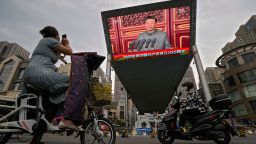
A woman cycles past a screen showing a news conference by Chinese Premier Li Keqiang after the closing session of the National People's Congress, in Beijing, China, on 28 May 2020. (Thomas Peter/Reuters)


When I first arrived in Beijing, I often complained to my friends in Singapore about the high cost of living in Beijing. 

Our office is situated in an office building at the Dongzhimen area. Every afternoon, white-collar workers in the building dine at the shopping malls nearby. Those who are keen to save some money would have a simple meal in the basement. But lunch easily costs around 50 RMB (S$10), and for those who are feeling a little extravagant and decide to have their lunch at the restaurants in the upper floors, it is common for them to pay an average of 120 RMB to 150 RMB for a meal.

I am always curious over one thing: how much must they earn each month to support such a lifestyle?

After lunch, some of these white-collar workers would buy imported fruits from the supermarket in the mall, or take away a cup of internet-celebrity-endorsed milk tea or Starbucks coffee to enjoy later at their desk. As a rough estimate, over 2,000 RMB can be spent on lunch each month.

Looking at the fashionable clothes they wear to work, the branded bags they carry, the various entertainment venues they go to, the internet-celebrity-endorsed cafes they frequent, the latest phone models they always seem to have, and perhaps even the sky-high housing rentals or loans they are paying in Beijing, I am always curious over one thing: how much must they earn each month to support such a lifestyle?

"Their monthly income is barely 1,000 RMB. It’s not even enough to rent a room in a medium Chinese city. And because of Covid-19, many families have encountered difficulties.” - Chinese Premier Li Keqiang

It is no longer news that the Chinese are getting richer. But Chinese Premier Li Keqiang made a shocking remark at a press conference following the closing session of the National People’s Congress meeting: China has 600 million people with a monthly income of 1,000 RMB. 

That was Li’s response to a question about poverty alleviation. He said without mincing his words, “Our country is a developing country with a big population. The per capita annual disposable income in China is 30,000 RMB. But there are still some 600 million people earning a medium or low income, or even less. Their monthly income is barely 1,000 RMB. It’s not even enough to rent a room in a medium Chinese city. And because of Covid-19, many families have encountered difficulties.”

Chinese Premier Li Keqiang is seen on a screen during a press conference held via online video link following the National People's Congress at the Great Hall of the People in Beijing on 28 May 2020. (Noel Celis/AFP)

He thus emphasised the importance of securing people’s livelihoods after the pandemic subsides and placed meeting the “essential needs of vulnerable groups and those families who have encountered new difficulties because of Covid-19” at a “very high priority on the government’s work agenda”.

Some netizens even find it hard to believe, and wonder if Li made an error at the press conference.

This speech comes as a rude shock. It is China’s plan to end poverty and build a moderately affluent society this year. While a monthly income of 1,000 RMB is above China’s official poverty line, that some 600 million people are at this lower-income level seems to contradict the saying that the Chinese are becoming richer. Chinese leaders rarely “expose their scars” under the spotlight, and in so doing, reveal another side of China to the masses. This is surprising to the people who are accustomed to hearing the mainstream narratives of China’s rise and its wealth creation miracle.

The bigger impact of this set of numbers comes from the facts behind it — it is starkly different from even what the ordinary Chinese citizen perceives it to be. 

Chinese netizens dislike various statistics and reports about income and assets the most. Whenever such numbers are released, they would say that these figures are a “bluff”. Many netizens would also claim that they are “being averaged out” (被平均), clearly implying that the statistics are making the Chinese seem richer than they actually are and are at odds with their perceived objective facts. It is the total opposite this time: nobody thinks that the facts have been manipulated. Some netizens even find it hard to believe, and wonder if Li made an error at the press conference.

The extent of their wealth is jaw-dropping even to foreigners. 

Indeed, China has experienced rapid development in over 40 years of reform and opening up. Its economy is already the second largest in the world and its GDP per capita has exceeded US$10,000 last year. China’s economic development is evidenced by its rapid “consumption upgrade” (demand for high-quality goods and services), the proliferation of various commercial districts in the cities, busy streets filled with vehicles, and latest phone models used by commuters on the trains.

Prior to the outbreak of the coronavirus, the Chinese were also the top spenders of international consumer markets and could be seen snapping up branded bags in Europe, cosmetics in Korea, and rice cookers in Japan. The extent of their wealth is jaw-dropping even to foreigners. 

What does it mean to be earning a monthly salary of 1,000 RMB? It may not even be enough for a Beijing white-collar worker to pay for a month’s worth of lunch. A woman wanting to look good can only afford one dress from a Beijing mall. It is only enough to pay for a half-day excursion around the suburbs of Beijing for an entire family with kids. A monthly salary of 1,000 RMB is unimaginable to many people living in first- and second-tier cities. But even more unimaginable is the fact that such an enormous number of people in China are surviving on so little. No wonder so many people find it surprising.

People wearing face masks cross a street on a bike in Beijing on 1 June 2020. (Noel Celis/AFP)

Thus, are the Chinese rich or not? In a country where stages of development are uneven; there are large disparities between cities and the countryside, and across regions; and where there is a wide income gap, this is indeed difficult to answer. In a population of 1.4 billion, some choose to splurge to live a decent life, while others are suffocating under the immense pressure of property prices and their child’s milk powder and school fees. Some live a middle-class life in first- and second-tier cities, while others living in the mountainous areas of western China worry about having enough food to eat and clothes to wear. The fact that 600 million Chinese are earning 1,000 RMB a month is perhaps just a situation that China cannot ignore at the present stage.

The Chinese society’s discussion of 600 million Chinese earning 1,000 RMB a month comes as a timely reminder to not neglect what’s happening domestically...

In recent years, China has been sending signals of “becoming richer and stronger” to the international community. It has also actively participated in international activities and projected its influence as a major power. The Chinese society’s discussion of 600 million Chinese earning 1,000 RMB a month comes as a timely reminder to not neglect what’s happening domestically and to shift its focus to issues related to the livelihoods of hundreds of millions of Chinese.

The Chinese leaders have wanted badly to fulfil their poverty alleviation mission, and have continued to keep their focus and resolve despite facing tough economic challenges brought about by the Covid-19 pandemic. A discussion on "600 million Chinese earning 1,000 RMB a month" at this juncture provides a much-needed reality check. 

Related: Property now a liability for China’s middle class | Without cash payouts, are China's Covid-19 economic measures enough? | China’s economy in worst shape in 30 years | Is China’s younger generation having it better? | Only 17 people left in poverty

https://www.thinkchina.sg/600-million-chinese-earn-1000-rmb-month-so-are-chinese-rich-or-poor?


China’s ‘unprecedented’ crackdown stunned private enterprise MUST READ

 One year on, it may have to cut business some slack

Updated 3:02 AM EDT, Wed November 3, 2021


On November 2, 2020, Jack Ma’s Ant Group was gearing up for the biggest initial public offering in history.

One day later, it all fell apart.

Beijing’s decision to yank the $37 billion IPO was just the start of a sweeping crackdown that has become one of the most consequential realignments of private enterprise in China’s history.


President Xi Jinping turns his fire on China's rich in push to redistribute wealth


In the year that followed, the Chinese government’s regulatory might has changed industries ranging from tech and finance to gaming, entertainment and private education.

China’s regulators aren’t alone in moving to restrict what they see as overly powerful companies, especially in Big Tech. Authorities in the United States and Europe have also moved over the last year to rein in unruly players by proposing new antitrust laws or trying to regulate data and online content.

But the speed and ferocity with which Chinese authorities have acted against the country’s corporate titans have startled even the closest China watchers.

“The latest regulatory tightening cycle is unprecedented in terms of duration, intensity, scope, and velocity,” analysts from Goldman Sachs wrote in a recent research report.

The campaign has wiped out more than $1 trillion worldwide from the market value of Chinese companies. It has sent chills through the wider economy and stoked fears about the prospects of future innovation and growth in China.

Some of China’s most successful entrepreneurs have quit high profile jobs in the past several months — decisions they’ve claimed are unrelated to the turmoil, but which analysts find hard to separate completely. Several tech firms have pledged to hand billions of dollars worth of their own profits to government-backed social causes. And some big proponents of Chinese investment have reconsidered plans to pour more money into the market until the outcome of the political interference is clear.

While China’s decisions have rocked the corporate world and rattled foreign investors, Xi appears undeterred. To him, reining in private enterprise is the solution to fixing longstanding concerns about consumer rights, data privacy, excess debt and economic inequality.

In other words, for the Chinese Communist Party it’s not about killing the private sector: It’s about taming the excesses of capitalism and embracing the country’s history of socialism.

“Common prosperity is the prosperity of all the people, the material and spiritual life of the people being rich,” Xi wrote in an article published last month by a Communist Party journal, invoking a historically significant phrase that dates back to the time of Chairman Mao Zedong. “It is not the prosperity of a few people.”


Ant Group's highly anticipated IPO was suspended just over a week after founder Jack Ma accused China's conventional, state-controlled banks of having a "pawn shop" mentality.

Dividing the ‘cake’

China is one of the world’s most unequal major economies, according to the World Bank. Its Gini coefficient — a popular measure of inequality — has increased significantly over the past four decades, coinciding with the country’s staggering rate of economic growth.

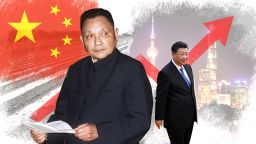
That meteoric rise accelerated under the leadership of Deng Xiaoping, who took power in the late 1970s after the death of Mao.Under Deng, the country embraced the free market and opened up to global trade. He famously said in 1985 that “some people can get rich first” to help poorer people in the long run, so that the society can gradually achieve “common prosperity” — a use of the phrase that differed significantly from its invocation by Mao, who advocated for wealth redistribution nearly 70 years ago as he worked to cement the party’s control.


Worsening inequality now appears to be vexing Xi, the country’s most powerful leader in decades. Just last year, his government concluded a five-year long fight against absolute poverty. Now he’s widely expected to seek a third presidential term next year, and has focused his time on reducing the wealth gap.

“We must divide the cake well,” Xi wrote in last month’s article, adding that his goal is to “achieve common prosperity of all people by the middle of this century.”

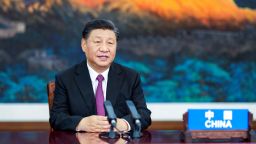
Xi Jinping delivers a speech at a ceremony marking the 100th anniversary of the founding of the Chinese Communist Party. Worsening inequality now appears to be vexing the country's most powerful leader in decades.


A desire for control

Analysts widely believe that Xi’s concerns about inequality are real, but that the unfolding crackdown also signals the ruling Chinese Communist Party’s desire for control.

Xi is “aware that a Communist Party regime only enjoys legitimacy as long as common people feel represented,” said Sonja Opper, a professor at Bocconi University in Italy who studies China’s economy and the private sector. “The ultimate motivation is more likely to gain control over powerful parts of the economy.”

The business crackdown that dominated much of this year is believed to have started after Ma — easily the most recognizable of China’s business elite — blasted China’s financial system during a controversial speech in October 2020.

Founder of Alibaba Group Jack Ma has all but disappeared from public life as the tech crackdown has taken shape over the last year.

Ma criticized China’s regulatory system at the time as being outdated and risk averse, an obstacle to the high flying, innovative tech firms that he said could bring banking to poor populations and smaller businesses that are otherwise locked out of traditional finance.

The tech entrepreneur also accused China’s conventional, state-controlled banks of having a “pawn shop” mentality by lending only to borrowers who could provide collateral. He touted more innovative, data-heavy approaches as capable of bringing banking to marginalized groups.

Those words likely spurred Beijing to retaliate swiftly. The Ant Group IPO was suspended just over a week later.

Since then, life has only gotten more difficult for Ma, Ant Group and China’s other corporate giants. The usually flamboyant Ma has all but disappeared from public life, and has even reportedly left the helm of an elite business school he founded.


Ant Group was forced to overhaul its business and become a financial holding company, meaning it is much more heavily regulated than it ever was before. Ma’s Alibaba (BABA), meanwhile, was hit earlier this year with a record $2.8 billion fine for behaving like a monopoly, and the company has lost roughly $400 billion in market value in the last year as it navigates a slew of new regulations from Beijing.


More than Jack Ma

Ma’s business empire isn’t the only one affected. Meituan, Tencent (TCEHY), Pinduoduo (PDD) and other tech firms have also been investigated or fined over alleged anti-competitive behavior. And the ride-hailing app Didi — which went public in the United States despite reported concerns from Chinese regulators — was banned from app stores and probed over questions about data security.

The Communist Party “seems increasingly concerned that China’s tech sector has become so globally prominent that it runs the danger of outrunning the Party itself,” said Rana Mitter, a professor who specializes in the history and politics of modern China at the University of Oxford. “The crackdown helps to bring it down to size.”


The clampdown has extended well beyond tech. Rules published in July upended China’s $120 billion for-profit tutoring sector. Additional guidelines released that month tightened oversight of the country’s massive food delivery industry.

The real estate market, which was already being roiled by government efforts to curb excessive borrowing by developers, has also been under intense scrutiny this year. Authorities have announced more than 400 regulations on the sector this year as they try to cut down on property debt and bring home prices under control, according to statistics compiled by Centaline Property, a Hong Kong-based property agency.

The government has also turned its attention to cultural and societal issues that authorities have deemed “unhealthy” or “toxic,” including overwork, unruly celebrity behavior and excessive time spent with video games. Other areas of pop culture have been scrutinized as well.


Wary of private tech’s power

Experts point to the crackdown — and especially the measures directed at technology — as the start of a new era for regulation in China.

Companies like Ant Group and Didi have rapidly ascended in recent years to become powerhouses in their fields. Alipay, operated by Ant Group, dominates China’s mobile payment market with a 56% share. Didi has a near monopoly of the ride-hailing market, with about a 90% share.

Beijing encouraged their rise at first. Such firms have been huge job creators and have attracted vast amounts of foreign and domestic capital. China’s influence as a hub for technological innovation has also exploded in recent years because of these firms, which compete head to head with Western rivals.

But now the government is growing wary of their size and power.

Firms like Alibaba, Tencent and Didi “will no longer be able to stay under the protective umbrella of Internet or technology, outside of supervision from the Chinese government,” said Doug Guthrie, a professor and director of China Initiatives at Arizona State University’s Thunderbird School of Global Management.

Beijing is also clearly concerned about the collection of data by these private firms. The technology they have created is so prevalent in Chinese life that they have access to sensitive information about hundreds of millions of people, ranging from where and when they travel to specific details about how they spend their money.

“It cannot go unnoticed that the industries and sectors that came under fire are all part of the modern tech economy, controlling vast amounts of individual level data,” said Opper from Bocconi University. She added that data “is an invaluable resource for any government wishing to control all walks of life.”

Beijing’s interest in Big Data was apparent this summer, as the government’s probe of Didi and other Chinese companies that trade in the United States took shape. Authorities focused on allegations that those firms mishandled sensitive data about their users in China, posing risks to personal privacy and national cybersecurity.

Those regulations “may therefore simply reflect the desire to gain control over the type of data and technology that is currently controlled by China’s most innovative, private technology corporations,” Opper said.


Economic slump may bring change of pace

Beijing has signaled the crackdown may not be over yet.

In August, the party’s top leaders unveiled a major policy blueprint for the next five years, in which they pledged to strengthen regulations on tech, financial services, education, and tutoring firms — areas of what they called “vital interest.”

But other factors might force the government to slow the pace and scale at which it is trying to transform private enterprise.

The world’s second largest economy has encountered a slew of challenges that are weighing heavily on economic growth, including disruptions due to the global shipping crisis, a massive energy crunch and concerns about a debt crisis in real estate. Last quarter marked the slowest pace of GDP growth in a year.

The crackdown on tech and education firms hasn’t helped, with demands for rapid change resulting in job losses and a drag on retail sales.

“My prediction: The ‘crackdown’ is going to stop now,” Guthrie said.

“The Xi administration is very committed to economic growth,” he added. “They have made their point about the coordination between the government and the private sector. But they know they need an entrepreneurial private sector to continue to drive China’s growth.”


There has been some indication that the regulatory push is slowing down.

Guo Shuqing, chairman of the China Banking and Insurance Regulatory Commission, told state broadcaster CCTV last month that the new regulations for financial tech firms have “yielded initial results.” He said he expects to achieve “even more significant progress” before the end of the year.

Even Ma is reportedly turning up in public again. Reuters reported last month that the tech billionaire was spotted on a cruise in Spain, his first trip outside China since the crackdown began.

The government wants companies to understand that they need to be in “lock step” with authorities, said Guthrie, who added that “no one gets to think of themselves as bigger or more global than the Chinese government.”

But he acknowledged that Beijing knows it needs Chinese tech to flourish.

“My sense is that the support and coordination between the government and the private sector is coming back into alignment,” he added.

- - - - - - - - - - 


China’s yearlong crackdown on private business


NOVEMBER 3, 2020

Chinese regulators suspend Ant Group’s $37 billion IPO citing “major issues,” days before the company was scheduled to start trading. It was the largest IPO in history.

FEBRUARY 7, 2021

Chinese regulators revealed new anti-monopoly guidelines aimed at the country’s biggest tech companies, sending a chill through global markets. Chinese firms have lost more than $1 trillion in market value this year as the crackdown has intensified.

APRIL 10, 2021

After a months-long antitrust investigation, Chinese regulators slap Alibaba with a record $2.8 billion fine for behaving like a monopoly.

APRIL 12, 2021

Ant Group is ordered by regulators to restructure itself as a financial holding company supervised by China’s central bank — a major readjustment for the high flying tech company, which now has to follow rules similar to those required of traditional banks.

JULY 4, 2021

China bans ride-hailing giant Didi from app stores, days after the company went public in the United States. The move was widely seen as a punishment for Didi’s decision to list overseas.

JULY 10, 2021

A major Chinese regulator proposes strict listing rules for companies that keep data on more than one million users. Companies that meet that requirement must seek the agency’s approval before listing shares overseas, according to the proposal.

JULY 24, 2021

China unveils wide-ranging rules on education and private tutoring in the country, essentially upending a $120 billion industry. Chinese markets are roiled by the announcement, and billions of dollars in market value are wiped off the value of several major, publicly traded education firms.

AUGUST 2021

China cracks down on what authorities call “chaos” in celebrity fan culture, following a series of scandals involving top artists like Kris Wu, Zheng Shuang and Zhao Wei. Some celebrities were effectively erased from the Chinese internet entirely, while others were slapped with fines or arrested on criminal charges.

AUGUST 17, 2021

President Xi Jinping pushes for the redistribution of wealth in China as part of a call for “common prosperity,” a phrase steeped in historical significance.

AUGUST 26, 2021

China blasts an excessive work culture known as “996,” which is pervasive in the country’s tech industry. The condemnation from the country’s top court signaled an intensifying pressure for companies to curtail the practice.

AUGUST 30, 2021

China bans kids from playing online games for more than three hours a week in a significant escalation of restrictions on the country’s massive gaming industry.


Source: The Shanghai Stock Exchange, The State Administration for Market Regulation, The Central Commission for Discipline Inspection, The Supreme People’s Court, The Ministry of Human Resources and Social Security, The People’s Bank of China, The Cyberspace Administration of China, China’s Ministry of Education, Xinhua News Agency, Goldman Sachs and Eikon Refinitiv data


Some of China’s most successful entrepreneurs have quit high profile jobs in the past several months — decisions they’ve claimed are unrelated to the turmoil, but which analysts find hard to separate completely. Several tech firms have pledged to hand billions of dollars worth of their own profits to government-backed social causes. And some big proponents of Chinese investment have reconsidered plans to pour more money into the market until the outcome of the political interference is clear.

While China’s decisions have rocked the corporate world and rattled foreign investors, Xi appears undeterred. To him, reining in private enterprise is the solution to fixing longstanding concerns about consumer rights, data privacy, excess debt and economic inequality.

In other words, for the Chinese Communist Party it’s not about killing the private sector: It’s about taming the excesses of capitalism and embracing the country’s history of socialism.

Enter your email to subscribe to the CNN Business Newsletter.


https://edition.cnn.com/2021/11/02/tech/china-economy-crackdown-private-companies-intl-hnk/index.html

Most Recent Post

Man charged for borrowing rare Chinese manuscripts from UCLA library, returning fakes

  Suspect Jeffrey Ying allegedly travelled to China after checking works out using several aliases Agence France-Presse Published: 12:11pm, ...

Popular Posts - Last 30 days