Thursday, 2 November 2023

Why China Can’t Break Its Coal Addiction

The CCP Prioritizes Energy Security Over Fighting Climate Change


By 


A coal-fired heating station in Harbin, China, November 2019
Jason Lee / Reuters

For years, environmentalists and energy policymakers have seen China’s reliance on coal as a major impediment to reducing global carbon emissions. Burning coal is the world’s single largest source of carbon dioxide emissions, and half of all coal-fired power stations are located in China.

Despite insisting that the country will turn away from coal, Chinese officials have wavered. In September 2021, for example, Chinese President Xi Jinping announced that China would no longer fund coal-fired power plants abroad. But today coal use is on the rise domestically. In the past year, Chinese provincial governments have greenlighted more coal power capacity than they did in the previous six years combined. If these plants are built and operated as usual, China would blow past its climate change commitments, putting global temperature goals out of reach.

The odd truth about China’s coal addiction is that it makes little financial sense. China insists on investing in coal even though coal plants have posted record losses in the past few years. Several factors, including the need for energy security, the structure of China’s climate goals, and the local interests of local governments, help account for this uneconomical behavior. The costs of China’s commitment to coal, however, could be very steep as the planet tries to stave off the worst effects of climate change.

LIGHTS OUT?

In 2021, China experienced its worst power shortages in decades, affecting more than 20 provinces. The following year, the combination of drought and heat waves led to major electricity restrictions in regions that rely on hydropower. Thanks to these power crises, concerns about climate change are now tempered by those about energy security. Xi espouses the slogan “Build first, destroy later,” a reference to his plan to keep traditional energy sources in place for now. Beijing has relaxed its previous “traffic light” system of oversight, whereby the central government in Beijing allowed some local governments to build coal plants only if the capacity were needed and financially viable. As the country’s economy struggles, China will further deprioritize its climate commitments.

In the short term, China has increased its coal production to allay concerns about the security of its energy supply. In the east and south of China, where most of the newly planned coal plants will be located, provinces justify the plant approvals by citing the need for reliable sources of power. Some western provinces say that they need new coal plants in their region to help the integration of new renewable energy sources into their power supplies.

The structure of China’s medium-term climate targets gives provincial governments the leeway to issue more permits for coal plants. China has said that its coal use will peak by 2025 and its carbon emissions will peak by 2030. But Beijing has not specified the level of either peak, so energy companies and provincial governments see a brief window to lock in high-carbon investments. Targets to reduce the levels of carbon intensity—a measure of carbon emissions per unit of GDP—have not stopped authorities from approving new coal plants. Economic growth could give more room for emissions growth without harming carbon intensity metrics.

But China’s looming economic downturn may be another reason that localities are handing out so many coal permits. Some provincial governments have justified new approvals by arguing that the plants will stimulate the economy. Authorities employed a similar rationale nearly a decade ago to draw investment and create jobs; when Beijing gave local governments the authority to permit coal plants in 2014, a wave of new constructions ensued until the traffic light system instituted in 2016 slowed the boom.

POOR PAYOFF

And yet investing in coal-fired power is not an economical choice. Indeed, today many power companies seem reluctant to continue building plants because their future profitability is doubtful. China’s coal capacity has grown faster than coal generation, so the revenues made by coal plants may not justify their large upfront costs. State-owned companies largely shoulder the responsibility of expanding coal mining and building more coal power capacity because they are partially insulated from losses by the government. Even after Chinese coal power companies lost unprecedented amounts of money in 2021 because of power shortages, they still have strong credit ratings because they are backstopped by the state.

Many of these new coal plants may fail to become financially viable. Medium-term growth projections do not support the need for so many. Before the COVID-19 pandemic, analysis by grid planning groups and industry associations suggested that coal capacity would peak at 1,200 gigawatts, but recent permitting could raise capacity above 1,400 gigawatts. The pandemic led to a temporary slowdown in energy demand, followed by a resurgence that contributed to power shortages. The demand for electricity in China is projected to grow by six percent in 2023, but no authoritative analyses suggest that China has to build such a large number of new coal plants to meet its energy needs.

China’s slow reforms to energy markets exacerbate the situation. Today, markets such as bilateral contracts and centralized auctions make up about half of all electricity generation in the country, with the rest of the electricity sold through government plans. Still the government caps the price of most electricity sales so that any plant that mostly provides backup capacity will lose money. Shortfalls could be made up for by raising the price of energy at peak times or by having consumers pay for capacity, but so far these efforts have been slow going. New plants, as well as some older ones, may meet the same fate as Beijing’s Gaobeidian coal plant, which was mothballed in 2017, ostensibly to meet air pollution goals, and whose coal units are now kept on standby, operating only a few hundred hours per year.

Given these headwinds, it is still unclear if all the permitted coal plants will actually be built. Some localities that have approved plans for new plants may decide against building them in the near future. It is also unclear how much carbon these plants will emit: most of a coal plant’s lifetime emissions come from how much electricity it generates, not how much capacity it has. If these plants are built but operated only infrequently—used, for instance, as a reserve—they may not have a devastating climate impact in the long run. One thing is for sure: replacing older facilities with newer, more efficient generators can lead to marginal short-term reductions in emissions, but at the expense of cementing a long-term commitment to coal.

ALL EYES ON CHINA

China’s approach to coal will have major knock-on effects to the profitability of its renewable energy industry. If coal growth exceeds demand, the appetite for building renewables might wane. So far, that hasn’t happened. China keeps building wind and solar plants at record rates. On the other hand, if many of China’s coal plants simply become backup energy sources, it could spur renewable energy growth by allowing provinces and clean energy developers to build faster without worrying about energy security.

No country will turn out the lights to meet climate change goals. But there are other ways that China can secure its energy supply while accelerating the transition to low-carbon energy. Expanding energy storage can help smooth the variability of renewable energy. Some localities are hoping to better space out electricity demand, for instance by encouraging people to charge electric vehicles at night and to reduce the use of air-conditioning during periods of peak energy consumption. Building wind and solar plants can also make energy more affordable, a key component of energy security. Once a renewable energy plant is built, most of its future energy costs are locked in, which creates more predictable balance sheets and makes the whole power sector less vulnerable to global fossil fuel volatility.

China is entering a period when emissions trajectories can be dramatically altered based on the interaction of many competing factors. To keep the country on track with its climate goals, Beijing will have to help moderate enthusiasm for coal by providing provinces with road maps to enhance their energy security. Reforming power markets could help manage a large overcapacity in coal power while encouraging low-carbon alternatives to overtake fossil fuels. In either case, the successes and failures of China’s transition from coal will reverberate globally. If China fails to move away from coal while maintaining economic growth, other countries with less advanced power systems might think twice about leapfrogging fossil fuels for cleaner energies. China’s impact on global emissions is therefore a matter not just of how much carbon it pumps into the atmosphere but also of the power of its example.

  • MICHAEL DAVIDSON is Assistant Professor at the School of Global Policy and Strategy and the Jacobs School of Engineering at the University of California, San Diego.

https://www.foreignaffairs.com/china/why-china-cant-break-its-coal-addiction

Tuesday, 31 October 2023

China’s billionaires looking to move their cash, and themselves, out | China | The Guardian

 Crackdowns on financiers, roiling political climate and slowing economy under Xi Jinping has many seeking exit plans

 Senior China correspondent   @amyhawk_

Mon 30 Oct 2023 23.10 GMT

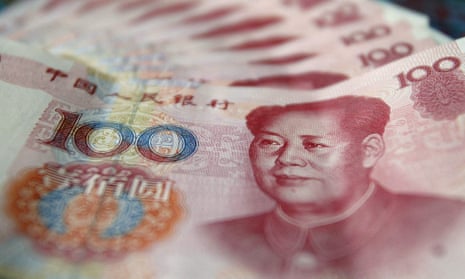
Chinese 100 yuan notes

Chinese 100 yuan notes. Of the world’s estimated 2,640 billionaires, at least 562 are thought to be in China, down from 607 last year, according to Forbes. Photograph: Frederic J Brown/AFP/Getty Images

Billionaires are notoriously difficult to track. It’s no surprise – the easier they and their assets are to find, the easier they are to tax. But by all accounts, the number of uber-wealthy people in China is in decline. Of the world’s estimated 2,640 billionaires, at least 562 are thought to be in China, according to Forbes, down from 607 last year.

With crackdowns on financiers and a roiling political climate, many of China’s rich people are looking to move their money, and themselves, out of the country.

China’s elites have long looked for ways to take their money overseas. Officially, individuals are only allowed to transfer $50,000 (£41,000) out of the country each year. But in practice wealthy people have a range of official and unofficial ways of shifting their funds, whether that is through money exchanges in Hong Kong, where capital controls do not apply, or funnelling cash into overseas businesses.

In August, police in Shanghai arrested five people who worked at an immigration consultancy, including the company’s boss, on suspicion of facilitating illegal foreign exchange transactions in excess of 100m yuan (£11m). In a state media report, the police said “illegal foreign exchange trading seriously disrupts the order of the country’s financial market”.

Before the pandemic, about $150bn flowed out of China each year via tourists taking their funds overseas, according to estimates from the Natixis, a bank. Although international travel has not returned to pre-pandemic levels, high US interest rates and a weak yuan are a strong incentive for cash-rich Chinese to move their money out of the country, economists say.

In the first half of 2023, there was a shortfall of $19.5bn in China’s balance of payments data, which economists use as an indicator of capital flight, although the true value of money unofficially leaving the economy may be higher.

Alicia Garcia Herrero, the chief economist for Asia Pacific at Natixis, says that “a high level of uncertainty about future economic policies and business opportunities in China” also encourages people to take their savings out of the country.

In 2021, Xi Jinping, China’s leader, resurrected a call for “common prosperity”, which was widely interpreted as a call for tycoons to share their wealth more widely. That year Alibaba, the tech company founded by Jack Ma, once one of China’s most high-profile entrepreneurs, donated 100bn yuan to the cause.

Xi is thought to be particularly mistrustful of China’s financial elites since more than $600bn fled the economy in 2015, after a surprise devaluation of the yuan. Since then Beijing has sought to tighten its grip on China’s wealth – and the people who have most of it. The Chinese Communist party (CCP) was particularly spooked when billionaires like Ma started to openly question China’s regulators (after Ma made his comments in 2020, he disappeared from public view for several years).

The “common prosperity” slogan has faded from view as Beijing seeks to promote China as a place that is open for business after three years of zero-Covid. But the pressure on business elites has not relented, and now that borders are open many are looking at exit plans. Last month Hui Ka Yan, the founder of the embattled property developer Evergrande and once Asia’s richest man, was arrested for unspecified crimes. Bao Fan, a renowned investment banker once seen as a kingmaker in the world of technology deals, was detained in February and has not been seen since. Other executives have been placed under exit bans.

The environment now is a marked shift from the 1990s and early 2000s, when China was preparing for entry into the World Trade Organization in 2001 and introducing a host of market reforms that allowed China’s entrepreneurs to amass huge wealth. That was an era in which money-making could come before anything else. But under Xi, who has consolidated his personal power more than any leader since Mao, the emphasis has returned to political control, rather than economic freedom.

“The arbitrary punishment being meted out to the wealthy class is unlike anything we have seen since the 1990s,” says Victor Shih, a professor of China’s political economy at the University of California San Diego. “This has prompted many in that class to think about diversifying out of China.”

There are increasing signs of wealthy Chinese decamping to nearby hotspots. More than 10% of luxury condos sold in Singapore in the first three months of this year went to mainland Chinese buyers, up from about 5% in the first quarter of 2022, according to data from OrangeTee, a real estate company. There are now about 1,100 single-family offices – firms set up to manage the wealth of a specific family – in Singapore, up from 50 in 2018, with around half of that boom estimated to come from Chinese clients.

Wealthy Chinese are also looking for ways to move themselves as well as their money out of China. About 13,500 high-net-worth individuals are expected to leave China this year, up from 10,800 last year, according to Henley & Partners, an immigration consultancy.

“The Chinese government plays for keeps, as Jack Ma and numerous others have discovered,” says David Lesperance, an independent consultant who helps ultra-high-net worth people to relocate. “So we have to look at how to protect your wealth and your wellbeing”.

Lesperance says he receives an increasing number of inquiries from businesspeople who want to move their whole teams out of China, not just their families. As well as the political risks, entrepreneurs no longer feel that China is a land of opportunity, he says. In 2017, China was minting two new billionaires a week. Now, economic growth has slowed.

“Before they would stay because they were making a ton of money in China,” says Lesperance. “Now they’re not making as much money. So they’re like, why am I staying again? Why am I risking this?”

 Additional research by Chi Hui Lin

https://www.theguardian.com/world/2023/oct/31/chinas-billionaires-looking-to-move-their-cash-and-themselves-out

Monday, 30 October 2023

China seeks to stifle public grief for former premier Li Keqiang

 Censorship targets ‘overly effusive’ comments, gatherings or references to Li’s views on economic reform

Crowds of people stand looking at a huge pile of flower tributes.
People lay flowers outside a building where the late Chinese premier Li Keqiang lived as a child in Hefei city, Anhui province, China. Remembering Li fondly is a ‘veiled articulation of unhappiness about Xi’, says one expert. Photograph: AP

Public tributes to China’s former premier Li Keqiang, who died on Friday, are being strictly controlled as the government seeks to prevent a mass outpouring of grief that could lead to social unrest.

Li suffered a sudden heart attack in Shanghai and died in the early hours of Friday, according to Xinhua news agency.

There have been public displays of grief, particularly in his home city of Hefei, in Anhui province, where hundreds of mourners laid flowers for one of their most significant sons.

Social media is awash with tributes to Li, who was once seen as a force for economic liberalisation in the highest echelons of the Chinese Communist party (CCP). But discussion online has been strictly censored to ensure that Li’s legacy adheres to the official narrative and does not mention talking points about political or economic reform.

A leaked memo, published by China Digital Times, shows that media outlets have been instructed to “pay particular attention to overly effusive comments” regarding Li’s death.

Many of the comments that referenced Li’s reputation as an economic reformer were deleted. One comment that was censored from Weibo cited a Li quote from his first year as premier: “Whatever the market can handle, let the market do more of.”

A man reads a newspaper with an obituary of Li Keqiang on a bulletin board in Beijing.
A man reads a newspaper with an obituary of Li Keqiang on a bulletin board in Beijing. Photograph: Tingshu Wang/Reuters

Despite being China’s premier for a decade, it is not clear whether Li will receive an official memorial in addition to regular funeral arrangements. At the regular foreign ministry press briefing on Friday, spokesperson Mao Ning declined to elaborate on any plans.

Students, seen by CCP elites as the most volatile demographic when it comes to protests, are being instructed to refrain from public displays that go beyond the official lines. Screenshots circulating on social media show a message from the youth league committee at Hainan University instructing students to “at most” share Li’s official obituary. The notice said any online or offline gatherings were “strictly prohibited”, according to a report in Taiwanese media.

Another notice posted to students at the Guiyang Institute of Aeronautics and Astronautics asked them not to make any comments about the “political situation” and to refrain from any public gatherings.

A man bows in front of the former house of Li Keqiang in Dingyuan county, Chuzhou city, in China’s eastern Anhui province.
A man bows in front of the former house of Li Keqiang in Dingyuan county, Chuzhou city, in China’s eastern Anhui province. Photograph: Rebecca Bailey/AFP/Getty Images

When Li became premier in 2013, he was seen as someone who would embrace private enterprise and allow the free market to flourish. But he was gradually sidelined by Xi Jinping, China’s leader, who has reasserted the CCP’s grip on all parts of the economy. To many, Li now represents the path not taken by China’s increasingly authoritarian government.

The CCP is particularly fearful about reaction to deaths of senior officials or public figures. The deaths of former premier Zhou Enlai in 1976 and Hu Yaobang, a former CCP general secretary, in 1989, prompted widespread outpourings of grief that morphed into protests.

More recently, the deaths of Covid whistleblower Li Wenliang in 2020 and people in an apartment fire in Xinjiang in 2022 triggered expressions of public grief – with the latter becoming the “white paper” protests that spread across several cities at the end of last year. The CCP leaders are “haunted” by these memories, said Jeffrey Wasserstrom, a professor of Chinese history at the University of California, Irvine.

Many people have flocked to the Weibo page of Li Wenliang to pay their tributes to the more recently departed Li Keqiang. “Today, it seems another truth-teller with the surname Li has departed,” wrote one, in a post archived by China Digital Times.

Li Yuan, a columnist for the New York Times, described the public grief as “the most significant outpouring of emotion since the white paper movement”.

New footage from China congress fuels questions about why Hu Jintao was hauled out – video

Wasserstrom added: “There is definitely a lot of discontent in some quarters about Xi Jinping and little room to express it without taking a big risk … Expressing regret for Li’s death provides an opportunity for doing this in at least a veiled way.”

Prof Steve Tsang, the director of the SOAS China Institute, also said that “remembering Li fondly is a veiled articulation of unhappiness about Xi”.

With that in mind, Tsang said there was “no chance” that Xi would allow “anything but a small family affair” for Li.

Additional research by Chi Hui Lin

https://www.theguardian.com/world/2023/oct/30/china-seeks-to-stifle-public-grief-for-former-premier-li-keqiang

Most Recent Post

Man charged for borrowing rare Chinese manuscripts from UCLA library, returning fakes

  Suspect Jeffrey Ying allegedly travelled to China after checking works out using several aliases Agence France-Presse Published: 12:11pm, ...

Popular Posts - Last 30 days