Tuesday, 19 January 2021

Special report: Trump's U.S.-China transformation

 President Trump began his term by launching the trade war with China he had promised on the campaign trail. By mid-2020, however, Trump was no longer the public face of China policy-making as he became increasingly consumed with domestic troubles, giving his top aides carte blanche to pursue a cascade of tough-on-China policies.

Bethany Allen-Ebrahimian

Jan 19, 2021 -World


Why it matters: Trump alone did not reshape the China relationship. But his trade war shattered global norms, paving the way for administration officials to pursue policies that just a few years earlier would have been unthinkable.

  • Trump-era China policy often featured two separate tracks: policies Trump personally led, and policies spearheaded by officials with China expertise.
  • In some cases, Trump's own actions worked against the stated objectives of his China-focused national security staff — most notably Trump's disparaging attitude toward allies and his prioritizing of trade negotiations over sanctions.

Here's a timeline of the evolution of U.S. policy toward China under Trump:

Late 2016: A surprising election result leaves many guessing what turn U.S.-China relations might take. Initially, there are concerns that, despite his tough campaign rhetoric regarding China's trade practices, President Trump might cozy up to Chinese President Xi Jinping.

  • But an early December 2016 phone call between the president-elect and Taiwanese president Tsai Ing-wen — the first such direct contact between the top U.S. and Taiwanese leaders since at least 1979 — swiftly reformulates expectations and foreshadows the Trump administration's diplomatic iconoclasm.

2017: A trade war and little else. As promised, Trump levies tariffs on billions of dollars of Chinese goods, sparking a trade war that stretches on for most of Trump's presidency.

2018: A whole-of-government approach begins to take shape.

  • The National Security Strategy's Indo-Pacific framework is approved in early 2018, and a Trump-era China strategy begins to emerge.
  • U.S. Pacific Command changes its name to Indo-Pacific Command in a move seen as aimed at countering China's rise.
  • The Department of Justice launches its China Initiative, an effort to disrupt China's covert activities in the U.S.

2019: The U.S. gets tougher, with some guardrails.

  • Secretary of State Mike Pompeo becomes a leading figure in the U.S. push against China, publicly accusing the Chinese Communist Party of seeking "international domination."
  • Trump's desire to seal a trade deal with China, however, prevented administration officials from pursuing sanctions on Chinese officials deemed complicit in human rights abuses.

2020: All bets are off. The year reshapes many aspects of the U.S.-China relationship.

  • After years of tariffs and negotiations, the Phase One trade deal is signed in January, giving President Trump a PR-ready "win."
  • But after the coronavirus outbreak, Trump embraces blaming China as a way to deflect the blame from his own administration's failures to effectively address the rising number of cases stateside. His racially tinged invocation of the "China virus" exacerbates anti-Chinese racism, as attacks against Asian Americans rise around the country.
  • With a trade deal signed and a new grudge against China, Trump lifts the floodgates, allowing staff across agencies to push through long-desired actions on China-related issues across the board.
  • With Trump conspicuously absent from China policy-making, Pompeo becomes the public face of America's China policy.

By the numbers: 2020's whole-of-government approach


Photo Illustration: Sarah Grillo/Axios. Photos: Alex Wong/Getty Images and Lintao Zhang/Getty Images


In 2020, the Trump administration took at least 210 public actions related to China that spanned at least 10 departments, according to publicly available data, demonstrating what the administration calls a "whole-of-government" strategy.

Why it matters: The full impact of such an enormous number of actions taken in such a short period of time has not yet been felt — leaving the Biden administration with the huge task of sorting through these new policies.

  • 22 actions by the Justice Department, including indictments and arrests.
  • 60 actions by the State Department, including visa restrictions, travel advisories, diplomatic actions and public statements.
  • 27 actions by the White House, including executive orders, signing bills into laws and the signing of the Phase One trade agreement.
  • 23 actions by the Defense Department, including freedom of navigation operations, Taiwan Strait transits, and the release of reports and other information.
  • 16 actions by the Department of Homeland Security, including blocking the import of items made through forced labor and the release of reports and statements.
  • 24 actions by the Treasury Department, including sanctions.
  • 13 actions by the Commerce Department, including export controls, additions to the entities list and advisories.
  • 3 actions by the U.S. Trade Representative's office, including the release of reports and a public statement.
  • 2 actions by the Energy Department, including designating China as a "foreign adversary."
  • 2 actions by the Export-Import Bank of the United States.
  • 6 actions by the Federal Communications Commission, including designating Huawei and ZTE as national security threats.
  • 1 action by the Agriculture Department, an interim report on agricultural trade with China.
  • 1 action by the National Security Agency, a cybersecurity advisory regarding China-linked cyber actors.
  • 1 action by the Education Department, a letter sent to university officials regarding Confucius Institutes.
  • 2 actions by the Labor Department, including a letter and a list of goods made with forced labor.

Some actions have been criticized as counterproductive and damaging to U.S. values, such as restrictions placed on Chinese journalists and the U.S. withdrawal from the World Health Organization, in part due to China's influence over the organization.

In 2020, the Trump administration also levied sanctions on 90 Chinese entities or individuals, comprising 11.5% of total U.S. sanctions designations last year, according to data compiled by the Center for a New American Security.

What they're saying

A senior administration official with knowledge of the Trump administration's China strategy told me that China's coercive economic practices and the unique threats it posed to U.S. national security interests and values required new thinking:

  • "The U.S. had to step out in front and take some actions that were perceived as extreme. It’s not establishment Washington thinking."

The results: "I think we were proved to be correct in many ways. You can impose economic costs on China without the world falling apart. China has been extremely restrained in its retaliation. The U.S. as the world’s largest economy had to take the lead and show that the world isn’t going to end."

Looking to the Biden administration: "I think this is good momentum for the next team to come in," said the official.


https://www.axios.com/2021/01/19/trump-china-policy-special-report

Friday, 11 December 2020

AstraZeneca and Russia’s Sputnik V lab to share data in seeking coronavirus vaccine advances

 MOSCOW — The developers of Russia's Sputnik V vaccine will share science with pharmaceutical giant AstraZeneca to explore possible advances against the coronavirus, both sides said Friday, in the first major collaboration of labs that were in the frenzied vaccine hunt.

 and  
December 11, 2020 at 12:45 p.m. EST

https://www.washingtonpost.com/world/europe/virus-vaccine-astrazeneca-russia-collaboration/2020/12/11/6481a3f8-3baa-11eb-aad9-8959227280c4_story.html

Anglo-Swedish pharmaceutical company AstraZeneca developed its vaccine in collaboration with the University of Oxford. (Justin Tallis/AFP/Getty Images)

It also is a further sign of the unprecedented pace of vaccine ­research. Efforts are already underway for improvements and ­second-generation formulas, even before the widespread distribution of the first crop of vaccines from labs in the United States, Europe, China and elsewhere.


The research is aimed at testing new vaccine formulas using ­cold viruses, said a statement by the Anglo-Swedish AstraZeneca, which could work in tandem with Russia’s Gamaleya National Center of Epidemiology and Microbiology, whose Sputnik V uses two injections based on vectors of the common-cold virus, or adenovirus.


Live updates: The latest on the pandemic around the world

The AstraZeneca vaccine, created with the University of Oxford, uses a cold virus that typically infects chimpanzees. That teaches the human immune system to block the novel coronavirus.


AstraZeneca “will soon begin exploring within Russia to understand whether two adenovirus-based vaccines can be successfully combined,” the company said.


Russia said AstraZeneca had agreed to explore using a Sputnik V “component” as part of ­efforts to create an improved vaccine.


For Russia — which trumpeted the partnership in tweets from a Sputnik V account — the deal offers a chance to further promote its flagship vaccine, which is still in Phase 3 trials but became available for health-care workers and others this week in Russia. Initial interest at Moscow clinics for the shots, however, appeared limited as many Russians remained wary of the vaccine.


Russia expected a surge for its Sputnik V vaccine. But many skeptics still stayed away.

The potential collaboration also sets up contrasts as wealthy countries snap up the early supplies of the promising vaccines from U.S.-based Moderna and Pfizer, which worked with Germany’s BioNTech. The AstraZeneca-Oxford vaccine, which is still awaiting regulatory approval, has been promoted by the company as a “vaccine for the world,” with an eye to affordability and global reach.


Russia says it has orders for 1.2 billion doses from more than 40 countries in Asia, Latin America, Africa, Central Asia, India and other regions.

The AstraZeneca-Oxford vaccine, left, and Russia’s Sputnik V vaccine. (Left: John Cairns/University of Oxford/AFP/Getty Images. Right: Olga Maltseva/AFP/Getty Images)

The British government also recently announced that it would begin testing combinations of two technologies, pairing one dose of a viral-vector vaccine like the one from AstraZeneca with a messenger RNA vaccine, the technology used in the Pfizer-BioNTech and Moderna vaccines.

AstraZeneca said in a statement that such combinations “could help unlock synergies in protection and improve vaccine accessibility and could provide an additional approach to help overcome this deadly virus.”


The news comes as setbacks were announced Friday for two Western vaccines, one developed by France’s Sanofi and Britain’s GlaxoSmithKline and the other by Australia’s University of Queensland.


Russian officials said Thursday that Sputnik V’s efficacy is 96.5 percent, compared with 70 percent for the AstraZeneca-Oxford vaccine.


The British medical journal the Lancet on Tuesday published a peer-reviewed paper on the AstraZeneca vaccine, but questions lingered about how well it worked in people over 55 and about results showing better outcomes with an initial half-dose. Full scientific data on Sputnik V has not been released, but Russia has promised to provide access to all data to any country interested in the vaccine.


“We offered @AstraZeneca to use one of our vectors so they can also have two vectors in their vaccine. AZ confirmed,” the developers of Sputnik V tweeted Friday.


“The new chapter of vaccine cooperation has started today,” another tweet announced. “We made an offer and AstraZeneca accepted it. It all happened here on Twitter!”


Russia’s decision to register and roll out the vaccine before Phase 3 trials were completed was criticized as reckless by some Western scientists. But Russian officials have grown increasingly hostile and defensive at what they see as Western attacks designed to discredit Russia’s vaccine for commercial reasons.


Igor Konashenkov, a Russian military spokesman, on Friday attacked what he called a foreign-funded “information sabotage” effort against Sputnik V from inside and outside Russia.


Foreign Minister Sergei Lavrov said Thursday that the United States and its allies were trying to exploit the pandemic, creating a global vaccine race.


Russia had called for global cooperation to defeat the threat, he said, “but unfortunately, a number of countries, primarily the Americans and their allies, are trying to use this situation in their geopolitical interests, putting their selfish interests above those of all humanity.”


AstraZeneca vaccine details published in Lancet, but questions remain

Kremlin spokesman Dmitry Peskov on Friday denounced unspecified “dirty tricks . . . to discredit our vaccine” and told journalists that “there should not be any rivalry on the vaccine market.”

Russia’s Sputnik V vaccine at a clinic in Moscow last week. (Maxim Shipenkov/EPA-EFE/Shutterstock)

Sputnik V’s developers on Friday also offered to share the Russian vaccine with France’s Sanofi and Britain’s GlaxoSmithKline to boost their vaccine’s efficacy.


Sanofi and GSK announced Friday that their vaccine would be delayed until the end of next year after their trial found a low immune response in older adults.


“#Sputnik V is willing to share its technology with Sanofi and GSK to help in developing their next vaccine,” the Russian Direct Investment Fund, backer of Sputnik V, tweeted. “A partnership of different producers is the way of the future.”


So far, 150,000 Russians have been vaccinated with the Sputnik V vaccine, Gamaleya Center Director Alexander Gintsburg said Thursday. Only front-line health workers and teachers qualify to get the shot in mass vaccinations at government health clinics that opened this week. The Russian military is also offering vaccines to service members.


Polling in Russia shows that many Russians remain skeptical about being vaccinated, with anti-vaccine conspiracy theories circulating online, and that some Russians are convinced the coronavirus does not exist. Any collaboration with a major Western drug company could boost Russian government efforts to encourage Russians to get vaccinated.


Clinical trials of a second Russian vaccine, developed by the Vector Center, began Friday.


The global price of the Sputnik V vaccine has been set at about $20 for two shots. Russian developers say the vaccine can be stored at about 18 degrees, making it easier to store and transport than the Pfizer-BioNTech vaccine, which must be kept at ultracold temperatures. The AstraZeneca-Oxford vaccine, however, can be stored long term at ordinary refrigerator temperatures.


Noack reported from Berlin. Carolyn Y. Johnson in Boulder, Colo., and Emily Rauhala in Washington contributed to this report.


Russia’s vaccine volunteers swap stories — and antibody readings — as amateur researchers

Russia unveils coronavirus vaccine ‘Sputnik V,’ claiming breakthrough in global race before final testing complete

Coronavirus: What you need to know


Vaccines: The CDC recommends that everyone age 5 and older get an updated covid booster shot. New federal data shows adults who received the updated shots cut their risk of being hospitalized with covid-19 by 50 percent. Here’s guidance on when you should get the omicron booster and how vaccine efficacy could be affected by your prior infections.

New covid variant: The XBB.1.5 variant is a highly transmissible descendant of omicron that is now estimated to cause about half of new infections in the country. We answered some frequently asked questions about the bivalent booster shots.

Guidance: CDC guidelines have been confusing — if you get covid, here’s how to tell when you’re no longer contagious. We’ve also created a guide to help you decide when to keep wearing face coverings.

Where do things stand? See the latest coronavirus numbers in the U.S. and across the world. In the U.S., pandemic trends have shifted and now White people are more likely to die from covid than Black people. Nearly nine out of 10 covid deaths are people over the age 65.

For the latest news, sign up for our free newsletter.


https://www.washingtonpost.com/world/europe/virus-vaccine-astrazeneca-russia-collaboration/2020/12/11/6481a3f8-3baa-11eb-aad9-8959227280c4_story.html


Other reads

Thursday, 8 October 2020

China just stunned the world with its step-up on climate action

 China’s President Xi Jinping surprised the global community recently by committing his country to net-zero emissions by 2060. Prior to this announcement, the prospect of becoming “carbon neutral” barely rated a mention in China’s national policies.

October 8, 2020

China currently accounts for about 28% of global carbon emissions – double the US contribution and three times the European Union’s. Meeting the pledge will demand a deep transition of not just China’s energy system, but its entire economy.

Importantly, China’s use of coal, oil and gas must be slashed, and its industrial production stripped of emissions. This will affect demand for Australia’s exports in coming decades.

It remains to be seen whether China’s climate promise is genuine, or simply a ploy to win international favour. But it puts pressure on many other nations – not least Australia – to follow.

It remains to be seen whether China will deliver on its climate pledge. Da qing/AP

Goodbye, fossil fuels

Coal is currently used to generate about 60% of China’s electricity. Coal must be phased out for China to meet its climate target, unless technologies such as carbon-capture and storage become commercially viable.

Natural gas is increasingly used in China for heating and transport, as an alternative to coal and petrol. To achieve carbon neutrality, China must dramatically reduce its gas use.

Electric vehicles and hydrogen fuel-cell vehicles must also come to dominate road transport - currently they account for less than 2% of the total fleet.


Read more: New research: nitrous oxide emissions 300 times more powerful than CO₂ are jeopardising Earth's future


China must also slash the production of carbon-intensive steel, cement and chemicals, unless they can be powered by renewable electricity or zero-emissions hydrogen. One report suggests meeting the target will mean most of China’s steel is produced using recycled steel, in a process powered by renewable electricity.

Modelling in that report suggests China’s use of iron ore – and the coking coal required to process it into steel – will decrease by 75%. The implications for Australia’s mining industry would be huge; around 80% of our iron ore is exported to China.

It is critically important for Australian industries and policymakers to assess the seriousness of China’s pledge and the likelihood it will be delivered. Investment plans for large mining projects should then be reconsidered accordingly.

Conversely, China’s path towards a carbon neutral economy may open up new export opportunities for Australia, such as “green” hydrogen.


To meet its pledge, China must decarbonise its transport system. DIEGO AZUBEL/EPA

A renewables revolution

Solar and wind currently account for 10% of China’s total power generation. For China to meet the net-zero goal, renewable energy generation would have to ramp up dramatically. This is needed for two reasons: to replace the lost coal-fired power capacity, and to provide the larger electricity needs of transport and heavy industry.

Two factors are likely to reduce energy demand in China in coming years. First, energy efficiency in the building, transport and manufacturing sectors is likely to improve. Second, the economy is moving away from energy- and pollution-intensive production, towards an economy based on services and digital technologies.

It’s in China’s interests to take greater action on climate change. Developing renewable energy helps China build new “green” export industries, secure its energy supplies and improve air and water quality.

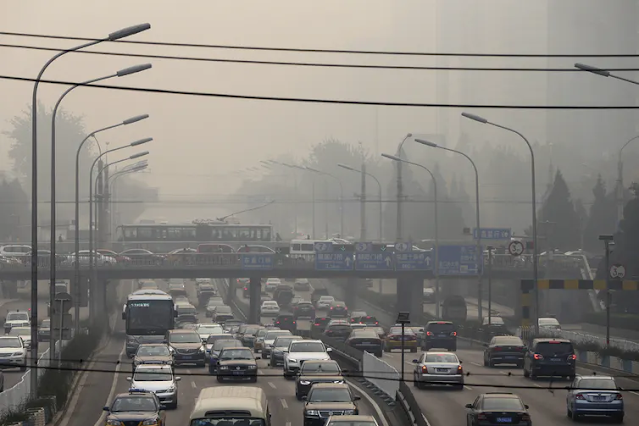
A transition to renewable energy would improve air pollution in China. Sam McNeil/AP

The global picture

It’s worth considering what factors may have motivated China’s announcement, beyond the desire to do good for the climate.

In recent years, China has been viewed with increasing hostility on the world stage, especially by Western nations. Some commentators have suggested China’s climate pledge is a bid to improve its global image.

The pledge also gives China the high ground over a major antagonist, the US, which under President Donald Trump has walked away from its international obligations on climate action. China’s pledge follows similar ones by the European Union, New Zealand, California and others. It sets an example for other developing nations to follow, and puts pressure on Australia to do the same.


Read more: South Korea's Green New Deal shows the world what a smart economic recovery looks like


The European Union has also been urging China to take stronger climate action. The fact Xi made the net-zero pledge at a United Nations meeting suggests it was largely targeted at an international, rather than Chinese, audience.

However, the international community will judge China’s pledge on how quickly it can implement specific, measurable short- and mid-term targets for net-zero emissions, and whether it has the policies in place to ensure the goal is delivered by 2060.

Much is resting on China’s next Five Year Plan – a policy blueprint created every five years to steer the economy towards various priorities. The latest plan, covering 2021–25, is being developed. It will be examined closely for measures such as phasing out coal and more ambitious targets for renewables.

Also key is whether the recent rebound of China’s carbon emissions – following a fall from 2013 to 2016 – can be reversed.


President Xi, left, has taken the high ground over the Trump-led US with its bold climate plan. AP

Wriggle room

The 2060 commitment is bold, but China may look to leave itself wriggle room in several ways.

First, Xi declared in his speech that China will “aim to” achieve carbon neutrality, leaving open the option his nation may not meet the target.

Second, the Paris Agreement states that developed nations should provide financial resources and technological support to help developing countries reduce their emissions. China may make its delivery of the pledge conditional on this support.

Third, China may seek to game the way carbon neutrality is measured – for example, by insisting it excludes carbon emissions “embodied” in imports and exports. This move is quite likely, given exports account for a significant share of China’s total greenhouse gas emissions.

So for the time being, the world is holding its applause for China’s commitment to carbon neutrality. Like every nation, China will be judged not on its climate promises, but on its delivery.

Most Recent Post

Man charged for borrowing rare Chinese manuscripts from UCLA library, returning fakes

  Suspect Jeffrey Ying allegedly travelled to China after checking works out using several aliases Agence France-Presse Published: 12:11pm, ...

Popular Posts - Last 30 days